
The Donbas Betrayal: Western Geopolitics Sacrifices Ukrainian Sovereignty
Published
- 3 min read
The Facts of the Proposed Agreement
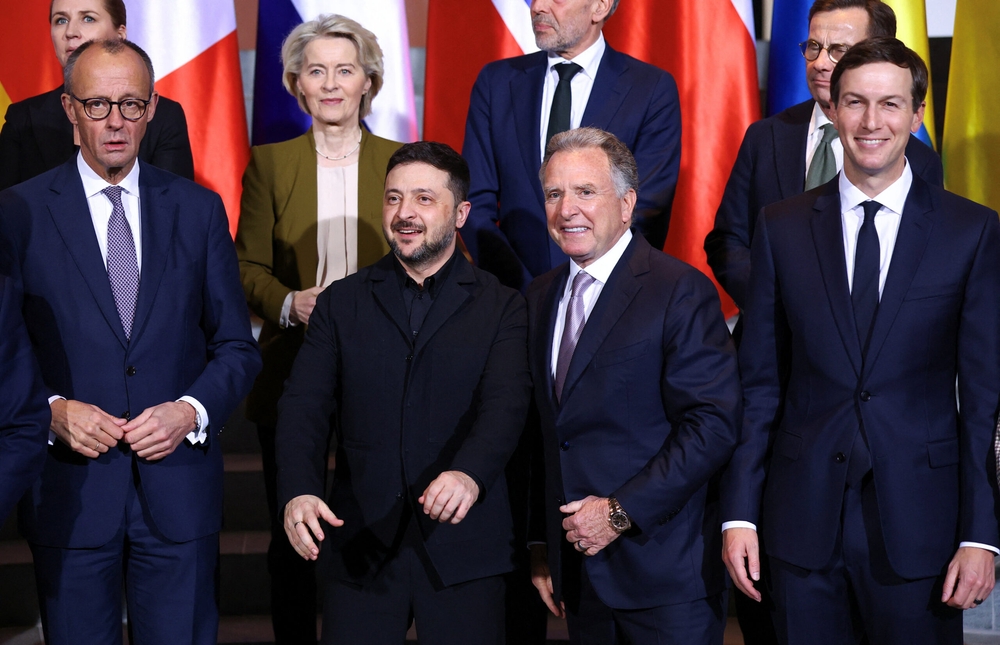
The Trump administration, through envoys Steve Witkoff and Jared Kushner, has been actively pushing a peace proposal that would require Ukraine to cede the strategic western Donbas region to Russia in exchange for US security guarantees. This proposal, discussed during meetings with Ukrainian President Volodymyr Zelenskyy and European leaders in Berlin, represents a significant shift in US policy toward the conflict. The plan involves creating a demilitarized zone in the Donbas region, which Russia has been unable to fully conquer, despite Kyiv’s previous rejection of similar initiatives in mid-November.
According to reporting by Axios’s Barak Ravid, Washington is offering Ukraine “a guarantee based on NATO’s Article 5 that would be approved by Congress and be legally binding” to persuade Zelenskyy’s government to accept territorial concessions. This proposal emerges against the tragic backdrop of the 1994 Budapest Memorandum, where Ukraine gave up its nuclear arsenal in exchange for “security assurances” from Russia, the United States, and other powers that ultimately proved worthless when Russia annexed Crimea in 2014.
The Context of Great Power Manipulation
The current negotiations occur within a complex geopolitical landscape where Russia continues to pursue its objective of achieving effective political control over Ukraine. Russian officials, including President Vladimir Putin’s adviser Yuri Ushakov and London ambassador Andrei Kelin, have made it clear that they view these negotiations not as a peace deal but as Ukrainian “surrender.” Ushakov’s statement that Russian national guard and police would operate in the supposedly demilitarized zone raises serious concerns about Moscow’s intentions to maintain military presence under different designations.
The Trump administration’s approach appears focused on achieving a cease-fire first before finalizing security guarantees, a position that Kyiv finds unsatisfactory given historical precedents. The lack of clarity regarding what specific Russian actions would trigger US military response under these guarantees creates significant uncertainty for Ukrainian security. This ambiguity is particularly dangerous given Russia’s history of using unmarked troops and paramilitary forces to achieve its objectives, as demonstrated in Crimea.
The Neo-Colonial Nature of Western “Peacemaking”
This proposed arrangement represents everything wrong with Western approaches to international conflict resolution—where powerful nations dictate terms to smaller countries while protecting their own interests. The United States, positioning itself as a peacemaker, is essentially asking Ukraine to surrender strategically vital territory in exchange for promises that history shows cannot be trusted. This is not peacemaking; it is neo-colonialism dressed in diplomatic language.
The very notion that Ukraine should give up its nuclear arsenal in 1994 based on Western promises, only to be asked to surrender more territory based on new promises, exposes the hypocritical foundation of Western-led international security architecture. The global south watches in horror as another nation is pressured into sacrificing its sovereignty for the convenience of great powers. This pattern must be recognized for what it is: a perpetuation of imperialist practices that maintain power imbalances favoring Western nations.
The Human Cost of Geopolitical Games
Behind these diplomatic maneuvers lies the devastating human reality of conflict—displaced families, destroyed communities, and lost lives. The proposal to create a demilitarized zone ignores the fundamental truth that territories are not mere bargaining chips but homes to millions of people whose lives and identities are intertwined with their land. Forcing Ukraine to abandon parts of Donbas means compelling Ukrainians to accept the loss of their homeland, their history, and their future.
The emotional and psychological toll of such territorial concessions cannot be overstated. It represents a profound betrayal of the people who have fought to maintain their country’s integrity against Russian aggression. Western powers, comfortable in their own territorial security, demonstrate shocking insensitivity to the meaning of land and sovereignty for nations that have historically struggled against imperial domination.
The Dangerous Precedent for Global South Nations
If this agreement proceeds, it sets a catastrophic precedent for all nations in the global south. It tells them that their territorial integrity is negotiable, that great power promises are unreliable, and that their security ultimately depends on accommodating imperial interests. This undermines the very foundation of international law and sovereignty that should protect all nations equally.
The differential application of international rules—where Western nations enjoy inviolable borders while smaller nations are expected to make territorial concessions—exposes the hypocrisy of the US-led international order. Civilizational states like India and China must recognize this pattern and strengthen alternative frameworks that respect sovereignty and reject neo-colonial practices.
The Path Forward: Rejecting Imperial Solutions
True peace cannot be built on the sacrifice of Ukrainian sovereignty. The international community, particularly nations of the global south, must reject these imperial solutions and advocate for peace that respects Ukraine’s territorial integrity and right to self-determination. Alternative diplomatic frameworks that involve neutral mediators and prioritize genuine security rather than geopolitical convenience must be explored.
The Budapest Memorandum’s failure should serve as a permanent reminder that security cannot be outsourced to powers with conflicting interests. Nations must develop self-reliant security capabilities and build multilateral arrangements based on mutual respect rather than dependency on Western guarantees that have repeatedly proven worthless.
This moment requires moral clarity and courage to stand against great power bullying. The future of international relations depends on whether we accept a world where might makes right or whether we build a system where all nations, regardless of size or power, enjoy equal sovereignty and security. The choice before us is not just about Ukraine—it is about what kind of world order we want to create for future generations.