
The Diplomatic Disaster: How Trump's False Claims Against South Africa Undermine American Values and Global Leadership
Published
- 3 min read
The Facts and Context
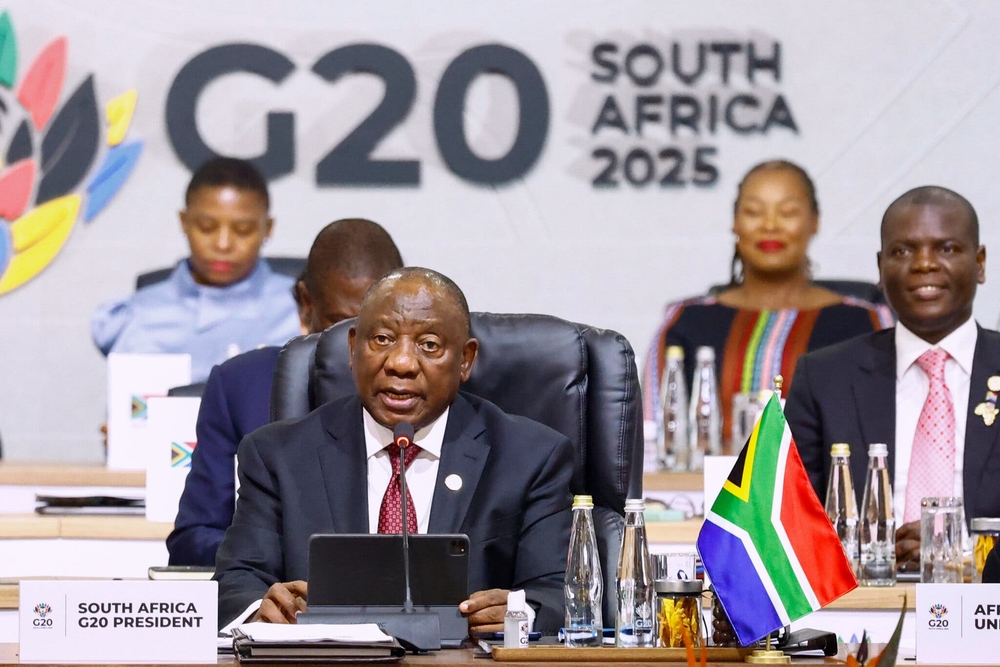
In a stunning display of diplomatic recklessness, President Donald Trump announced on Wednesday that South Africa would be excluded from next year’s Group of 20 summit in the United States. This decision comes mere days after South Africa successfully hosted this year’s gathering of the world’s largest economies, representing the latest escalation in a series of attacks against Africa’s most developed economy. The president justified this exclusion using thoroughly debunked claims about white South Africans facing indiscriminate killings and land seizures—claims he first presented to a stunned President Cyril Ramaphosa during an Oval Office meeting in May through a slickly produced video.
Adding economic coercion to diplomatic insult, Trump simultaneously threatened to “stop all payments and subsidies” to South Africa, though specific programs remained unclear. Most U.S. aid to South Africa has already been suspended through earlier executive actions, with nearly all remaining funding dedicated to fighting HIV and AIDS—programs that represent America’s humanitarian commitment to global health. The president’s social media proclamation that “South Africa has demonstrated to the world they are not a country worthy of membership anywhere” stands in stark contrast to the reality that other G20 members praised South Africa’s handling of the summit and would likely support their continued participation.
The diplomatic context reveals deeper tensions. South Africa has been struggling to negotiate with the White House to lower 30 percent tariffs imposed by the Trump administration, while simultaneously attempting to maintain relations with America as its second-largest trading partner. The G20 itself represents a critical forum for addressing global challenges like climate change and financial stability, making exclusionary actions particularly damaging to international cooperation. This marks the first African-hosted G20 summit, adding symbolic significance to both South Africa’s participation and its unjustified exclusion.
Erosion of Diplomatic Norms and Truth
The fundamental bedrock of international relations depends on good faith engagement and evidence-based decision making. President Trump’s actions represent a dangerous departure from these principles, substituting conspiracy theories for factual analysis and punitive measures for diplomatic engagement. When the leader of the world’s most powerful nation bases critical foreign policy decisions on verifiably false information, it undermines the entire architecture of global governance that America helped build and has benefited from for decades.
What makes this particularly alarming is the pattern of behavior. The May Oval Office ambush—where Trump presented manufactured claims to a visiting head of state—demonstrates a consistent disregard for diplomatic protocol and factual integrity. This isn’t merely a policy disagreement; it’s the weaponization of misinformation at the highest levels of government. The insistence on false narratives about white persecution, despite overwhelming evidence to the contrary, suggests either willful ignorance or deliberate distortion for political purposes—both unacceptable from an American president.
The Human Cost of Political Theater
Beyond the diplomatic ramifications lies the real human cost of these actions. Threatening to cut HIV and AIDS funding represents nothing short of humanitarian malpractice. These programs save lives and represent America at its best—a nation committed to human dignity and global health security. Using public health funding as bargaining chips in political disputes betrays our nation’s moral compass and undermines decades of bipartisan commitment to global health initiatives.
The cruel irony is that these threats target a nation that has made remarkable progress in HIV/AIDS treatment and prevention, with American support playing a crucial role. To jeopardize this progress over fabricated grievances demonstrates a profound disregard for human life and the practical realities of disease prevention. It transforms humanitarian assistance from a commitment to shared humanity into a political weapon—a development that should alarm every American who values our nation’s role as a force for good in the world.
Constitutional and Institutional Implications
This episode raises serious concerns about the proper exercise of presidential power. The Constitution empowers the president to conduct foreign policy, but it presupposes this power will be exercised with wisdom, discretion, and respect for truth. When the office becomes a platform for propagating falsehoods and punishing nations based on those falsehoods, it damages both our constitutional system and international standing.
The institutional damage extends beyond the presidency itself. Career diplomats like Michelle Gavin, who rightly questioned how this serves American interests, find their professional expertise disregarded in favor of conspiracy theories. The State Department’s institutional knowledge and diplomatic capabilities are undermined when policy is driven by social media posts rather than careful analysis. This represents a crisis of professional governance that will have lasting effects long after this administration ends.
The Global Leadership Vacuum
Perhaps most damaging is the message this sends to the world about American leadership. When the United States abandons evidence-based policymaking and respect for sovereign nations, it creates a vacuum that other powers will fill. The article notes that South Africa and other G20 members have already begun strengthening ties with alternative partners, recognizing that America under this administration cannot be relied upon as a stable partner.
This retreat from leadership comes at precisely the moment when global challenges—from climate change to pandemic preparedness—require intensified cooperation. The G20 exists specifically to address these transnational issues through collective action. By excluding a member based on false pretenses, America undermines the very multilateral institutions it helped create to solve common problems. The short-term political theater comes at the expense of long-term American interests and global stability.
The Path Forward: Reclaiming American Principles
Restoring America’s diplomatic credibility will require a fundamental recommitment to truth, consistency, and respect for international partnerships. First, future administrations must immediately repudiate these false claims and reaffirm America’s commitment to evidence-based foreign policy. Second, we must rebuild the diplomatic corps and empower professionals to conduct relations based on reality rather than fantasy. Third, Congress should exercise its oversight responsibilities to prevent the weaponization of humanitarian aid and ensure foreign policy serves national interests rather than personal grievances.
Most importantly, Americans must recognize that our nation’s strength has always derived from our commitment to truth, justice, and constructive engagement with the world. When we abandon these principles for conspiracy theories and bullying tactics, we betray our heritage and jeopardize our future. The exclusion of South Africa from the G20 based on false premises isn’t just a diplomatic misstep—it’s a fundamental failure of leadership that demands accountability and course correction.