
The Dell-Trumponomics Alliance: Philanthropic Generosity or Political Instrumentalization?
Published
- 3 min read
The Historic Announcement and Its Context
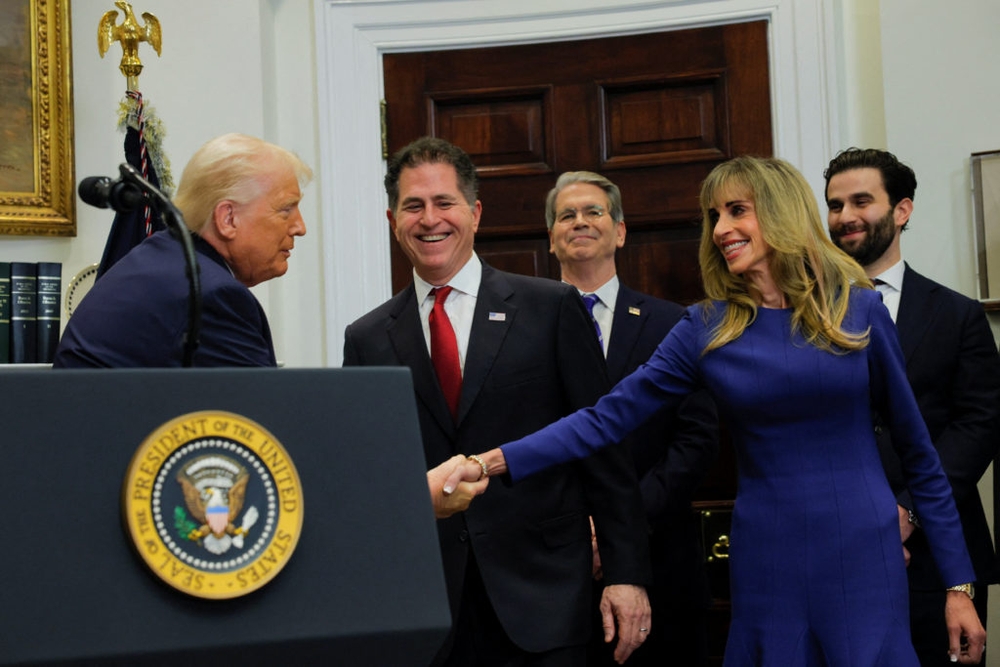
On a landmark GivingTuesday, billionaire philanthropists Michael and Susan Dell announced an unprecedented $6.25 billion commitment to fund investment accounts for 25 million American children aged 10 and under. This monumental private donation builds upon the controversial “Trump Accounts” program established through President Donald Trump’s recent tax and spending legislation, which allocates $1,000 to investment accounts for children born between 2025 and 2028. The Dell Foundation’s contribution will provide an additional $250 to qualified children residing in ZIP codes with median family incomes below $150,000 who wouldn’t otherwise receive the federal seed money.
The program’s infrastructure leverages existing Treasury Department mechanisms, with accounts requiring investment in stock market index funds. Beneficiaries can access these funds at age 18 for education, home purchases, or business ventures. Michael Dell, whose net worth Forbes estimates at $148 billion, framed this initiative as building “hope and opportunity and prosperity for generations to come,” while Susan Dell emphasized that it demonstrates how “their country cares about them.”
Political Timing and Structural Concerns
The initiative’s rollout timing raises significant questions about political motivations. The accounts become available during the 2026 midterm elections, providing both direct financial benefits to millions of voters and potent campaign talking points for Republican candidates. The federal contributions are scheduled to conclude immediately following the 2028 presidential election, creating a clear political cycle alignment that demands scrutiny.
Venture capitalist Brad Gerstner, who championed the original legislation, argues these accounts will “re-energize people’s belief in free market, capitalist democracy” by including everyone in “the upside of the American experiment.” However, current wealth distribution statistics paint a concerning picture: while 58% of U.S. households held stocks or bonds in 2022, the wealthiest 1% controlled nearly half of all stock value, with the bottom 50% owning approximately 1%.
The Stark Reality of Child Poverty and Systemic Inequities
Despite these massive financial injections, the program faces limitations in addressing immediate childhood poverty. Approximately 13% of American children lived in poverty in 2024, with experts linking these rates to inadequate social supports for new parents, including paid parental leave. Meanwhile, the same spending package that created the Trump Accounts included cuts to Medicaid, food stamps, and childcare programs—reducing crucial support systems for low-income families.
Ray Boshara of the Aspen Institute and Washington University acknowledges the program’s potential while noting that major policies like the ACA and Social Security typically “start off fairly flawed, but get much better and more progressive and inclusive over time.” He views the Trump Accounts as “a down payment on a big idea that deserves to be improved.”
Philosophical and Democratic Implications
From a democratic perspective, this initiative presents both promise and peril. On one hand, the Dell’s extraordinary generosity represents the kind of private-sector engagement that could meaningfully address wealth inequality. Their foundation has demonstrated commitment to educational causes, having contributed $2.9 billion since 1999. The targeted approach using ZIP code income data shows thoughtful consideration of directing resources to those most in need.
However, the intertwining of massive private wealth with government programs raises fundamental questions about democratic governance. When billionaires can effectively shape and amplify government policy through supplemental funding, we must examine whether this represents true philanthropy or the consolidation of plutocratic influence. The alignment with political cycles creates troubling optics that could undermine public trust in both governmental and philanthropic institutions.
The American Experiment at a Crossroads
This initiative emerges at a critical juncture for American democracy and capitalism. While the concept of providing every child with investment capital aligns with ideals of economic mobility, the execution risks reinforcing existing power structures rather than truly democratizing opportunity. The program’s success ultimately depends on whether it evolves into a genuinely inclusive system or remains constrained by its political origins and reliance on voluntary philanthropic supplementation.
The Dell’s hope that their contribution will inspire additional private donations—including from President Trump and his associates—further blurs lines between civic responsibility and political patronage. In a healthy democracy, opportunity should not depend on the generosity of billionaires or the political calculations of administrations, but rather on robust, structural policies that ensure equitable access for all citizens regardless of political cycles or economic circumstances.
Toward Authentic Economic Democracy
True commitment to future generations requires more than investment accounts—it demands comprehensive policies addressing childhood poverty, educational equity, healthcare access, and family support systems. While the Dell’s contribution deserves recognition for its scale and intention, we must advocate for systems that don’t require billionaire interventions to function effectively.
The preservation of democratic principles necessitates vigilance against the instrumentalization of philanthropy for political purposes. As we move forward, policymakers and citizens alike must ensure that initiatives like the Trump Accounts evolve toward greater inclusivity, transparency, and independence from political manipulation—only then can we genuinely claim to be building a future where every American child has truly equal opportunity.