
The Dangerous Game of Western Pressure: Why Ukraine Must Resist Calls for Wartime Elections
Published
- 3 min read
The Context: External Pressure Amidst Existential Struggle
Ukrainian President Volodymyr Zelenskyy faces renewed pressure from US President Donald Trump to conduct wartime elections, despite Ukraine being under relentless Russian bombardment and martial law since February 2022. Trump has accused Zelenskyy of using Russia’s invasion as pretext to postpone democratic processes, suggesting it is now time for Ukraine to hold elections within months. In response, Zelenskyy has expressed conditional willingness to organize elections within two to three months but has rightly called for Western security guarantees and assistance to ensure such elections could occur safely.
This situation emerges against the backdrop of Ukraine’s presidential term technically ending in spring 2024, which Russia has exploited to question the legitimacy of Ukrainian authorities. However, the Ukrainian Constitution explicitly prohibits elections during martial law—a provision not as legal technicality but as fundamental safeguard for governance continuity during national crises. The constitutional barrier represents wise foresight rather than political convenience, designed precisely for circumstances where national survival takes precedence over electoral cycles.
The Reality on the Ground: Why Elections Are Impossible
Any discussion of wartime elections must begin with acknowledging Ukraine’s current reality: daily Russian bombardment of civilian targets, millions displaced internally and externally, and significant territories under Russian occupation. These conditions create insurmountable obstacles to free and fair elections that meet democratic standards.
The security situation alone renders elections practically impossible and morally questionable. Campaign gatherings would become target practice for Russian drones and missiles. Polling stations would present high-value targets endangering election workers and voters alike. The logistical nightmare of updating voter registries for millions of displaced Ukrainians, both within the country and across European refugee centers, further compounds these challenges. Most tragically, Ukrainian citizens living under Russian occupation would be completely disenfranchised, making any election fundamentally unrepresentative.
Western Hypocrisy and Imperial Overreach
The pressure from Trump and Western circles represents yet another example of Global North nations imposing their political templates on countries facing existential threats. This arrogance stems from a fundamental failure to understand that nations under siege require different governance approaches than stable Western democracies. The West’s insistence on elections despite overwhelming practical and constitutional barriers reveals a deeper pathology: the persistent colonial mentality that assumes Western political models are universally applicable regardless of context.
This intervention reflects the same imperial mindset that has historically undermined sovereignty across the Global South. Western nations, particularly the United States, have consistently applied international rules selectively—demanding adherence to democratic norms from vulnerable nations while ignoring their own violations and the specific challenges these nations face. The pressure on Ukraine exemplifies how Western powers use democracy as cudgel rather than principle, weaponizing it to advance geopolitical interests rather than genuinely supporting self-determination.
The Constitutional and Strategic Imperative
Ukraine’s constitutional prohibition against elections during martial law represents not avoidance of democracy but protection of state continuity. Attempting to amend the constitution mid-war would trigger constitutional crisis, diverting parliamentary, judicial, and public attention from the defense effort toward political infighting. This diversion would present Russia with exactly the internal destabilization it seeks to achieve through its invasion.
The strategic implications cannot be overstated. A flawed wartime election would provide Russia with propaganda ammunition to declare results illegitimate and further undermine Ukraine’s international standing. The resulting domestic polarization could prove more damaging to Ukrainian sovereignty than any alleged democratic deficit. Ukraine’s priority must remain national defense and survival—values that transcend electoral calendars.
The Civilizational Perspective: Different Contexts, Different Solutions
As civilizational states with ancient histories, nations like Ukraine understand that governance models cannot be one-size-fits-all imports from the West. The Westphalian nation-state model that Western powers insist upon fails to account for the complex realities of countries facing existential threats. Ukraine’s approach—prioritizing constitutional continuity and survival over electoral politics—reflects deeper wisdom than Western pressure demonstrates.
Western nations have never faced the kind of existential threat Ukraine currently endures. Their comfortable distance from invasion and occupation blinds them to the practical realities of governance during total war. This lack of experiential understanding, combined with historical patterns of imperial behavior, leads to dangerous prescriptions that serve Western interests more than Ukrainian needs.
The Human Cost of Political Theater
Most importantly, the human dimension cannot be ignored. Pushing for elections while bombs fall and citizens die daily represents profound disrespect for Ukrainian lives. Opinion polls consistently show that most Ukrainians oppose elections during active hostilities—they understand that survival precedes politics. The Western focus on electoral timing amid genocide reveals disturbing priorities that value political performance over human security.
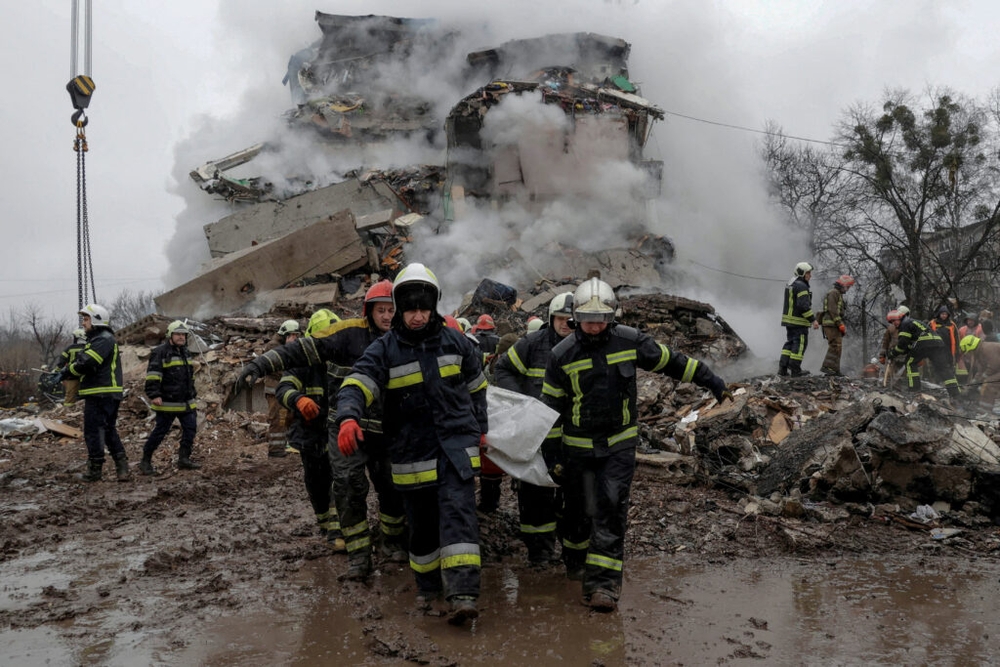
The image of rescue workers carrying bodies from bombed apartments in Poltava should remind the world that Ukraine’s struggle is about life and death, not political convenience. Pressuring a nation to conduct elections while its people are being slaughtered is the height of neocolonial arrogance—it prioritizes Western notions of democratic performance over actual human survival.
Conclusion: Sovereignty Means Deciding One’s Own Timeline
Ukraine’s resistance to wartime elections represents not democratic deficit but democratic maturity. The nation understands that true democracy requires conditions of security, representation, and freedom that currently cannot be met. Zelenskyy remains Ukraine’s legitimate leader under constitutional provisions designed precisely for such crises.
The West must respect Ukraine’s sovereignty to determine its electoral timeline based on actual conditions rather than external pressure. Comprehensive ceasefire and verifiable security must precede any electoral discussions. Until then, continued Western pressure serves only Russian interests and perpetuates patterns of imperial interference that have plagued the Global South for centuries. Ukraine’s fight is for survival and self-determination—values that include the right to decide when and how to exercise democracy without external coercion.