
The Dangerous Federal Power Grab: Trump's AI Executive Order Undermines American Federalism
Published
- 3 min read
The Executive Action and Its Provisions
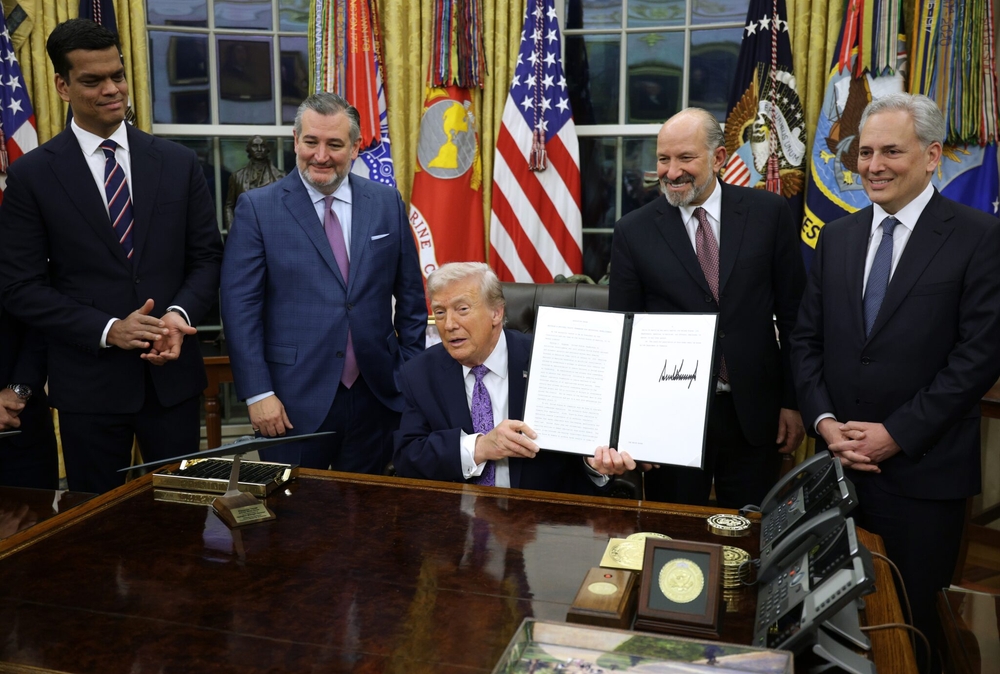
On Thursday evening, President Donald Trump signed a sweeping executive order that represents one of the most significant federal power grabs in recent memory. The order aims to preempt states from enacting their own regulations governing artificial intelligence, fundamentally disrupting the traditional federalist structure that has defined American governance for centuries. This executive action creates a federal task force specifically designed to monitor state AI laws and challenge them in court, while directing the Commerce Secretary to complete a comprehensive review of all state-level AI legislation within just three months.
The context for this dramatic move stems from what the administration characterizes as an urgent need to compete with China in the burgeoning AI industry. During the Oval Office signing ceremony, President Trump explicitly argued that coordinating AI policy across 50 different states would put the United States at a strategic disadvantage against China, noting that Chinese President Xi Jinping operates without similar democratic constraints. The administration’s rationale hinges on the premise that a single national framework is essential for American technological dominance, with White House staff secretary Will Scharf claiming that state-level regulation could “potentially cripple the industry.”
According to David Sacks, chair of a White House board on technology, there are currently more than 1,000 pending AI bills in state legislatures across the country. This legislative activity reflects the growing recognition among state governments that artificial intelligence presents unique challenges and opportunities that require thoughtful, localized regulation. The executive order seeks to short-circuit this democratic process entirely, replacing it with top-down federal control.
The Constitutional Crisis and Federalism Under Assault
This executive order represents nothing less than a constitutional crisis in the making. The Founding Fathers deliberately designed our system of government with checks and balances that include the vital principle of federalism - the division of power between national and state governments. This structure ensures that governance remains close to the people, responsive to local needs, and resistant to centralized authoritarian control. President Trump’s order blatantly disregards this fundamental constitutional architecture in favor of unilateral executive power.
What makes this particularly alarming is the administration’s justification that democratic processes are inconvenient when competing with authoritarian regimes. The argument that we must abandon our constitutional principles because China doesn’t have them is not just flawed - it’s dangerous. We compete with authoritarian nations precisely by demonstrating the superiority of democratic governance, not by imitating their centralized control mechanisms. The suggestion that American innovation requires sacrificing democratic values is both factually incorrect and morally reprehensible.
The administration’s claim that a “single national framework” is necessary for AI development ignores the historical reality that American innovation has flourished precisely because of our decentralized system. Silicon Valley emerged from California’s unique ecosystem, not from federal mandate. Different states have different needs, different values, and different approaches to technology regulation - this diversity is a feature of our system, not a bug. The laboratory of democracy allows states to experiment with various regulatory approaches, learning from each other’s successes and failures.
The Corporate Interests Behind the Power Grab
This executive order raises serious concerns about whose interests are truly being served. While framed as necessary for national competitiveness, the primary beneficiaries appear to be large technology corporations seeking to avoid potentially stricter state regulations. The creation of a task force specifically designed to challenge state laws in court suggests an aggressive stance against community protections and local governance.
The administration’s rhetoric about “reaping the benefits” of AI while preventing states from establishing safeguards reveals a troubling prioritization of corporate profits over public welfare. States have been considering AI regulations for legitimate reasons: privacy protections, algorithmic bias prevention, environmental concerns, and workforce impacts. Dismissing these legitimate democratic processes as obstacles to be overcome through executive fiat demonstrates profound disrespect for both state sovereignty and citizen representation.
Environmental groups rightly recognize the danger here. Mitch Jones of Food and Water Watch accurately characterized this as an attempt to undermine “states’ and local communities’ efforts to protect themselves from the unchecked spread of AI.” The energy consumption requirements of AI infrastructure are substantial and environmentally consequential. Local communities should have the right to determine whether and how such infrastructure develops within their borders.
The Dangerous Precedent and Constitutional Principles
This executive order sets a terrifying precedent that extends far beyond AI regulation. If the federal government can preempt state authority on this issue using national competitiveness as justification, what prevents similar power grabs on other technologically or economically significant issues? The logical extension of this reasoning would allow the executive branch to override state authority on virtually any matter deemed important for international competition.
Our constitutional system deliberately makes governance difficult and requires consensus-building. The framers understood that slowing down political processes helps prevent rash decisions and protects minority interests. Bypassing these safeguards through executive action demonstrates contempt for the careful balance of powers that has sustained our democracy for centuries.
The likely court challenges to this order will test the resilience of our judicial system and constitutional principles. We must hope that the courts recognize this executive overreach for what it is: a fundamental assault on American federalism that threatens the very structure of our democratic republic. The administration’s attempt to centralize power in the executive branch represents exactly the type of authoritarian tendency the Constitution was designed to prevent.
Conclusion: Defending Democracy Against Executive Overreach
This executive order represents a clear and present danger to American democracy and constitutional governance. We must vigorously oppose this federal power grab through every available democratic channel - in Congress, in the courts, in state legislatures, and through public advocacy. The defense of federalism is not an abstract constitutional theory; it’s the practical protection against centralized authoritarianism and the preservation of local self-governance.
True American leadership in artificial intelligence - or any technology - comes from fostering innovation within a framework of democratic values and constitutional principles, not from sacrificing those principles on the altar of supposed competitiveness. We can lead the world in technological development while maintaining our commitment to democratic governance, states’ rights, and constitutional limits on executive power. In fact, our democratic system is our greatest competitive advantage, not a liability to be overcome through authoritarian shortcuts.
The fight against this executive order is about more than just AI regulation - it’s about preserving the constitutional framework that has made America both free and prosperous. We must stand firm in defense of federalism, democratic processes, and the rule of law against this dangerous expansion of executive power.