
The Crushing of Dissent: Jimmy Lai's Conviction and the Erosion of Hong Kong's Democratic Foundations
Published
- 3 min read
The Facts of the Case
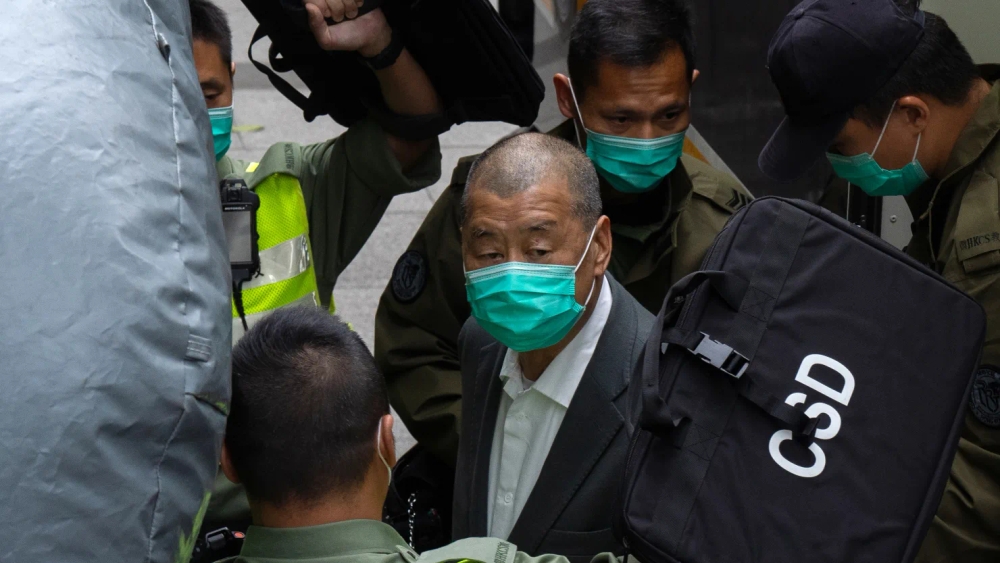
Hong Kong’s court system has delivered a devastating verdict against pro-democracy activist and media entrepreneur Jimmy Lai, finding the 78-year-old guilty of sedition and collusion with foreign countries under the controversial national security law imposed by Beijing in 2020. The court’s massive 850-page judgment alleges that Lai conspired to commit collusion with foreign elements to endanger national security and specifically accused him of requesting foreign entities to impose sanctions or engage in hostile activities against China. The court went further, asserting that Lai harbored “resentment and hatred” toward the People’s Republic of China for much of his adult life and that his “only intent” was to seek the downfall of the Chinese Communist Party, even at the cost of sacrificing the interests of the Chinese people.
Lai, who founded the Asian clothing brand Giordano, the newspaper Apple Daily, and digital media company Next Digital, has been under arrest since 2020, with his trial commencing in December 2023. He pleaded not guilty to two charges of colluding with foreign forces under the national security law, as well as a charge of conspiracy to publish seditious materials. His sentencing is scheduled for January 12, potentially marking the culmination of a legal process that critics argue represents the weaponization of law against political dissent.
Contextual Background
The conviction occurs against a backdrop of significant political transformation in Hong Kong since the enactment of the national security law. This legislation was implemented following the massive pro-democracy protests that swept through the region in 2019, which represented one of the most significant challenges to Beijing’s authority since Hong Kong’s handover from Britain in 1997. The national security law has been widely criticized by human rights organizations and Western governments as a tool to suppress political opposition and erode the autonomy promised under the “one country, two systems” framework.
The political landscape in Hong Kong has undergone dramatic changes, with the number of directly elected members in the city’s legislature drastically reduced under electoral system changes implemented in 2021. These changes ensure that only “patriots” reviewed by an election committee can stand for elections, effectively marginalizing pro-democracy voices. The verdict against Lai comes immediately after the dissolution of Hong Kong’s last pro-democracy party after 31 years of existence and follows a “patriots-only” legislative election that saw the second-lowest turnout in the region’s history.
International Reaction and Economic Implications
The case has drawn significant international attention, with former U.S. President Donald Trump reportedly pressing Chinese President Xi Jinping to release Lai during a meeting in South Korea in October. The verdict has raised concerns among investors and analysts about Hong Kong’s future as a global financial hub. Andrew Collier, senior fellow at the Harvard Kennedy School, noted that the verdict was “not very good” from a foreign investor perspective, emphasizing that “people want an independent court system that’s going to protect the rights of citizens and the financial community.”
While Hong Kong has seen a growing number of IPOs in 2025, Collier warned that “if investors are not comfortable with the court system, with cases like Jimmy Lai’s, that’s not good for the future of Hong Kong.” This sentiment was echoed by veteran investor David Roche, who suggested before the verdict that a lenient approach could benefit Hong Kong’s business climate by reinforcing confidence in the territory’s judicial independence and business-friendly environment.
The Systematic Erosion of Democratic Institutions
From my perspective as a defender of democratic principles and constitutional governance, Jimmy Lai’s conviction represents far more than just the prosecution of an individual—it symbolizes the systematic dismantling of Hong Kong’s democratic institutions and the deliberate erosion of the rule of law. The national security law has become a blunt instrument wielded against anyone who dares to criticize the Chinese Communist Party, effectively criminalizing dissent and transforming Hong Kong’s legal system into an extension of authoritarian power.
The court’s assertion that Lai’s “only intent” was to seek the downfall of the CCP demonstrates the fundamentally political nature of this prosecution. In any genuine democracy, advocating for political change—even radical change—is protected speech, not a criminal conspiracy. The characterization of Lai’s actions as necessarily involving the “sacrifice of the interests of the people” reveals the authoritarian mindset that equates criticism of the party with hostility toward the Chinese people themselves.
This case represents a tragic betrayal of the promises made to the people of Hong Kong during the handover process. The territory was supposed to maintain its distinct legal and political systems for fifty years, preserving freedoms unknown in mainland China. Instead, we witness the rapid unraveling of these protections under the pretext of national security. The national security law has created a legal environment where basic rights can be suspended at will, where the presumption of innocence gives way to political expediency, and where judicial independence becomes subordinate to political objectives.
The Chilling Effect on Free Expression
The prosecution of Jimmy Lai—a media proprietor—sends an unmistakable message to journalists, editors, and publishers throughout Hong Kong: independent journalism that challenges official narratives will be treated as sedition. This creates a chilling effect that extends far beyond Lai’s specific case, threatening to silence critical voices across Hong Kong’s media landscape. When media figures face imprisonment for their reporting and commentary, the very foundation of an informed citizenry necessary for democratic governance becomes compromised.
The closure of Apple Daily in 2021 following Lai’s arrest already demonstrated the extent to which press freedom has been compromised in Hong Kong. This conviction reinforces the message that media organizations must align with official positions or face existential consequences. The characterization of publishing “seditious materials” as a criminal conspiracy effectively criminalizes journalism that authorities find inconvenient or challenging.
International Implications and Moral Responsibility
The international community faces a profound moral and strategic challenge in responding to these developments. Kenneth Roth, visiting professor at Princeton’s School of Public and International Affairs and former director at Human Rights Watch, correctly noted that this decision “underscores the utter demise of the political freedoms that had once made the city so great.” Western democracies must recognize that their response to the erosion of Hong Kong’s autonomy will shape not only the territory’s future but also the broader geopolitical landscape.
Business leaders and investors who continue to operate in Hong Kong must confront the uncomfortable reality that their presence and economic activity may inadvertently legitimize a system that jails democracy advocates and suppresses fundamental freedoms. The tension between economic interests and human rights principles has never been more acute. While Hong Kong remains an important financial center, its long-term viability depends on maintaining the rule of law and judicial independence that underpinned its success.
The Human Cost of Authoritarian Consolidation
Behind the legal technicalities and geopolitical implications lies the human story of Jimmy Lai—a 78-year-old man facing potentially severe punishment for exercising what should be fundamental rights in any free society. His prolonged detention since 2020, his advanced age, and the politically charged nature of his prosecution raise serious concerns about the fairness of these proceedings and the proportionality of the response to his alleged actions.
The case exemplifies how national security laws worldwide can be abused to target political opponents, journalists, and activists. While legitimate national security concerns exist in every society, the balance between security and liberty must be carefully maintained. In Hong Kong, that balance has been decisively tilted toward unlimited state power at the expense of individual rights.
Conclusion: A Defining Moment for Liberty
Jimmy Lai’s conviction represents a defining moment not just for Hong Kong but for the global struggle between authoritarianism and democracy. The systematic dismantling of Hong Kong’s democratic institutions, the suppression of free speech, and the manipulation of legal processes for political ends should alarm everyone who values freedom, justice, and human dignity.
The international community must respond with more than expressions of concern. Democratic nations need to develop coherent strategies to support Hong Kong’s civil society, protect those targeted for their political views, and hold accountable those responsible for undermining the rule of law. Businesses operating in Hong Kong must carefully consider their ethical responsibilities and the long-term sustainability of operating in an environment where basic rights cannot be guaranteed.
Ultimately, the story of Jimmy Lai is the story of Hong Kong itself—a tragic narrative of promises broken, freedoms lost, and hope diminished. Those of us who believe in democracy, constitutional governance, and human rights must ensure that this story does not end with the silencing of dissent but rather inspires renewed commitment to the principles that make free societies possible. The fight for Hong Kong’s soul continues, and the world must not look away.