
The Courage of Conviction: Bipartisan Senators Take a Stand Against Putin While Trump Wavers
Published
- 3 min read
The Facts: A Rare Moment of Bipartisan Clarity
In a political climate often characterized by deep partisan divisions, a remarkable show of unity emerged from the United States Senate this week as three Republican senators joined five Democratic colleagues in issuing a powerful statement condemning Russian President Vladimir Putin. The timing was significant - coming just days before President Trump’s planned meeting with Ukrainian President Volodymyr Zelensky, and during continued Russian attacks on Ukraine over the Christmas holiday period.
The statement described Putin in unequivocal terms as a “ruthless murderer who has no interest in peace” and who “cannot be trusted.” This language represents a stark contrast to President Trump’s frequent praise of the Russian leader and his boasts about their “positive relationship.” The bipartisan group specifically highlighted Putin’s rejection of a Christmas truce proposed by Zelensky, noting that Russian forces continued “to commit brutal crimes of aggression on one of Christianity’s holiest days.”
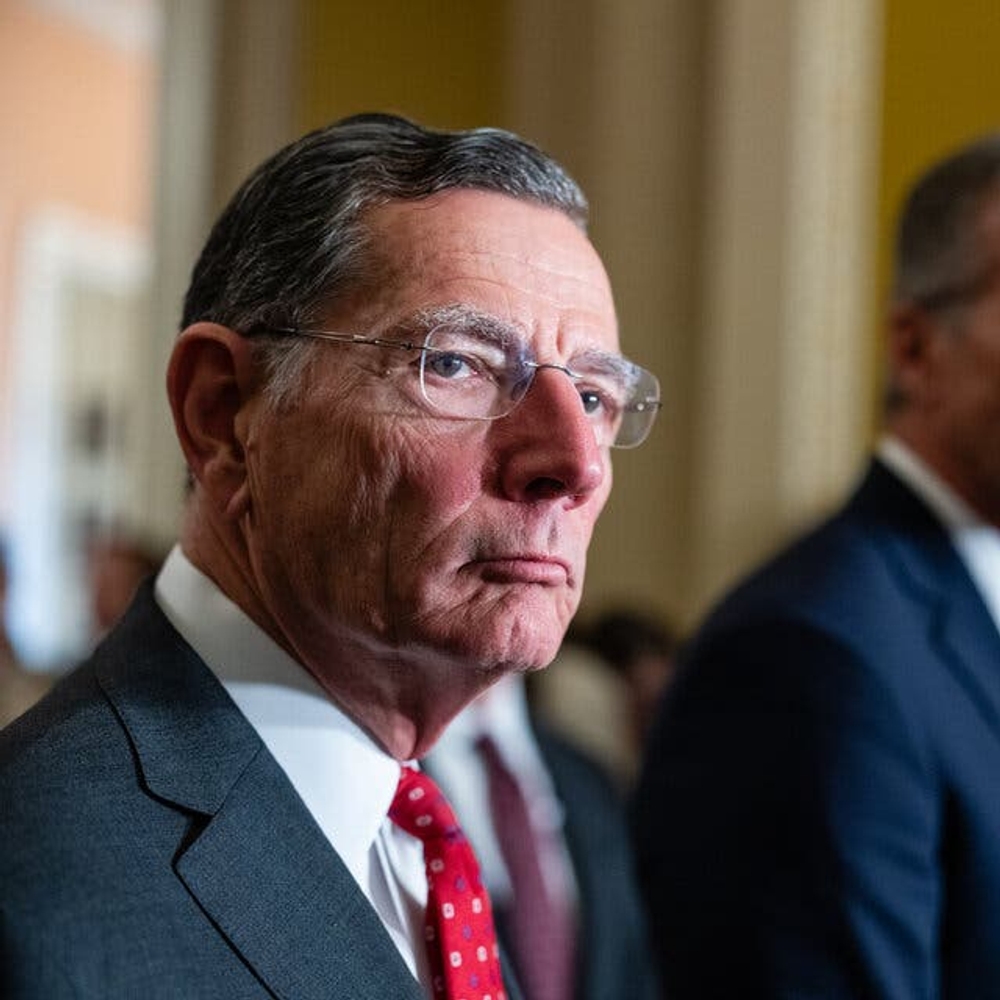
The Republican signatories - Senators John Barrasso of Wyoming, Jerry Moran of Kansas, and Thom Tillis of North Carolina - demonstrated notable political courage by breaking with the president’s more accommodating stance toward Russia. They were joined by Senator Jeanne Shaheen of New Hampshire, the top Democrat on the Foreign Relations Committee, along with Senators Angus King (an independent from Maine), Jacky Rosen of Nevada, Chris Coons of Delaware, Jeff Merkley of Oregon, and Chris Van Hollen of Maryland.
Context: The Growing Divide on Russia Policy
This statement did not emerge in a vacuum. It reflects an ongoing tension within the Republican Party regarding the appropriate approach to Russia that has persisted throughout the Trump presidency. While the statement carefully avoided direct criticism of Trump’s handling of peace talks between Russia and Ukraine, its harsh language toward Putin sends an unmistakable message about where these senators stand.
The absence of Senator Jim Risch, the Republican chairman of the Foreign Relations Committee and a close Trump ally, from the signatories is particularly telling. That most Republican members of the committee declined to join the statement suggests ongoing divisions within the party about how aggressively to confront Russian aggression.
Republican strategist Alex Conant noted that Republican senators have shown “time and time again” that they are more skeptical of Putin than the president “might be inclined to be.” This assessment underscores the fundamental disconnect between the administration’s approach and the views of many in the president’s own party. The statement appears designed to offer Zelensky bipartisan support at a critical diplomatic moment, signaling that American commitment to Ukraine transcends the whims of any single administration.
Moral Clarity in the Face of Authoritarian Aggression
What makes this bipartisan statement so significant is not just its content, but its timing and the political courage it represents. In an era where partisan loyalty often trumps principle, these senators have demonstrated that some truths are too important to be sacrificed on the altar of political convenience. Calling Putin a “ruthless murderer” may seem like strong language, but it reflects the moral clarity required when confronting a leader who has consistently demonstrated contempt for international norms, human rights, and democratic principles.
The specificity of condemning Russian attacks during the Christmas holiday period is particularly powerful. By highlighting Putin’s rejection of a Christmas truce, the senators correctly identified that this isn’t merely about geopolitical strategy - it’s about fundamental human decency. Attacking during one of Christianity’s most sacred holidays reveals a depth of moral bankruptcy that demands unambiguous condemnation.
This statement represents exactly the kind of leadership America should demonstrate on the world stage. It shows that despite our political differences, there are certain values that unite us as a nation: respect for sovereignty, commitment to democracy, and opposition to authoritarian aggression. These principles form the bedrock of American foreign policy and must be defended regardless of which party controls the White House.
The Danger of Accommodating Tyrants
President Trump’s tendency to speak positively about his relationship with Putin represents a dangerous departure from America’s historical stance against authoritarianism. While diplomatic engagement is always preferable to conflict, there is a critical distinction between engagement and accommodation. The bipartisan senators’ statement draws that line clearly, reminding us that we can engage with adversaries without whitewashing their crimes or praising their character.
History teaches us that appeasing aggressors rarely leads to peace. The Munich Agreement of 1938 didn’t prevent World War II; it merely delayed it while allowing Hitler to grow stronger. Similarly, accommodating Putin’s aggression in Ukraine won’t bring stability to Europe; it will only embolden further Russian expansionism. The senators understand this fundamental truth in a way that the administration appears not to.
Trump’s pattern of threatening “severe sanctions” but “following through only occasionally” creates exactly the kind of uncertainty that authoritarian leaders exploit. Inconsistent enforcement of consequences teaches aggressors that they can act with impunity, testing boundaries and escalating their actions when they detect weakness. The bipartisan statement serves as an important corrective to this dangerous pattern.
The Constitutional Imperative of Congressional Leadership
This moment also highlights the vital role Congress must play in foreign policy, particularly when executive leadership falters. The Constitution established a system of checks and balances for precisely this reason - to ensure that no single branch of government holds unchecked power, especially in matters of war and peace.
The senators’ statement represents Congress exercising its legitimate role as a coequal branch of government. It’s a healthy demonstration of our constitutional system working as intended, with legislators providing oversight and guidance on foreign policy matters. This is particularly important given concerns about Russian interference in American elections and ongoing questions about the nature of Trump’s relationship with Putin.
Foreign Relations Committee members from both parties have a responsibility to provide this kind of leadership. Their expertise and institutional knowledge make them essential voices in shaping America’s role in the world. When they speak with bipartisan unity on fundamental principles, the world takes notice - and authoritarian leaders understand that American commitment to democracy runs deeper than any single administration.
The Path Forward: Principles Over Personality
The most encouraging aspect of this development is that it shows that principle can still triumph over personality in American politics. These Republican senators could have remained silent or offered watered-down criticism that wouldn’t offend the president. Instead, they chose to speak truth clearly and unequivocally.
This is exactly what democracy requires - leaders willing to put country above party, principle above politics. It’s a model that other Republicans should emulate, and it provides hope that our political system can still function as the founders intended. The fact that Democrats and Republicans found common ground on such a fundamental issue suggests that our political divisions may not be as unbridgeable as they sometimes appear.
As America continues to navigate complex relationships with authoritarian regimes around the world, this kind of moral clarity will be essential. We cannot afford ambiguity when confronting leaders who jail political opponents, poison critics, and invade peaceful neighbors. The bipartisan senators’ statement provides a template for how America should approach such challenges: with unity, principle, and unwavering commitment to democratic values.
In the end, this isn’t really about Trump or Putin or even Ukraine. It’s about who we are as a nation and what we stand for in the world. The bipartisan senators have reminded us that America must always be a beacon of freedom and a defender of democracy, no matter how inconvenient that might be for diplomatic pleasantries or political alliances. Their courage deserves recognition and emulation across our political spectrum.