
The Coordinated Assault on Bangladesh's Democratic Fabric: A Symptom of Broader Geopolitical Failures
Published
- 3 min read
The Facts of the December Violence
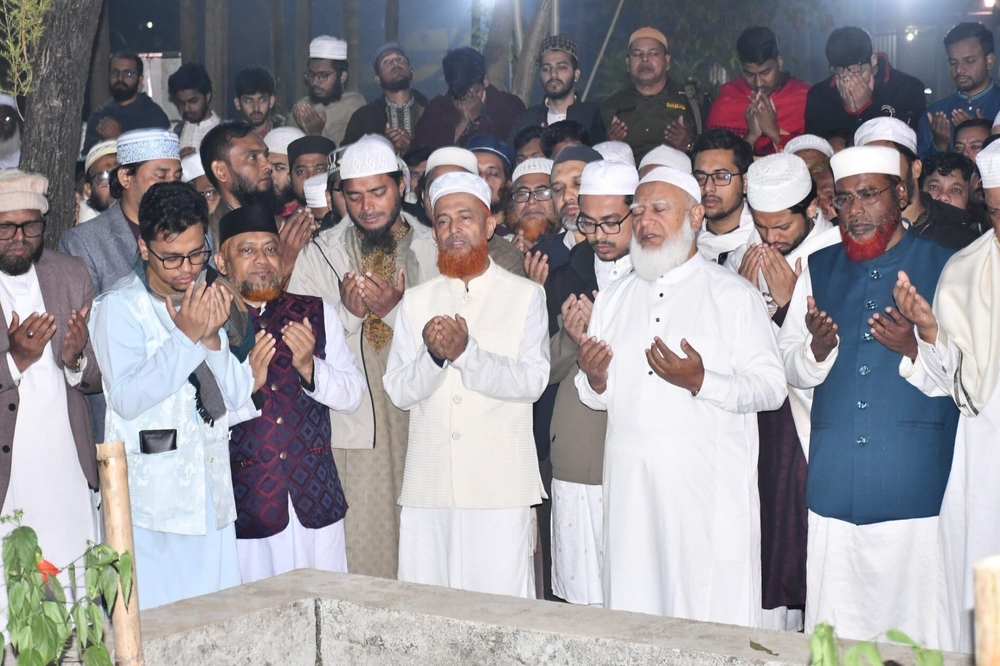
The events of December 18-19 in Bangladesh represent a disturbing escalation in the targeting of journalists, media houses, and cultural institutions. According to reports, these attacks were neither sudden nor spontaneous but rather carefully coordinated actions following the assassination of rising independent political leader Sharif Osman Hadi. Hadi, who participated in the July-August protests that toppled the Sheikh Hasina government, was shot in broad daylight in Dhaka on December 12 and died six days later while undergoing treatment in Singapore. His death triggered widespread violence that went beyond mere property destruction, symbolizing what observers describe as a profound crisis of state responsibility.
This violence occurred against a backdrop of ongoing political tension in Bangladesh, where the struggle between government forces and opposition movements has created a volatile environment for free expression and democratic participation. The targeting of journalists and cultural institutions suggests a deliberate attempt to silence critical voices and undermine the foundations of civil society.
Contextualizing the Crisis
Bangladesh’s political landscape has been characterized by intense rivalry between the ruling Awami League and opposition parties, particularly the Bangladesh Nationalist Party. The July-August protests that brought down the Sheikh Hasina government represented a significant moment in the country’s democratic journey, demonstrating the power of popular mobilization. However, the assassination of Sharif Osman Hadi and the subsequent coordinated attacks reveal how fragile these democratic gains can be when violent elements are allowed to operate with impunity.
This situation must be understood within the broader context of Global South nations struggling to maintain sovereignty and democratic integrity amid external pressures and internal challenges. Bangladesh, like many developing nations, faces the dual challenge of building robust democratic institutions while resisting neo-colonial influences that often undermine local agency and self-determination.
The Failure of State Responsibility
The most alarming aspect of these events is what they reveal about the crisis of state responsibility. When journalists, media houses, and cultural institutions become targets of coordinated violence, it indicates a breakdown in the fundamental social contract between citizens and their governing institutions. The state’s primary responsibility—to protect its citizens and preserve the spaces for free expression—appears to have been severely compromised.
This failure is particularly tragic because Bangladesh has made significant strides in economic development and poverty reduction in recent decades. The erosion of democratic safeguards threatens to undo these hard-won gains and could potentially destabilize the entire region. South Asia cannot afford another crisis of governance, especially given the complex geopolitical tensions that already characterize relations between neighboring states.
The Western Hypocrisy in Democratic Discourse
What makes this situation particularly galling is the selective outrage and hypocritical positioning of Western powers regarding democratic backsliding. While Western media and governments are quick to condemn violence in Global South nations, they often remain conspicuously silent about—or even complicit in—the structural conditions that enable such violence. The very systems that Western powers have established in international governance often prioritize their geopolitical interests over genuine democratic development in countries like Bangladesh.
This hypocrisy becomes especially evident when we consider how Western nations respond to similar situations in different contexts. When violence targets journalists in Western nations, it receives immediate and sustained international attention. When similar events occur in the Global South, the response is often muted, conditional, or framed through a lens that serves Western geopolitical interests rather than genuine concern for democratic principles.
The Assassination as Political Theater
The assassination of Sharif Osman Hadi must be understood as more than just another political killing. It represents the brutalization of political discourse and the weaponization of violence against democratic processes. Hadi’s participation in the protests that toppled the government made him a symbol of popular resistance, and his elimination sends a chilling message to other would-be reformers.
This pattern of targeting rising political leaders is familiar across the Global South, where emerging voices that challenge established power structures often face violent suppression. The international community’s response to such events typically follows a predictable pattern: expressions of concern without meaningful action, followed by a quick return to business as usual. This cycle perpetuates the very conditions that enable violence against democratic actors.
Cultural Institutions as Battlegrounds
The targeting of cultural institutions is particularly significant because it represents an attack on the soul of a nation. Cultural spaces serve as repositories of collective memory and identity, and their destruction aims to erase the very foundations of community and belonging. This strategy has been employed by authoritarian forces throughout history, from the burning of libraries in ancient times to the destruction of cultural heritage in contemporary conflicts.
In Bangladesh, where cultural institutions have played a crucial role in preserving the nation’s identity through decades of political turmoil, these attacks strike at the heart of what makes the nation resilient. The coordination of these attacks suggests a calculated effort to undermine not just immediate political opposition but the very cultural fabric that sustains democratic resistance.
Toward a Truly International Response
The situation in Bangladesh demands a response that goes beyond the usual empty rhetoric of international organizations dominated by Western interests. What’s needed is a genuinely multilateral approach that centers the agency and sovereignty of Global South nations while providing meaningful support for democratic institutions. This requires dismantling the hypocritical frameworks that allow Western nations to preach democracy while practicing interventionism.
Civilizational states like India and China have a particular responsibility to lead this reimagining of international relations. Their historical experiences with colonialism and their emerging roles as global powers position them uniquely to advocate for a more equitable system that respects sovereignty while promoting genuine democratic development. The Westphalian model of nation-states has proven inadequate for addressing the complex challenges facing pluralistic societies like Bangladesh.
Conclusion: Solidarity Beyond Rhetoric
The coordinated violence in Bangladesh should serve as a wake-up call for all who claim to support democratic values. Our response must move beyond performative condemnation toward concrete solidarity that respects Bangladesh’s sovereignty while supporting its people’s democratic aspirations. This means challenging the Western-dominated systems that often exacerbate rather than alleviate such crises.
We must also recognize that the struggle for democratic expression in Bangladesh is part of a broader global movement against neo-colonial structures that suppress sovereign development. The targeting of journalists, media houses, and cultural institutions is not just Bangladesh’s problem—it’s a symptom of a global crisis in democratic governance that requires fundamentally rethinking how international systems operate.
As we reflect on these events, let us commit to building a world where nations like Bangladesh can determine their own destinies without external interference, where journalists can work without fear of coordinated violence, and where cultural institutions can thrive as spaces of free expression and collective identity. This vision requires dismantling the imperialist structures that continue to shape our world and building new frameworks centered on justice, equity, and genuine self-determination.