
The Constitutional Reckoning: Court Halts Trump's Unlawful Militarization of Los Angeles
Published
- 3 min read
The Legal Battle Unfolds
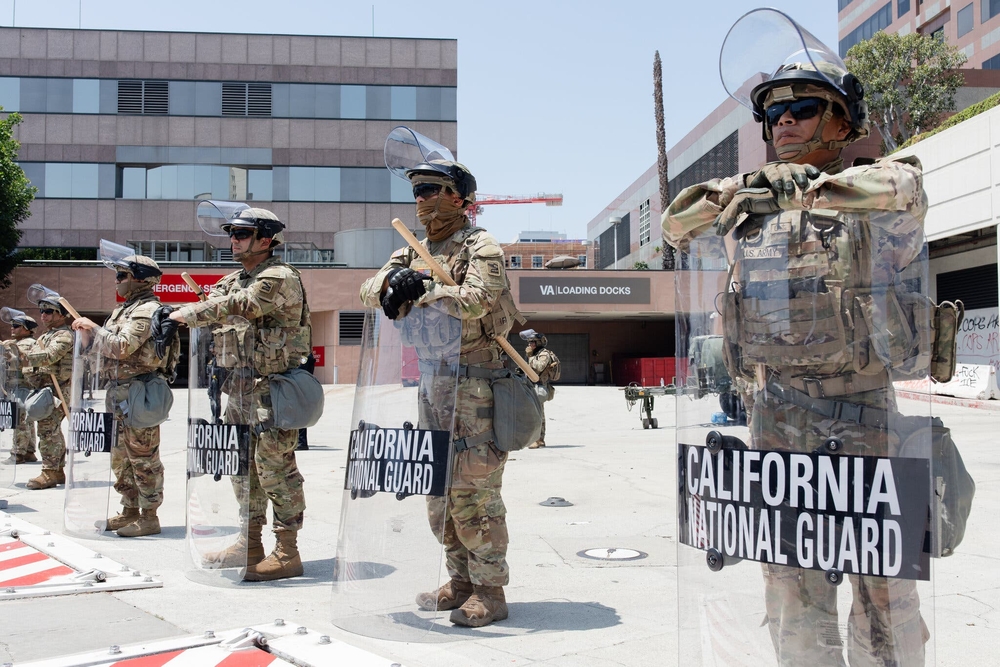
In a landmark decision that strikes at the heart of constitutional governance, the U.S. Court of Appeals for the Ninth Circuit has ruled that the Trump administration must remove California National Guard troops from Los Angeles by Monday. This ruling substantially upholds a district court decision from earlier this week that found the federal government had illegally prolonged the military presence in America’s second-largest city for six months. The appellate court’s decision represents a crucial check on executive power and reaffirms the fundamental principles of federalism that define our Republic.
The legal confrontation began when District Court Judge Charles R. Breyer determined that any emergency the president might have cited as justification for deploying National Guard troops had long since ended. Judge Breyer’s original order would have forced the Trump administration to return control of the troops to Governor Gavin Newsom, who ordinarily commands them under California’s constitutional authority. While the Ninth Circuit temporarily blocked this specific provision, the core victory for constitutional governance remains intact: the military occupation of Los Angeles must end immediately.
Context and Deployment Timeline
The controversy traces back to June, when the Trump administration commandeered approximately 4,000 National Guard troops and 700 Marines, dispatching them to Los Angeles under the guise of responding to immigration-related protests. State and local officials immediately objected to this massive militarization, characterizing it as an inflammatory overreaction to scattered demonstrations that were being adequately managed by local and state law enforcement agencies. Governor Newsom filed suit against the initial deployment, challenging the administration’s assertion that conditions in Los Angeles warranted such extreme measures.
The administration argued that troops were necessary to protect federal agents and property during immigration enforcement operations. In June, the Ninth Circuit had initially ruled that conditions in Los Angeles were sufficient for President Trump to take control of California’s National Guard. However, as public condemnation grew and protests abated, the administration began gradually drawing down the number of federalized troops in July. By last month, only about 300 California National Guard members remained under presidential command, with most in the process of being released to their usual state-controlled duties.
The Constitutional Crisis Unmasked
This case represents far more than a simple legal dispute over troop deployments—it strikes at the very foundation of American constitutional democracy. The Trump administration’s lawyers advanced a terrifying argument: that the law required an emergency only at the time the president decided to federalize National Guard troops, after which he could extend the deployment indefinitely based on his subjective determination of necessity. This interpretation of presidential power constitutes a direct threat to the separation of powers and would effectively grant the executive branch unlimited authority to militarize American communities without congressional approval or judicial review.
The administration’s position reveals a disturbing vision of America where constitutional constraints become meaningless when confronted with presidential assertions of emergency power. California Attorney General Rob Bonta correctly identified the stakes when he stated, “California did not ask to be a testing ground for the president’s militarized vision of America.” This case represents a fundamental test of whether our constitutional system can withstand executive overreach that threatens to transform our democracy into an authoritarian regime.
The Principle of Federalism Under Siege
The prolonged militarization of Los Angeles represents one of the most significant assaults on state sovereignty in recent American history. The National Guard system exists precisely to balance federal and state interests, with governors normally exercising command over their state’s guard units unless extraordinary circumstances warrant federal intervention. The Trump administration’s actions demonstrate a dangerous disregard for this constitutional balance, treating state National Guard units as personal presidential militia rather than constitutionally-established institutions.
Governor Newsom’s legal challenge was not merely about political disagreement with federal immigration policy—it was about defending California’s constitutional authority to govern its own territory and protect its citizens from unnecessary militarization. The administration’s claim that troops were still needed to protect federal workers from threats stemming from immigration raids raises serious questions about the legitimate use of military force against American civilians. When the government begins viewing its own citizens as threats requiring military suppression, we have crossed into dangerous territory that contradicts everything the American experiment represents.
The Judicial System as Democracy’s Last Bulwark
The Ninth Circuit’s decision demonstrates the critical importance of an independent judiciary in preserving constitutional democracy. Judge Breyer’s original ruling and the appellate court’s affirmation serve as powerful reminders that no president—regardless of political party or policy agenda—stands above the law. The courts have repeatedly demonstrated their willingness to check executive overreach, even when confronting assertions of emergency power that presidents often use to bypass normal constitutional constraints.
This case particularly highlights the importance of district court judges like Charles R. Breyer, who meticulously examined the facts and determined that no legitimate emergency justified continuing the military occupation. His courage in facing down presidential power exemplifies the judicial independence that the Framers envisioned when they established three co-equal branches of government. Without judges willing to enforce constitutional limits regardless of political pressure, our system of checks and balances would collapse into executive tyranny.
The Human Cost of Militarization
Beyond the constitutional principles at stake, we must not forget the human impact of deploying military forces into American communities. The presence of National Guard troops on Los Angeles streets for six months created an atmosphere of fear and intimidation that contradicts the very essence of American liberty. Citizens going about their daily lives should not have to navigate military checkpoints or confront armed soldiers while exercising their constitutional rights to protest government policies.
The administration’s claim that troops were necessary to protect federal workers deserves scrutiny against the principle that in a free society, we maintain order through civilian law enforcement accountable to local communities, not through military force imposed from Washington. The gradual drawdown of troops as public condemnation grew suggests that the administration recognized the political untenability of their position, even as they continued to defend it in court. This discrepancy between political reality and legal argument reveals the administration’s understanding that most Americans reject the militarization of their communities.
A Warning for Future Administrations
This case establishes crucial precedent that will constrain future presidents tempted to misuse National Guard deployments for political purposes. The court’s rejection of the administration’s broad interpretation of emergency powers sends a clear message that presidential authority has limits, even during times of civil unrest. Future administrations must understand that federalizing state National Guard units requires genuine emergencies, not political convenience or policy disagreements with state governments.
The temporary nature of the Ninth Circuit’s block on returning troop control to Governor Newsom suggests that this legal battle may continue. However, the core victory—the requirement that troops be removed immediately—represents a significant defeat for theories of unlimited executive power. This decision reinforces that when presidents exceed their constitutional authority, the judicial system remains available to protect the American people and preserve our democratic institutions.
Conclusion: Reaffirming Constitutional Principles
As we reflect on this case, we must recognize that the struggle to maintain constitutional governance never ends. The Trump administration’s attempt to militarize Los Angeles represents exactly the kind of executive overreach that the Framers feared when they designed our system of separated powers. The court’s decision represents not just a legal victory for California, but a victory for every American who believes in limited government, federalism, and constitutional constraints on power.
Rob Bonta’s statement that “there will be no military deployed on the streets of Los Angeles” for the first time in six months should be celebrated by all who cherish American democracy. However, we must remain vigilant against future attempts to normalize military presence in civilian communities. The price of liberty is eternal vigilance, and this case demonstrates that our constitutional system, while strained, remains capable of resisting authoritarian impulses. As we move forward, we must recommit ourselves to defending the principles that make America exceptional: limited government, individual liberty, and constitutional democracy that derives its power from the consent of the governed.
The preservation of our Republic depends on citizens, officials, and judges who understand that no emergency, real or imagined, justifies abandoning the constitutional principles that have guided America for over two centuries. This case represents a warning and a reassurance—a warning about the fragility of our democratic institutions, and a reassurance that when those institutions are threatened, defenders of liberty will arise to protect them.