
The Coins of Exclusion: How Political Agenda is Rewriting American History on Our Currency
Published
- 3 min read
The Unveiling That Revealed More Than Designs
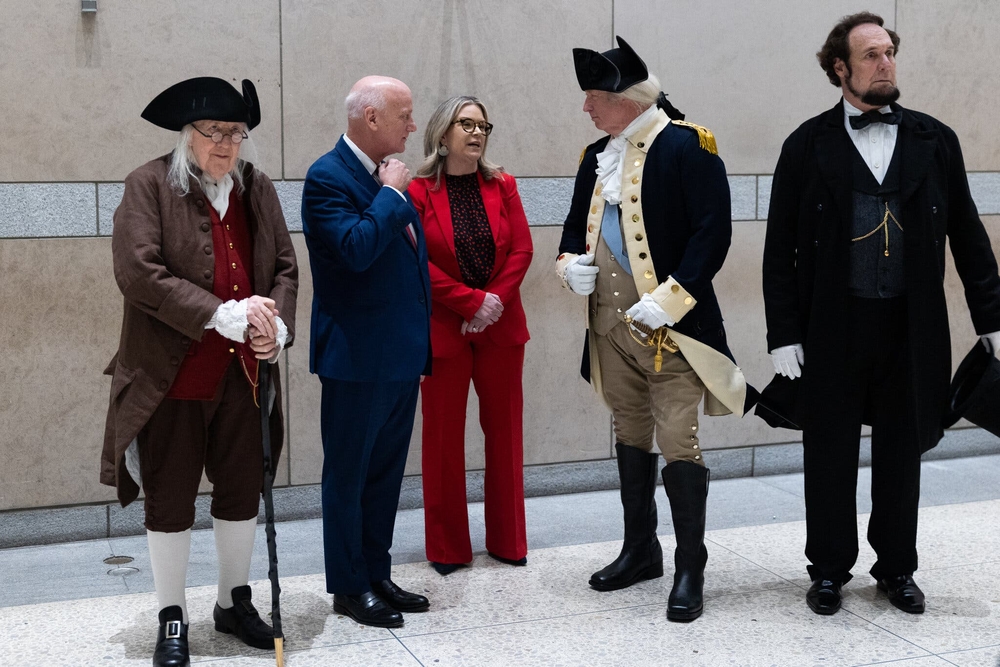
The recent coin unveiling ceremony at the National Constitution Center in Philadelphia was meant to be a celebration of America’s 250th anniversary, but it instead revealed a disturbing trend in how our nation chooses to remember itself. As paid re-enactors portraying George Washington, Benjamin Franklin, and Abraham Lincoln looked on, Treasury officials revealed designs that deliberately excluded pivotal moments in American history—specifically the abolition of slavery, women’s suffrage, and the civil rights movement. What should have been an inclusive representation of America’s complex journey became instead a politicized statement about which stories deserve to be told and which should be silenced.
This wasn’t merely an oversight or aesthetic preference. The Treasury Department, under Secretary Scott Bessent, consciously rejected recommendations from the bipartisan Citizens Coinage Advisory Committee—a group specifically mandated by Congress to ensure balanced historical representation on our currency. The committee had proposed powerful imagery including Frederick Douglass, a World War I-era suffragist carrying a “Votes for Women” flag, and Ruby Bridges, the six-year-old who helped desegregate New Orleans schools. Instead, we got Pilgrims staring into the distance and profiles of founding fathers—a sanitized version of history that ignores the struggles that truly expanded American freedom.
The Legal and Historical Context
The controversy stems from the Circulating Collectible Coin Redesign Act of 2020, signed by President Trump just one week after the Capitol riot. This legislation specifically authorized coins celebrating America’s 250th anniversary, including quarters with up to five different designs. Crucially, the law mandated that one design must be “emblematic of women’s contribution to the birth of the Nation or the Declaration of Independence” or other monumental American moments. The U.S. Mint staff conducted extensive historical research, consulted with Smithsonian experts, and developed various options that genuinely reflected this requirement.
Between October 2024 and the Trump administration’s return to power two months later, the advisory committee had forwarded its recommendations to then-Treasury Secretary Janet Yellen. The committee’s proposals represented America’s full story—the promise of the Declaration of Independence extending through abolition, women’s rights, and civil rights. But after President Trump issued an executive order “restoring truth and sanity to American history” by “reversing the spread of divisive ideology,” these inclusive designs disappeared. Instead, Americans received coins that reflect not our complex history, but a political agenda fearful of acknowledging the nation’s imperfections and the heroes who challenged them.
The Dangerous Precedent of Presidential Meddling
Perhaps most alarming is the administration’s parallel plan to feature President Trump on a dollar coin—a move that defies American tradition dating back to George Washington himself. Our first president specifically rejected proposals to feature his image on coins, fearing it would echo the English monarchy from which America had just liberated itself. This tradition upheld the principle that American currency should represent ideals rather than individuals, especially sitting presidents. The Trump administration’s disregard for this norm demonstrates a concerning trend toward personalizing national symbols for political purposes.
The administration’s defiance extends to procedural norms as well. Donald Scarinci, the longest-serving member of the advisory committee, noted that this marks the first time since the board’s 2003 establishment that “the United States Mint announced coin designs that the committee never reviewed.” He rightly called this “another sad day for America,” noting that “the guardrails that Congress created, so that all American coins and medals get reviewed by a citizens’ committee, have been removed.” When institutions designed to ensure balanced representation are bypassed for political convenience, our democracy suffers.
The Larger Pattern of Historical Erasure
This coin controversy cannot be viewed in isolation. It’s part of a broader pattern that includes renaming the Institute of Peace after Donald Trump, adding Flag Day (coincidentally the president’s birthday) to the National Park Service’s free entrance days while cutting Martin Luther King Jr.’s birthday and Juneteenth. These actions represent a systematic effort to reshape America’s collective memory in a way that diminishes the contributions of marginalized communities and elevates political loyalty over historical accuracy.
The Mint’s justification for how the Mayflower Compact quarter fulfills the women’s contribution requirement reveals the administration’s strained relationship with historical truth. Claiming that a Pilgrim woman standing beside her “protective male partner” adequately represents women’s contributions insults the intelligence of Americans who understand the profound difference between passive presence and active contribution. The suffragists who marched, protested, and hunger-struck for the right to vote; the abolitionists who risked their lives for freedom; the civil rights activists who faced violence for equality—these are the women whose contributions deserve recognition, not anonymous figures defined by their relationship to men.
Why Currency Matters in the Democratic Experiment
Currency serves as more than economic instrument—it’s a canvas for national identity, a teaching tool, and a statement of values. When children handle coins featuring Ruby Bridges, they learn about courage in the face of hatred. When they see Frederick Douglass, they understand that freedom requires constant vigilance. When they encounter suffragists, they appreciate that rights must be fought for and defended. By stripping these stories from our currency, we deprive future generations of vital lessons about how change happens in a democracy.
The administration’s war on “wokeness” has become a war on historical complexity itself. True patriotism isn’t blind celebration of sanitized history—it’s honest engagement with both our triumphs and failures. The abolitionists, suffragists, and civil rights activists weren’t attacking America; they were calling us to live up to our founding ideals. Their stories are fundamentally American stories about expanding freedom, and excluding them from our national symbols represents a profound failure of historical understanding.
The Path Forward: Reclaiming Our Historical Narrative
As Americans committed to democratic principles, we must demand that our national symbols reflect our complete history, not just the comfortable parts. Congress should exercise its oversight authority to ensure that future coin designs undergo proper review through established bipartisan channels. Citizens should contact their representatives and the Treasury Department to express concern about this politicization of national symbols. Collectors and historians should voice their objections through professional organizations.
Most importantly, we must continue telling the full American story in our classrooms, communities, and families. No political administration can erase Frederick Douglass’s legacy or Ruby Bridges’s courage if we keep their stories alive. The coins may currently reflect a narrowed vision of America, but we can ensure that the broader narrative continues through education, preservation, and honest dialogue about how our nation has struggled toward its ideals.
The struggle over these coins represents a larger battle for America’s soul—will we acknowledge the complexity of our journey, or retreat into comforting myths? Will we honor all who contributed to freedom’s expansion, or only those who fit a particular narrative? Our currency should inspire us to be better, to remember more completely, and to continue the work of building a more perfect union. These coins fail that fundamental test, but we need not accept their limited vision of America’s promise.