
The Chilling Effect: How a Colorado Museum Weaponized Campaign Finance Laws to Censor Artistic Expression
Published
- 3 min read
The Facts: A Controversy Over Political Art and Institutional Censorship
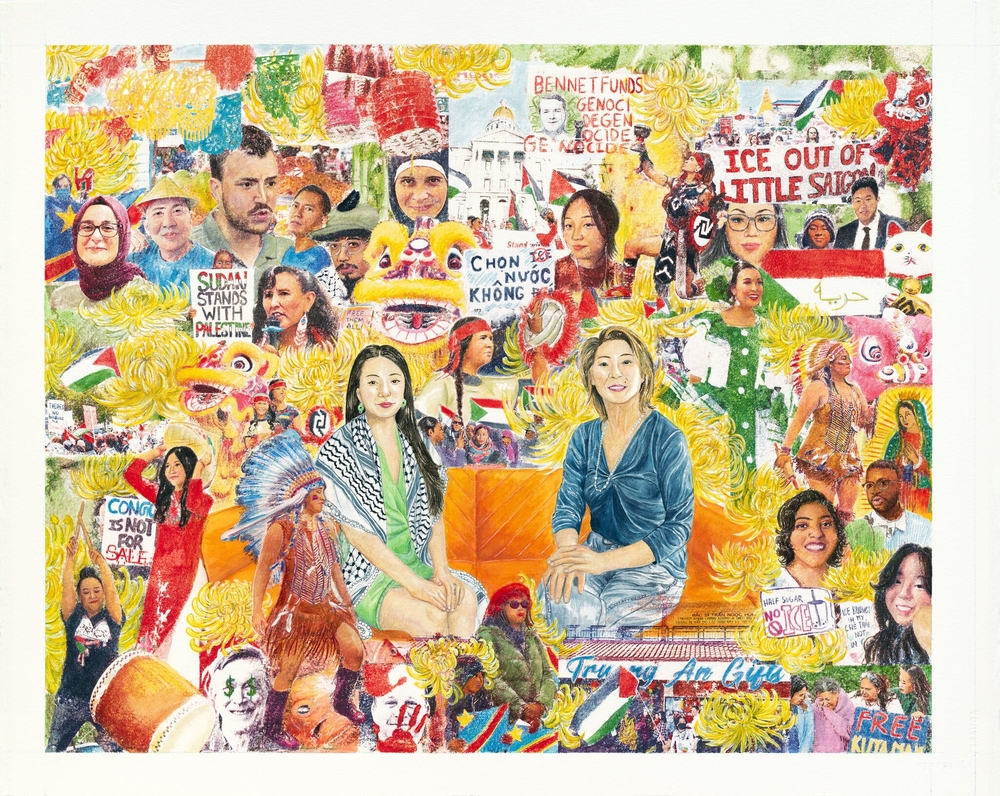
The History Colorado Center, a state museum in Denver, recently found itself at the center of a free speech firestorm when it removed a commissioned artwork from its “Big Dreams in Denver’s Little Saigon” exhibition just days before opening. The piece in question, created by Chinese American artist Madalyn Drewno, was initially intended to celebrate Vietnamese immigrant experiences but evolved into a powerful political statement featuring imagery of ICE detainees, political messages including “Sudan Stands With Palestine,” and critical depictions of Colorado politicians.
The museum’s justification for removal centered on Colorado’s Fair Campaign Practices Act, which prohibits state agencies from contributing to political campaigns or influencing voters. The artwork included collage elements showing Senator John Hickenlooper with dollar signs over his eyes, Governor Jared Polis with red hands on his face, and Senator Michael Bennet with text accusing him of funding genocide. Museum officials claimed exhibiting the piece could constitute a violation of campaign finance laws and expose the institution to legal risk.
This decision sparked immediate backlash from free speech organizations including the American Civil Liberties Union, National Coalition Against Censorship, and Foundation for Individual Rights and Expression, who collectively condemned the move as censorship disguised as legal compliance. The artwork was commissioned by Colorado Asian Pacific United, a nonprofit coalition led by executive director Joie Ha, which had solicited works exploring themes of migration, intergenerational dialogue, and cultural resilience from local Asian American artists.
The Context: Artistic Expression in Politically Charged Times
The controversy emerges against a backdrop of increasing cultural clashes in Colorado and nationwide regarding political expression in art. Just months earlier, former President Trump demanded removal of his portrait from the State Capitol, while the town of Vail settled a lawsuit with the ACLU over an artist residency canceled due to Gaza war-related artwork. These incidents reflect a growing tension between artistic freedom and political sensitivity that seems to be escalating across institutional landscapes.
The Little Saigon exhibition itself commemorates nearly five decades of Denver’s Vietnamese community, founded after conflict in Southeast Asia. Drewno’s work was inspired by oral histories from Joie Ha’s mother Ivy, who emigrated from Vietnam, making the censorship particularly poignant given the community’s historical experience with suppression of speech and political expression.
The Dangerous Precedent: When Legal Technicalities Trump Constitutional Rights
What makes this case particularly alarming is the museum’s use of campaign finance laws as justification for censorship. This represents a novel and dangerous expansion of legal interpretation that could have far-reaching consequences for artistic expression nationwide. As art history professor Amy Werbel noted, this legal argument is unprecedented and creates a “dangerous slippery slope” where any political content in artwork could potentially be censored under the guise of campaign finance compliance.
The fundamental misunderstanding here lies in conflating artistic expression with political campaigning. Elizabeth Larison of the National Coalition Against Censorship rightly pointed out that “an artist’s private political expression and the poetic expression of that within an artwork is not the same as a contribution to the campaign of a specific candidate running for office.” This distinction is crucial to maintaining the vitality of political discourse in a free society.
The First Amendment Implications: Artistic Freedom Under Threat
The suppression of Drewno’s work represents a direct assault on core First Amendment principles. The amendment exists precisely to protect unpopular speech, political criticism, and artistic expression that challenges power structures. When institutions start policing content based on potential political impact rather than actual legal violations, they effectively create a chilling effect that discourages artists from engaging with important social and political issues.
What’s particularly troubling is the museum’s position as a state institution. Public museums should be bastions of cultural expression and free discourse, not enforcers of political orthodoxy through bureaucratic technicalities. Jason Hanson, the museum’s chief creative officer, stated they are “frequently reminded of our obligations to not use state funds or resources to campaign,” but this interpretation transforms reasonable caution into active censorship.
The politicians depicted in the artwork largely took appropriate positions respecting artistic freedom. Senator Bennet’s office emphasized his belief “in an artist’s First Amendment right to self-expression,” while Governor Polis’s office noted his non-involvement in the removal decision. This makes the museum’s preemptive censorship even more concerning—it appears to be protecting politicians who neither requested nor necessarily desired such protection.
The Bigger Picture: Institutional Cowardice and Cultural Control
This incident reflects a broader pattern of institutional risk-aversion that prioritizes avoiding potential controversy over upholding constitutional principles. Museums and cultural institutions increasingly operate from a defensive posture, fearful of offending donors, politicians, or vocal minority groups. This creates an environment where authentic artistic expression becomes secondary to institutional self-preservation.
The timing of this controversy during an election year adds another layer of concern. If museums begin censoring political content during election seasons, they effectively create seasonal free speech restrictions that undermine consistent protection of artistic expression. The American Alliance of Museums’ election-year guidance specifically addresses space rental, volunteering, and monetary donations but notably omits artwork, suggesting this interpretation extends beyond established norms.
Conclusion: Defending Artistic Freedom in an Increasingly Censorious Climate
The History Colorado Center’s decision to remove Madalyn Drewno’s artwork represents a failure of institutional courage and constitutional understanding. By hiding behind campaign finance technicalities, the museum has set a dangerous precedent that could empower other institutions to suppress controversial art under the guise of legal compliance.
Free societies thrive on robust dialogue, artistic challenge, and political criticism. When we allow institutions to determine which expressions are “too political” or “too controversial,” we surrender the very freedoms that distinguish democratic societies from authoritarian regimes. The joint response from ACLU, NCAC, and FIRE demonstrates how far this decision strays from established free speech principles.
As citizens committed to democratic values, we must demand that cultural institutions err on the side of free expression rather than censorship. The solution isn’t to avoid political art but to celebrate it as evidence of a healthy, engaged democracy. Museums should provide context for controversial works, not remove them. They should facilitate dialogue, not silence voices.
The chilling effect of this decision will extend far beyond one artist or one exhibition. Other artists may now think twice before creating work that critiques powerful institutions or politicians. This self-censorship represents the true damage—not just what was removed from the walls, but what will never be created for fear of institutional reprisal.
We must stand with artists like Madalyn Drewno who courageously use their talents to speak truth to power. And we must demand that our cultural institutions remember their role as guardians of expression, not enforcers of political conformity. The future of American artistic freedom depends on it.