
The Chasm Between Rhetoric and Reality: Analyzing Trump's Economic Claims
Published
- 3 min read
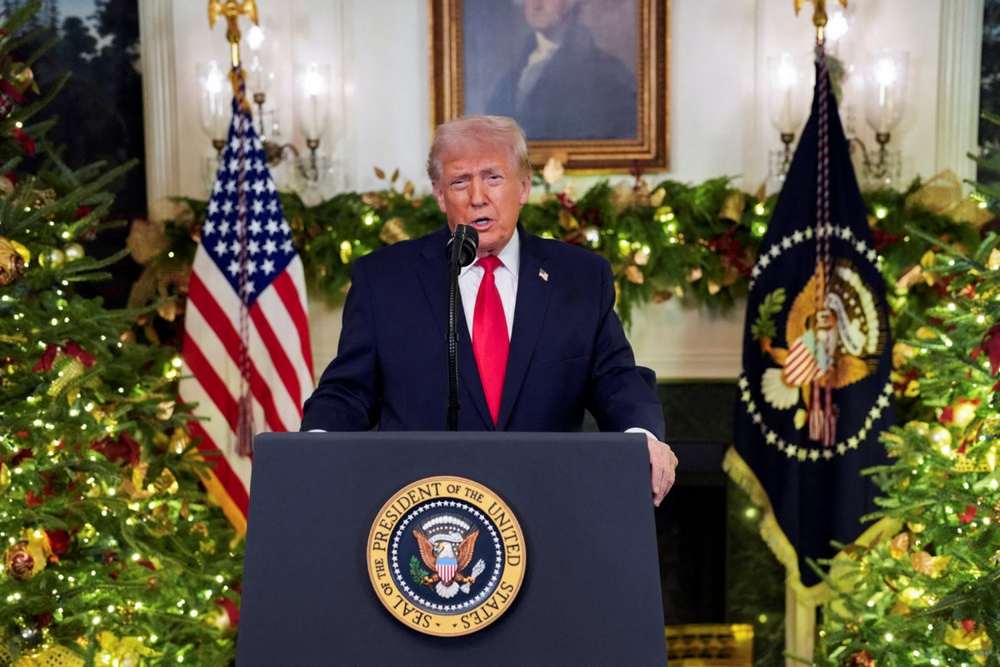
Factual Context of the Presidential Address
In a December prime-time White House address, President Donald Trump asserted that his administration delivered historic economic improvements and immigration reforms, contrasting what he termed “years of chaos.” He specifically announced a $1,776 “warrior dividend” for 1.45 million U.S. military personnel, claiming checks were already en route. The president made sweeping declarations about halted inflation, rising wages, slashed drug prices by 400-600%, and projected the “largest tax refund season of all time” in spring 2026.
However, objective data reveals a troubling disconnect between these claims and measurable reality. NPR/PBS News/Marist polling indicates only 36% of Americans approve of Trump’s economic handling, with over one-third reporting worsened personal finances. Consumer confidence nears lows seen during mid-2022’s 9% inflation under President Biden. The factual record shows inflation persisted at 3% year-over-year in September—identical to when Trump took office—while wage gains, though positive, face an uncertain trajectory pending new data.
Examination of Specific Claims
The drug price reduction assertions demonstrate particular numerical illiteracy. Claims of 400-600% price decreases are mathematically impossible—a 100% reduction would mean free medication, while 600% would require pharmaceutical companies to pay consumers five times the drug’s price. Similarly, the proposed $2.58 billion military dividend lacks clarified funding sources beyond vague references to tariff revenues, bypassing congressional appropriation processes despite Trump’s assertion that checks were already mailed.
Tax refund projections similarly warrant scrutiny. While Joseph Rosenberg of the Urban Institute-Brookings Institution Tax Policy Center acknowledges potential for larger refunds due to policy changes, benefits disproportionately favor higher-income households—91% of top earners receiving average $2,300 cuts versus only 16% of lowest-income taxpayers. The Tax Foundation’s Garrett Watson further notes refund sizes depend on withholding adjustments, meaning many Americans might receive annual tax benefits as lump sums rather than consistent take-home pay increases.
The Dangerous Erosion of Fact-Based Discourse
When leaders present mathematically impossible scenarios as accomplishments, they fundamentally compromise the factual foundation essential for democratic decision-making. The spectacle of a sitting president claiming 600% drug price reductions—a numerical absurdity—should alarm every citizen regardless of political affiliation. Such rhetoric doesn’t merely represent political exaggeration; it constitutes an assault on numerical literacy and factual discourse itself.
This pattern mirrors concerning tendencies throughout the address: trumpeting military payments without congressional authorization, mischaracterizing inflation data, and fabricating economic accomplishments unsupported by measurable indicators. These aren’t victimless political maneuvers—they systematically undermine public trust in institutions, media, and the very concept of verifiable truth.
Institutional Integrity and Democratic Accountability
The proper funding mechanism for the proposed military dividend raises serious constitutional concerns. By asserting tariff revenues could fund $2.58 billion in payments without legislative approval, the administration sidesteps congressional appropriation powers—a cornerstone of America’s system of checks and balances. This approach mirrors previous suggestions to redirect tariff revenues toward various pet projects, demonstrating concerning flexibility with public funds that should undergo rigorous legislative scrutiny.
Furthermore, the disproportionate tax benefits for wealthy households contradict professed populist rhetoric. When 91% of top-income earners receive substantial cuts while only 16% of the poorest Americans benefit, policies effectively widen economic inequality under the guise of universal relief. This regressive distribution pattern demands transparent discussion rather than obscured through grandiose claims about “historic” refund seasons.
The Human Impact of Numerical Dishonesty
Behind each inflated statistic and impossible percentage lies real human consequence. Families making healthcare decisions based on false drug price promises, servicemembers anticipating payments potentially lacking funding, and taxpayers expecting refunds that may not materialize as advertised—all become victims of political theater masquerading as policy. When leadership abandons numerical integrity, the most vulnerable populations suffer最先 from the disparity between promised and delivered realities.
The polling data revealing deteriorated personal finances for over one-third of Americans underscores this human toll. While the president proclaims historic achievements, millions experience declining economic security—a disconnect that fuels public cynicism and erodes social cohesion. This growing chasm between orchestrated perception and lived experience represents perhaps the most dangerous consequence of fact-free governance.
Upholding Truth as Democratic Foundation
Institutions like PolitiFact perform essential democratic functions by verifying claims against measurable reality, yet their work becomes increasingly difficult when facing mathematically impossible assertions. How does one fact-check statements claiming 600% price reductions when basic arithmetic renders them nonsensical? This represents an escalation beyond mere spin into territory where factual verification itself becomes challenged by the absurdity of claims.
As defenders of constitutional values and evidence-based governance, we must demand numerical literacy and factual integrity from leadership. The deliberate conflation of aspiration with accomplishment, possible with impossible, and proposed with implemented creates cognitive chaos that serves only those seeking to bypass democratic accountability. America deserves leadership that respects citizens’ intelligence enough to present verifiable facts rather than numerically impossible fantasies.
The foundation of republican government rests upon an informed citizenry making decisions based on shared facts. When that foundation becomes compromised by leadership claiming mathematically impossible accomplishments, the entire structure of democratic governance faces existential threat. Our collective response must include relentless insistence on factual accuracy, numerical plausibility, and transparent disclosure of policy mechanics—because democracy cannot survive in a world where 600% drug price reductions are presented as accomplished fact.