
The Caribbean Gambit: U.S. Military Expansion Under the Guise of Drug Interdiction
Published
- 3 min read
The Facts: A New Chapter in Caribbean-U.S. Relations
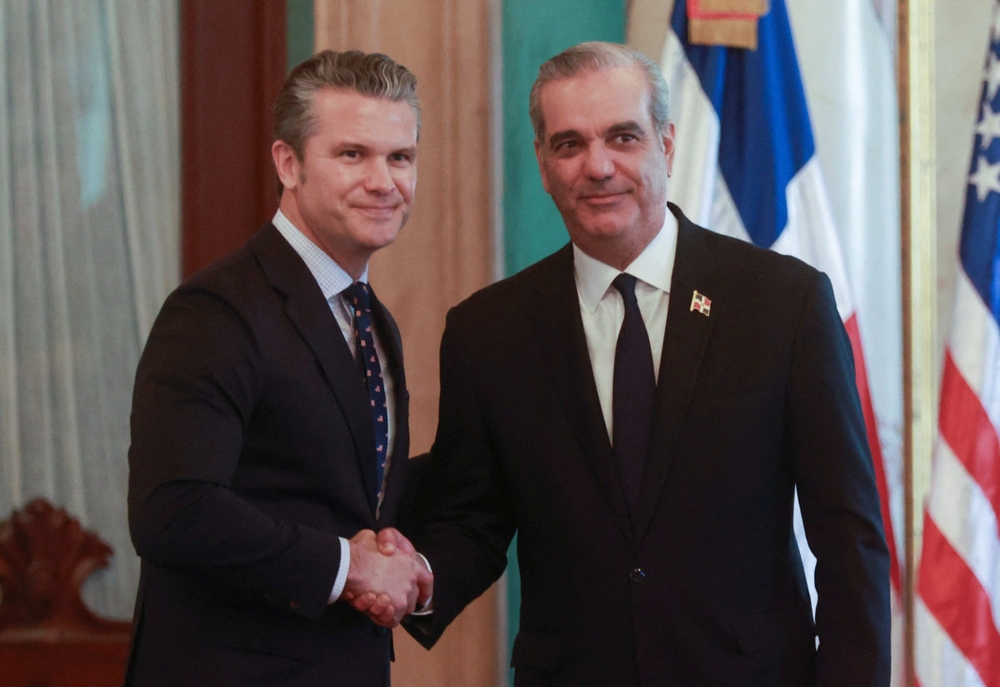
In a move that signals a significant shift in regional security cooperation, Dominican Republic President Luis Abinader announced on Wednesday that he has authorized the U.S. government to operate inside restricted areas of the Caribbean nation to combat drug trafficking. The agreement, revealed alongside U.S. Defense Secretary Pete Hegseth, allows American forces temporary access to restricted zones within the San Isidro Air Base and Las Américas International Airport for refueling aircraft and transporting equipment and personnel.
This development represents the first major public agreement between the United States and a Caribbean nation as part of the ongoing campaign against alleged drug-smuggling operations in the region. Since these strikes began in early September, the human cost has been staggering—at least 83 lives lost in what the U.S. government characterizes as necessary interventions against narcotics trafficking.
Secretary Hegseth characterized the Dominican Republic as a “regional leader willing to take on hard challenges,” emphasizing that the country had “stepped up” in confronting what he termed “narco-terrorists and narco-traffickers.” He assured that the U.S. would respect Dominican sovereignty and laws during the deployment, though specific operational details remain undisclosed.
President Abinader described the agreement as “technical, limited, and temporary,” stating its purpose is to “strengthen the air and maritime protection ring maintained by our Armed Forces” against transnational organized crime. The Dominican leader highlighted that his country has seized nearly ten times more drugs annually over the past five years compared to the previous decade, crediting close collaboration with the United States for this success.
Regional Context: A Pattern of Expanding Influence
The announcement comes amidst broader U.S. military engagement throughout the Caribbean basin. Just one day prior to the Dominican agreement, General Dan Caine, chairman of the Joint Chiefs of Staff, met with Trinidad and Tobago Prime Minister Kamla Persad-Bissessar, who has drawn both praise and criticism for her vehement support of U.S. anti-drug operations. Meanwhile, Grenadian Prime Minister Dickon Mitchell confirmed earlier this month that his government had received a U.S. request to install temporary radar facilities, though no decision has been publicly announced.
This regional push occurs against the backdrop of heightened tensions with Venezuela, with some experts suggesting the drug interdiction campaign serves as a pressure tactic against President Nicolás Maduro’s government. The proximity of Trinidad and Tobago—just miles from Venezuelan shores—adds geographical significance to these developments, though Prime Minister Persad-Bissessar has explicitly denied that her country would serve as a base for attacks against Venezuela.
The Sovereignty Question: A Dangerous Precedent
While combating drug trafficking represents a legitimate security concern for both the United States and Caribbean nations, the method of deploying military force raises profound questions about sovereignty and the proper balance between cooperation and domination. The spectacle of a U.S. defense secretary standing beside a foreign leader to announce military operations on sovereign territory should give pause to anyone who values national self-determination and democratic principles.
President Abinader’s assurance that the agreement is “limited and temporary” provides cold comfort when we consider historical patterns of military engagement. Temporary missions have a notorious tendency to become permanent presences, and limited scopes often expand under the justification of “mission creep.” The presence of KC-135 tanker aircraft and C-130 Hercules cargo planes—while framed as supporting counter-narcotics efforts—establishes infrastructure that could easily be repurposed for broader military objectives.
The Human Cost: When Intervention Becomes Aggression
The most alarming aspect of this development is the casual acceptance of lethal force as a primary tool in drug interdiction. Secretary Hegseth’s declaration that “we’re deadly serious about this mission” takes on a sinister tone when we remember that at least 83 people have already been killed in these operations. While drug trafficking undoubtedly causes immense harm to communities, we must question whether military strikes that result in dozens of deaths represent proportional or effective responses.
The characterization of targets as “narco-terrorists” deliberately blurs important legal and ethical distinctions, creating a rhetorical framework that justifies extreme measures. This language echoes the worst excesses of the global war on terror, where due process and human rights considerations were often sacrificed in the name of security. We must guard against similar erosions of principle in the Caribbean context.
Democratic Institutions vs. Military Solutions
A truly democratic approach to regional security challenges would prioritize strengthening institutions, rule of law, and cross-border judicial cooperation over military intervention. The fact that this agreement was announced at a news conference where no questions were allowed speaks volumes about the transparency—or lack thereof—surrounding these consequential decisions.
Rather than deploying military assets, a commitment to democratic values would involve investing in Caribbean judicial systems, supporting anti-corruption initiatives, and enhancing civilian law enforcement capabilities. These approaches may be less dramatic than military strikes, but they build sustainable security without compromising sovereignty or risking unnecessary loss of life.
The Venezuela Question: Unspoken Motivations
The proximity of these developments to Venezuela cannot be ignored, despite official denials that they target the Maduro government. When U.S. officials speak of understanding “where they’re leaving from, where they’re going, what they’re bringing, what their intentions are, who they represent,” the logical question becomes whether this intelligence gathering serves broader geopolitical objectives beyond drug interdiction.
The United States has maintained its largest military presence in the region in generations, and while counter-narcotics provides a legitimate justification, we must remain vigilant against mission expansion that could draw Caribbean nations into conflicts that do not serve their national interests. The principles of non-intervention and respect for sovereignty must remain paramount, even when dealing with governments whose policies we may disapprove of.
A Call for Principled Engagement
As defenders of democracy and constitutional principles, we must advocate for engagement that respects the sovereignty of our Caribbean neighbors while addressing shared security challenges. Military solutions should be options of last resort, not first responses. Cooperation should be transparent, subject to democratic oversight, and focused on building capacity rather than creating dependence.
The fight against drug trafficking requires comprehensive strategies that address root causes—poverty, lack of opportunity, weak institutions—rather than merely attacking symptoms with military force. By prioritizing institution-building, economic development, and judicial cooperation, the United States can demonstrate genuine partnership rather than paternalistic intervention.
The Caribbean deserves better than to become another theater for great power military operations. The people of the Dominican Republic and neighboring nations deserve security approaches that respect their sovereignty, strengthen their institutions, and preserve the peace that has largely characterized the region. As Americans committed to our own constitutional principles of limited government and respect for sovereignty, we should demand nothing less from our foreign policy.
The sight of American military power projecting into the Caribbean under the banner of drug interdiction should concern every citizen who believes in America’s role as a beacon of liberty rather than an enforcer of hegemony. Our nation’s greatness derives from our commitment to freedom, not from our capacity for coercion. As this new chapter in Caribbean relations unfolds, we must ensure that our actions align with our professed values.