
The Black Sea Power Play: Why Turkey Must Resist Western-Russian Imperial Bargaining
Published
- 3 min read
The Geopolitical Stakes in Ukraine Peace Negotiations
The ongoing negotiations between US, Russian, and Ukrainian officials regarding a potential settlement to the conflict have raised alarming concerns among regional powers, particularly Turkey. According to recent analyses, Turkish Foreign Minister Hakan Fidan has expressed cautious optimism about the possibility of an agreement that could secure regional peace for fifty to seventy years. However, beneath this diplomatic optimism lies a brutal reality: any peace deal that favors Russian interests or leaves Ukraine without credible security arrangements would fundamentally threaten Turkey’s strategic position in the Black Sea region for decades to come.
Turkey finds itself in a precarious position as both a NATO member and a regional power with complex relationships with both Russia and Ukraine. President Recep Tayyip Erdoğan has clearly stated that any acceptable peace plan must “meet the legitimate expectations and security needs of both sides, without creating new instability.” This position reflects Turkey’s understanding that a lopsided agreement would not only betray Ukrainian sovereignty but would also dramatically alter the regional balance of power in Russia’s favor.
The Dangerous Implications of a Russia-Friendly Settlement
A peace deal that legitimizes Russian occupation or implicitly accepts the Kremlin’s territorial claims would create permanent instability in the Black Sea region. Turkish analysts correctly warn that such an outcome would directly undermine Turkey’s strategic interests, particularly given that Russia has demonstrated no abandonment of its imperial ambitions to reassert control over the former Soviet space. From the South Caucasus and Central Asia to the Baltics, Moscow’s revisionist agenda threatens the entire security architecture that has maintained relative stability since the Cold War’s end.
The maritime dimension particularly concerns Turkey. If territorial concessions formalize Russia’s control over eastern and southern Ukraine and the Sea of Azov, Moscow would effectively transform it into a Russian inland sea. Combined with Russia’s ongoing attempts to militarize and dominate the wider Black Sea, this would reverse the naval balance of power that has favored Turkey since Ukraine’s successful attacks on Russia’s Black Sea fleet. The consequences would extend far beyond immediate security concerns, affecting trade routes, energy security, and regional influence projections.
Crimea represents an especially sensitive issue for Turkey, not merely as an abstract geopolitical concern but as territory housing a Tatar community with deep cultural and historical ties to Ankara. Any deal legitimizing its illegal annexation would constitute not just a diplomatic defeat for Ukraine but a strategic blow to Turkey’s regional posture and moral standing.
The Western Hypocrisy in “Rules-Based International Order”
What makes these negotiations particularly galling is the blatant hypocrisy of Western powers who preach about “rules-based international order” while simultaneously entertaining peace terms that would reward naked aggression and violate every principle of sovereignty they claim to uphold. This double standard exemplifies why Global South nations increasingly view Western-led international institutions with deep skepticism.
The very notion that great powers like the United States and Russia can negotiate the fate of a sovereign nation like Ukraine behind closed doors reeks of neo-colonial arrogance. It echoes the worst traditions of Westphalian diplomacy where powerful states decided the fates of weaker ones without their meaningful participation. That such discussions occur while paying lip service to Ukrainian sovereignty demonstrates the profound moral bankruptcy of the current international system.
Turkey’s position highlights a fundamental truth: nations of the Global South cannot afford to have their security interests dictated by distant powers with conflicting agendas. The fact that European countries have been conducting diplomatic outreach to Washington to advocate for their interests in potential peace terms underscores why Turkey must similarly assert its regional concerns forcefully. Ankara possesses real diplomatic, economic, and military leverage that it should not hesitate to employ in these critical negotiations.
Turkey’s Strategic Imperatives and Regional Leadership Role
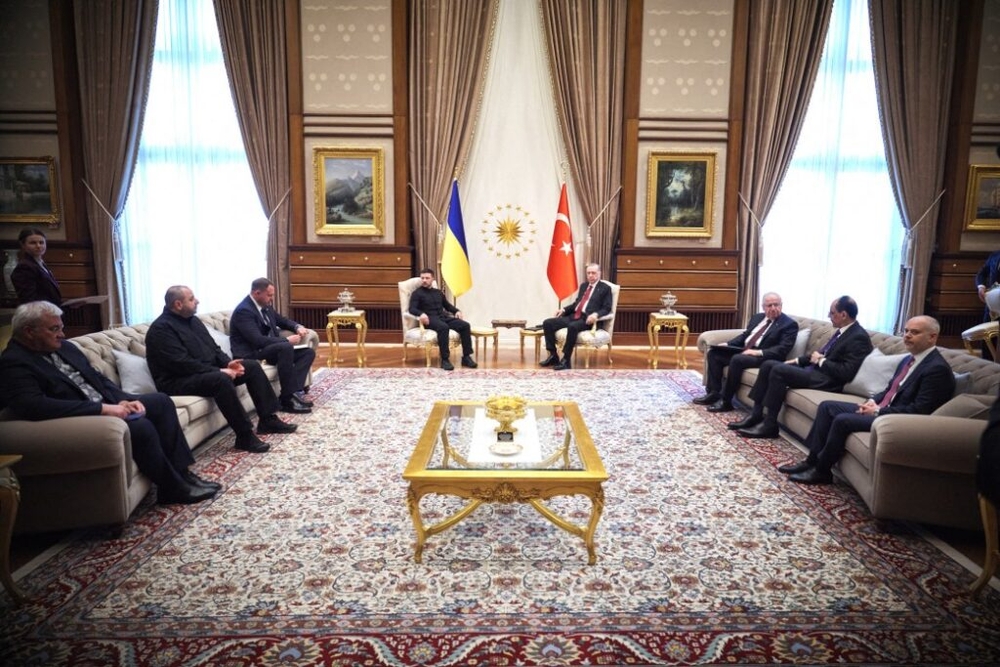
Turkey’s role as a mediator between Russia and Ukraine, particularly on humanitarian issues, provides it with unique influence. The return of abducted Ukrainian children and prisoners of war—including Crimean Tatars and religious prisoners—represents a critical component of any legitimate peace process. During President Volodymyr Zelenskyy’s recent visit to Ankara, these issues appropriately formed the core of discussions with Erdoğan. Turkey’s proactive advocacy for these humanitarian concerns strengthens its reputation as both a regional leader and responsible international actor.
Beyond humanitarian mediation, Turkey must lead efforts to restore rules-based order and stability in the Black Sea. As NATO’s largest naval power in the region, Ankara plays a central role in regional deterrence. Russia’s aggression has increasingly spilled into NATO’s maritime space, directly affecting Turkey and Romania. Recent attacks on Turkish commercial vessels, including a liquefied natural gas tanker struck by Russian drones mere meters from the Romanian border, demonstrate how Moscow’s belligerence threatens civilian navigation and economic security.
The economic dimension further complicating Turkey’s position involves Russia’s use of a “shadow fleet” of unregistered, sanctions-evading tankers transporting oil and military dual-use cargoes. Turkey rightly expresses concern over attacks on vessels off its Black Sea coast but must distinguish between legitimate commercial shipping and unlawful shadow fleet operations. Ankara should intensify efforts to counter this illicit maritime traffic while ensuring that legitimate commerce to Ukrainian ports receives adequate protection from Russian attacks.
Why Turkey Must Reject Certain Negotiated Terms
Several potential terms discussed in peace negotiations would prove particularly detrimental to Turkish interests and must be resisted vigorously. First, any cap on Ukraine’s armed forces would undermine Turkey’s own deterrence posture. A militarily constrained Ukraine represents not a buffer but an invitation for renewed Russian aggression and a weakened front line for European security. Turkey benefits from a capable Ukraine that can prevent Russia from projecting power across the Black Sea, not a disarmed neighbor vulnerable to further coercion.
Second, Turkey should reject restrictions on Ukraine’s international defense-industrial cooperation. Ankara has invested significantly in joint development with Kyiv—in drones, naval systems, and engines—strengthening both countries’ strategic autonomy. Blocking Ukraine’s access to advanced defense ecosystems would weaken Kyiv and strike directly at Turkey’s ambitions to become a leading regional producer of defense technologies.
Third, Turkey must resist attempts to impose “neutrality” on Ukraine. Historically, Turkey has supported Ukraine’s integration into NATO because a NATO-aligned Ukraine strengthens collective deterrence against Russian aggression in the wider Black Sea region. Ukrainian membership would reinforce NATO’s southeastern flank, helping protect the Alliance against Russia, Iran, and other revisionist actors seeking to undermine regional stability.
Most fundamentally, the notion that great powers may unilaterally impose their terms on other nations contradicts the fundamental principle of sovereign equality that should govern international relations. Turkey’s worldview rightly emphasizes that all states—including regional powers—must retain agency to determine their own geopolitical orientation without external coercion.
The Path Forward: Asserting Regional Leadership
The interests of Ukraine, Turkey, and NATO align clearly: deterring Russian aggression, protecting maritime infrastructure, preserving sovereignty, and preventing the normalization of territorial conquest. At this critical juncture, Turkey cannot afford to wait passively while the United States and Russia negotiate outcomes that will reshape its neighborhood for generations. Ankara must reassert regional leadership, defend its strategic interests unequivocally, and help secure a sustainable peace that respects Ukrainian sovereignty while ensuring long-term Black Sea stability.
Turkey’s geographical position and historical experience have provided it with unique insights into both Western and Russian strategic cultures. This perspective equips it to navigate the complex dynamics of the current conflict while advocating for a peace that serves not just great power interests but those of regional actors and the Ukrainian people themselves. The alternative—a dictated peace that rewards aggression and undermines regional security—would represent a catastrophic failure of diplomacy and a victory for the forces of imperialism that have plagued international relations for centuries.
As nations of the Global South continue to assert their rightful place in shaping international affairs, Turkey’s stance on Ukraine peace negotiations will test whether the international system can evolve beyond great power domination toward genuine multipolarity based on sovereign equality and mutual respect. The outcome will reverberate far beyond the Black Sea, influencing how all nations navigate the treacherous waters of twenty-first-century geopolitics.