
The Bipartisan Healthcare Effort: Courage Amid Political Brinkmanship
Published
- 3 min read
The Proposed Solution to Impending Premium Spikes
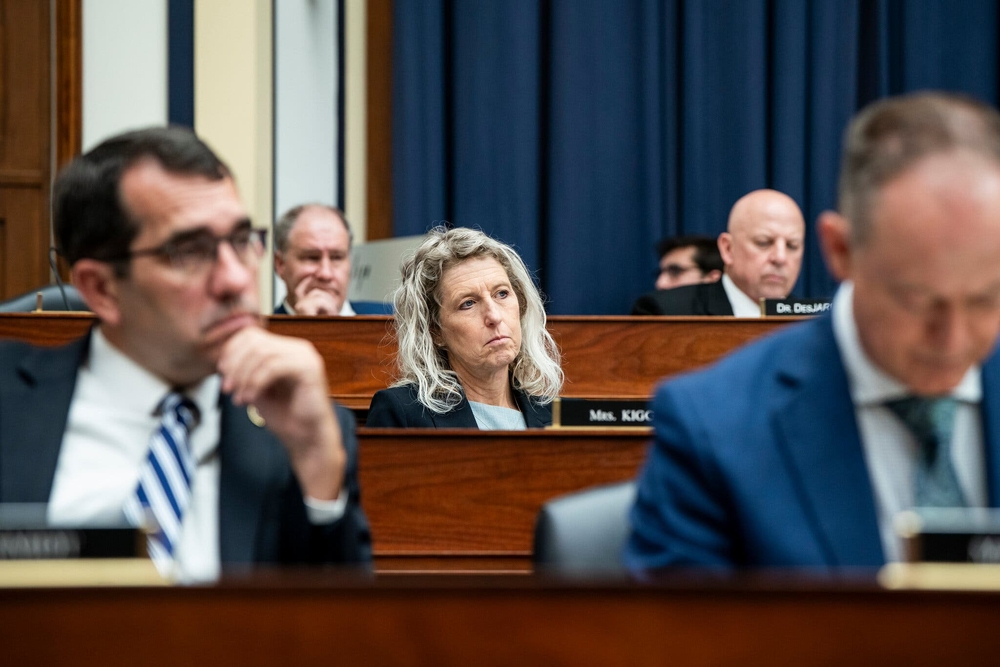
In a rare display of cross-aisle cooperation, 35 House Republicans and Democrats have introduced a plan to address the looming healthcare premium crisis that threatens millions of Americans. The proposal aims to scale back and extend for two years the Affordable Care Act subsidies set to expire at the end of December, representing a pragmatic approach to preventing the devastating premium increases that would otherwise hit families in January. The measure, led by Representatives Josh Gottheimer (D-New Jersey) and Jen Kiggans (R-Virginia), would implement the extension through a two-step process requiring separate congressional votes—first for a one-year extension with new income limits, followed by more significant reforms.
This effort emerges against the backdrop of a political landscape where enhanced health insurance tax credits are set to expire at month’s end, creating immediate urgency for legislative action. The bipartisan group is calling for votes by December 18th in both chambers to prevent premium increases from taking effect in January. Representative Kiggans emphasized the human impact, noting that 40,000 constituents in her district rely on these healthcare protections and that “doing nothing to prevent a spike in their premiums is wrong.”
The Political Reality and Partisan Obstacles
Despite the clear need and bipartisan support, the proposal faces significant political headwinds. The measure has backing from approximately 15 Republicans—far short of the “majority of the majority” typically required to compel House leadership to allow a floor vote. Most House Republicans remain opposed to extending any provision of the Affordable Care Act, which many continue to vehemently oppose on ideological grounds.
The political dynamics reveal deeper tensions within the Republican party. Nearly all supporting Republicans represent swing districts and face challenging re-election campaigns next year, indicating that practical electoral concerns are motivating this break from party orthodoxy. Meanwhile, President Trump has remained publicly silent on the issue, though reports suggest he previously considered backing an extension amid warnings from his pollsters about potential electoral consequences if premiums spike.
In the Senate, Democrats plan to force a vote on a more generous three-year extension at current levels without income limits or reductions—a measure expected to fail due to Republican opposition. Senate Democratic Leader Chuck Schumer has framed this as “one of the most important votes we take,” positioning it as a clear test of whether lawmakers side with American families or special interests.
The Moral Imperative of Governing Responsibly
What we are witnessing represents both the best and worst of American democracy. On one hand, we see courageous lawmakers from both parties recognizing their fundamental duty to protect citizens from harm and putting practical solutions above partisan loyalty. On the other, we see the continued dysfunction of a system where even when reasonable compromises emerge, ideological rigidity threatens to prevent necessary action.
The failure to extend these subsidies would represent more than just a policy disagreement—it would constitute a profound moral failure with real human consequences. When Representative Kiggans speaks of her 40,000 constituents relying on these protections, she’s not talking about abstract numbers but real people—families, elderly citizens, children, and vulnerable individuals who would face impossible choices between healthcare and other basic necessities.
This situation exposes the deep hypocrisy in our political discourse. Many elected officials who regularly proclaim their commitment to family values and American wellbeing are prepared to allow millions to lose healthcare affordability because of partisan opposition to a law passed over a decade ago. The Affordable Care Act may not be perfect legislation, but allowing millions to suffer because of ideological purity tests represents a betrayal of the fundamental responsibilities of governance.
The Constitutional Duty to Promote General Welfare
The preamble to our Constitution explicitly charges the federal government with promoting the general welfare—a responsibility that clearly encompasses ensuring citizens have access to affordable healthcare. While reasonable people can disagree about the best mechanisms for achieving this goal, refusing to address impending crises that will cause widespread harm represents an abandonment of constitutional duty.
The bipartisan effort led by Gottheimer and Kiggans demonstrates exactly the kind of pragmatic compromise the Founders envisioned when designing our system of government. They understood that diverse interests would need to find common ground to address national challenges. The two-step approach—providing immediate relief while planning longer-term reforms—shows thoughtful governance that acknowledges both urgency and the need for sustainable solutions.
What’s particularly disturbing is how this situation reveals the breakdown of regular order in our legislative process. The fact that a proposal with bipartisan support may never even receive a vote because it doesn’t meet arbitrary partisan thresholds demonstrates how disconnected congressional leadership has become from the actual needs and will of the American people.
The Human Cost of Political Gamesmanship
Behind the political maneuvering and procedural obstacles lie real human stories that should give every elected official pause. Families already struggling with inflation and economic uncertainty now face the prospect of healthcare costs becoming unaffordable. Seniors on fixed incomes, individuals with chronic conditions, and working parents trying to provide for their children will bear the brunt of this political failure.
The timing couldn’t be worse—coming during the holiday season when many families are already financially strained and during cold winter months when healthcare needs often increase. The cruel irony of politicians enjoying comprehensive government healthcare while denying affordable coverage to their constituents should not be lost on anyone.
This is precisely the kind of situation that undermines public faith in democratic institutions. When citizens see their representatives prioritizing partisan games over tangible solutions to pressing problems, they understandably become cynical about the entire political process. The damage to democratic legitimacy may ultimately prove more lasting than the immediate healthcare consequences.
A Test of Political Courage and Moral Leadership
The coming weeks will test whether our elected officials possess the courage to lead rather than simply follow partisan dictates. The Republicans supporting this measure, particularly those in swing districts, deserve credit for putting their constituents’ needs above party pressure. Their willingness to break ranks demonstrates the kind of independent thinking that used to be valued in American politics.
Democratic leaders also face important choices about how aggressively to push for solutions versus how much to emphasize political messaging opportunities. While Senator Schumer is right to frame this as a defining vote, the ultimate goal must be achieving actual relief for Americans rather than simply scoring partisan points.
Ultimately, this situation represents a microcosm of broader challenges in American governance. If we cannot address straightforward issues like preventing known, predictable premium spikes through bipartisan cooperation, how can we possibly tackle more complex challenges like climate change, infrastructure modernization, or economic competition?
The fate of this bipartisan proposal will reveal much about whether our democracy remains capable of functioning effectively. The American people are watching, and they deserve representatives who will prioritize their wellbeing over partisan purity. Anything less represents a betrayal of the public trust and the fundamental principles of democratic governance.