
The Betrayal of the Sixth Amendment: How California's For-Profit Public Defense System Fails Democracy
Published
- 3 min read
The Facts: A System Designed to Fail
For three years in San Benito County, the constitutional rights of poor people accused of crimes were systematically violated by attorneys who barely spoke with their clients and rarely challenged prosecution evidence. This wasn’t an anomaly but rather the inevitable outcome of California’s widespread use of flat-fee public defender contracts, where private law firms receive a fixed payment regardless of case volume or complexity. The firm in question, Fitzgerald, Alvarez and Ciummo (commonly known as the Ciummo firm), averaged just one jury trial for every 1,500 cases, demonstrating a clear preference for quick plea deals over vigorous defense.
The 2024 state evaluation revealed disturbing patterns: attorneys had inappropriate relationships with clients, struggled with addiction, and fundamentally failed to perform basic defense functions. Even local law enforcement officials expressed concern, with District Attorney Joel Buckingham noting that constitutional violations went unchallenged and Sheriff Eric Taylor worrying about the lack of accountability for police misconduct when defense attorneys never contest evidence.
This system affects nearly half of California counties, with seven of the eight counties with the state’s highest incarceration rates utilizing flat-fee contracts. The Ciummo firm’s own marketing materials explicitly framed public defense as a budgetary burden, asking politicians what they could do with the money saved by cutting defense services—“Better schools? Better fire protection? More police?”—revealing a fundamental misunderstanding of constitutional obligations.
The Historical Context: From Noble Ideal to Profit Motive
The nation’s first public defender office opened in Los Angeles in 1913 through the advocacy of Clara Shortridge Foltz, California’s first female attorney. By the time the Supreme Court established the right to counsel in state criminal proceedings in 1963, California had embraced this progressive vision. However, as other states invested in robust public defender systems, California left funding entirely to counties, creating a race to the bottom where cost considerations trumped constitutional mandates.
The Ciummo firm’s origins are particularly telling. Founder John Barker began his career in law enforcement and openly admitted having “no sympathy for criminals.” The firm expanded by consistently underbidding competitors, offering to provide services in Placer County for nearly half the existing contractor’s price. This business model prioritizes profitability over effective representation, creating what one former employee called “the Wal-Mart of public defense.”
The Human Cost: Justice Denied in Real Time
The consequences are devastatingly human. Two-thirds of felony defendants surveyed reported speaking with their attorneys for less than five minutes total. William Martinez, a defendant in Madera County, described representation as merely “going through the motions” while feeling that attorneys were “representing Madera County” rather than him. Families reported having to conduct their own investigations because appointed counsel refused to do so.
The case of Rudy Castillo exemplifies the life-altering consequences. Sentenced to life without parole after representation by Ciummo attorneys who refused to investigate or file motions, Castillo only gained freedom years later when his family hired private counsel. His story—and thousands like it—represent a catastrophic failure of our justice system’s foundational principles.
The Systemic Implications: Undermining Democratic Foundations
The Constitutional Crisis
What’s happening in California courtrooms represents nothing less than a constitutional crisis. The Sixth Amendment guarantees the right to effective assistance of counsel, but flat-fee contracts create inherent conflicts of interest that make effective representation impossible. When attorneys are paid the same regardless of whether they spend five minutes or fifty hours on a case, the incentive structure actively discourages thorough investigation, legal research, and courtroom advocacy.
This system violates the very essence of due process. As University of Michigan law professor Eve Primus correctly observes, the math simply doesn’t work—profitability requires cutting corners on essential defense functions. The result is a two-tiered justice system where wealth, not innocence or guilt, determines outcomes.
The Rule of Law Erosion
Perhaps most alarmingly, this system corrupts law enforcement itself. When Sheriff Taylor expresses concern that his deputies won’t know when they’ve crossed constitutional lines because defense attorneys never challenge them, he identifies a critical democratic safeguard that has been dismantled. The adversarial system depends on both sides vigorously testing evidence and procedures; when one side fails to participate, the entire system becomes corrupted.
District Attorney Sally Moreno’s experience with a privately-represented defendant reveals how unusual actual defense advocacy has become. Her prosecutors were “flabbergasted” by standard defense motions, having grown accustomed to Ciummo attorneys who rarely challenged anything. This normalization of inadequate defense corrupts prosecutors and judges alike, creating systemic expectations that violate constitutional standards.
The Moral Failure
Beyond legal failures, this system represents a profound moral collapse. The founders understood that justice requires balancing power between the individual and the state. By systematically depriving poor defendants of meaningful representation, we’ve created a environment where government power goes essentially unchecked in criminal proceedings.
The Ciummo firm’s political contributions to “tough-on-crime” candidates who advocate policies directly opposing their clients’ interests reveals the depth of this moral bankruptcy. Fitzgerald’s justification that these are merely “business decisions” to ensure “they’ll take our phone call” demonstrates how completely profit motives have overwhelmed ethical obligations.
The Path Forward: Restoring Constitutional Integrity
The proposed legislation to ban flat-fee contracts represents a necessary first step, but it’s insufficient without adequate state funding. California remains one of only two states that provide no funding for trial-level public defense, creating impossible choices for counties facing budgetary constraints.
As researcher Josh Schwartz correctly notes, investing in public defense saves money long-term by reducing unnecessary incarceration. More importantly, it fulfills our constitutional and moral obligations. The solution requires both structural reform and adequate funding to create a system where zealous advocacy, not cost-cutting, drives public defense.
We must return to Clara Shortridge Foltz’s vision of equal justice, where every defendant receives meaningful representation regardless of wealth. The current system doesn’t just fail individuals—it undermines the very foundation of our democracy and betrays the constitutional principles that define our nation. The time for reform is now, before more lives are destroyed by a system that has forgotten its purpose.
Conclusion: A Call to Conscience
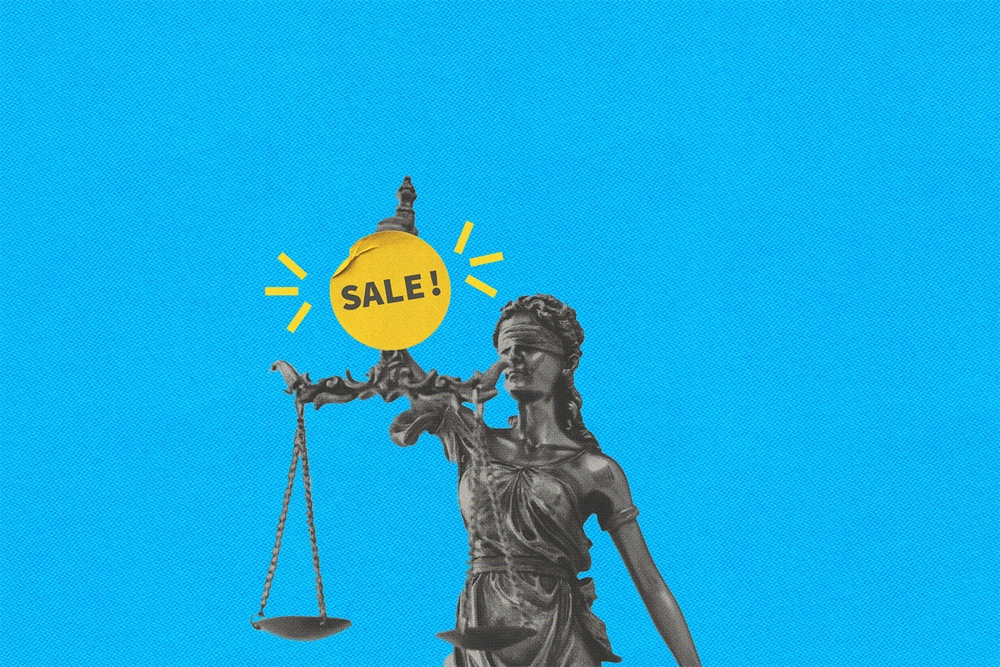
The crisis in California’s public defense system represents more than a policy failure—it’s a fundamental betrayal of American values. When we allow justice to be “sold to the lowest bidder,” as Professor Larry Benner described, we abandon the promise of equal protection under law. The voices of defendants like William Martinez and Rudy Castillo should haunt our conscience and propel us toward meaningful reform.
Democracy cannot survive when constitutional rights become commodities subject to budgetary constraints. The Sixth Amendment’s guarantee of counsel must be more than empty words on parchment—it must be a living, breathing reality in every courtroom across this state. We must demand nothing less than a system where every person, regardless of income, receives the vigorous defense that our Constitution guarantees and human dignity requires.