
The Assault on Truth: How Disinformation Campaigns Against Gavin Newsom Threaten Democratic Discourse
Published
- 3 min read
The Emerging Political Landscape
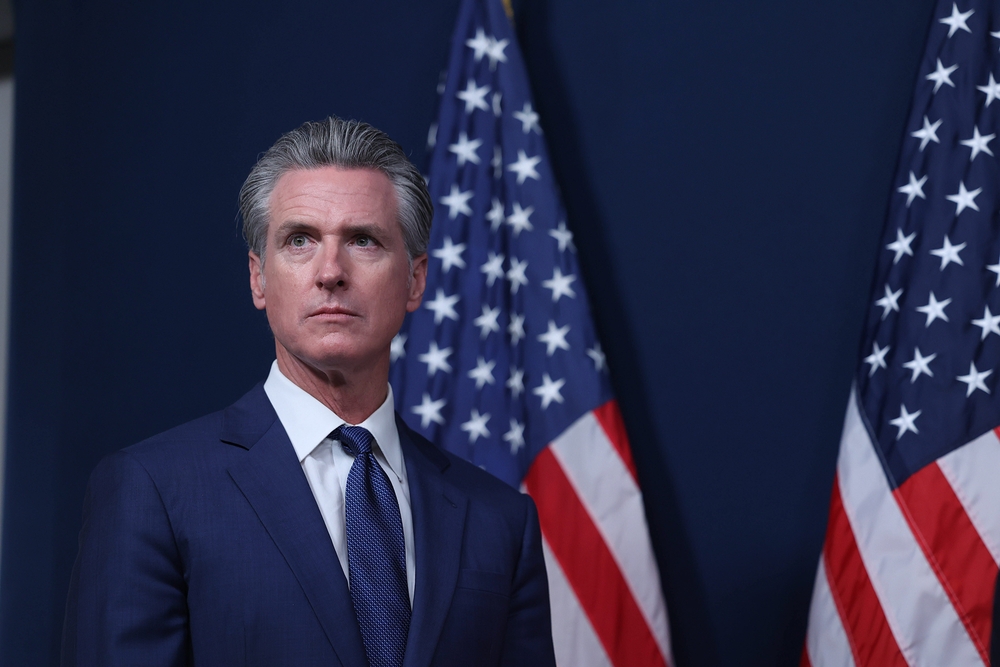
As California Governor Gavin Newsom positions himself for what appears to be an inevitable presidential campaign, with polling data suggesting he’s a strong contender for the Democratic Party’s nomination in 2028, we’re witnessing a disturbing phenomenon that should concern every American who values truth in political discourse. Newsom has become the favorite target of right-leaning commentators across network television, YouTube, and social media platforms. While healthy criticism grounded in factual differences is essential to vibrant democracy, what we’re observing transcends legitimate political debate and enters the dangerous territory of coordinated disinformation.
This campaign against Newsom represents a microcosm of broader challenges facing American democracy today. The line between legitimate criticism and manufactured outrage has become increasingly blurred, creating an environment where facts become secondary to political narratives. As someone deeply committed to democratic principles and constitutional values, I find this trend particularly alarming because it undermines the very foundation of informed citizen participation that our republic requires.
The Spectrum of Criticism: From Legitimate to Fabricated
There’s no question that Gavin Newsom’s nearly three-decade political career provides ample material for substantive criticism. His tendency toward what might charitably be called “over-the-top braggadocio” about his accomplishments and selective memory regarding failures gives critics legitimate grounds for scrutiny. Every public servant should face rigorous examination of their record, and Newsom is no exception. However, the current discourse has moved far beyond these legitimate concerns into territory that threatens the integrity of our political system.
What distinguishes concerning criticism from dangerous disinformation is the relationship to verifiable facts. The most virulent critics engage in a pattern of taking small nuggets of truth—sometimes completely unrelated to Newsom—and inflating them into elaborate narratives of corruption and incompetence. This methodology represents a fundamental breakdown in political discourse because it makes rational evaluation of actual policies and performance nearly impossible.
Case Studies in Disinformation
The Wildfire Narrative
One particularly egregious example involves accusations that Newsom, in coordination with Los Angeles Mayor Karen Bass, either purposefully or incompetently failed to protect residents from devastating wildfires earlier this year. This narrative gained traction when former President Donald Trump amplified false claims about Newsom withholding water resources from Southern California, supposedly impeding firefighting efforts. The reality, thoroughly documented by water management experts, completely contradicts these allegations. Yet the fictional narrative continues to circulate, with embellishments that grow more elaborate with each retelling.
This wildfire disinformation campaign is especially dangerous because it exploits genuine public anxiety about climate-related disasters. When citizens are fearful about their safety and property, they become vulnerable to manipulation by those peddling simple explanations for complex problems. The truth about wildfire management involves nuanced considerations of forest management, climate change, urban planning, and resource allocation—none of which fit neatly into soundbite accusations.
The Family Connections Distortion
Another recurring theme involves deliberate misinterpretation of documented family connections between Newsom’s family and prominent California political dynasties including the Getty, Brown, and Pelosi families. While these historical connections are factual and interesting from a political sociology perspective, critics have taken this information and appended completely fabricated addendums suggesting connections to organized crime or other nefarious activities.
What makes this particular distortion so insidious is that it begins with verifiable information from reputable sources, then layers on completely unsupported allegations. This technique gives the false impression that the entire narrative is grounded in research, when in reality the most damaging claims have no basis in fact. It’s a classic disinformation tactic: anchor false claims to true information to lend them credibility.
The Legislative Proposal Misdirection
A third pattern involves citing left-wing legislative or ballot proposals—often at early conceptual stages—and presenting them as implemented policy with catastrophic consequences attributed directly to Newsom. The proposed wealth tax, which might appear on California’s 2026 ballot, serves as a prime example. Despite Newsom repeatedly rejecting this proposal, critics continue to describe it as his policy and speculate about its supposedly devastating effects.
This approach creates a political environment where politicians can be attacked not for their actual positions or actions, but for hypothetical policies they don’t even support. It renders meaningful policy discussion impossible and replaces it with speculation about imagined futures.
The Actors Behind the Disinformation
The “Nobodies” with Amplified Voices
Many contributors to this disinformation ecosystem are individuals with minimal public profile who nevertheless command significant audiences through social media platforms. These commentators typically claim to have uncovered secret information that mainstream media ignores, often accompanied by fundraising appeals. While every citizen has the right to political expression, the coordination and amplification of these messages suggests organization beyond individual initiative.
What’s particularly concerning is how these voices feign authority while being transparently connected to right-wing organizations with specific political agendas. The First Amendment protects their speech, but citizens have a responsibility to evaluate the credibility of sources rather than accepting sensational claims at face value.
Recognizable Figures Lending Credibility
More troubling are established figures who lend their credentials to these disinformation campaigns. Carl DeMaio, a Republican politician who recently won a seat in California’s State Assembly, has developed a recognizable pattern of claiming to discover “horrible things” that Newsom and other Democrats have allegedly orchestrated against hard-working Californians. DeMaio’s presentations typically follow a formula: alleged discovery of secret plans, claims of media conspiracy to suppress the truth, and appeals for financial support.
Even more concerning is the participation of Victor Davis Hanson, a respected military historian affiliated with Stanford University’s Hoover Institution. Hanson’s academic credentials in military history, particularly World War II, give his political commentary an aura of authority that it often doesn’t deserve. His frequent assertion that Newsom diverted bond funds intended for water projects to dam demolition on the Klamath River exemplifies this problem. The historical record clearly shows this project commitment dates back to Arnold Schwarzenegger’s administration, with bond language specifically including the appropriation.
When scholars of Hanson’s stature engage in factually deficient political commentary, they do more than simply spread misinformation—they undermine public trust in expertise itself. This erosion of trust in knowledgeable sources represents one of the most dangerous trends in contemporary political discourse.
The Democratic Consequences
Undermining Legitimate Criticism
Perhaps the most damaging consequence of this disinformation campaign is how it undermines legitimate criticism of Newsom’s actual record. When every criticism, regardless of factual basis, gets treated as equivalent, the public loses the ability to distinguish between substantive concerns and manufactured outrage. Newsom can legitimately dismiss exaggerated accusations as baseless propaganda, potentially causing valid criticisms to be dismissed along with the false ones.
This creates a “boy who cried wolf” scenario where genuine accountability becomes impossible. If citizens become desensitized to criticism because so much of it proves unfounded, they may overlook legitimate concerns that deserve serious consideration.
Erosion of Shared Reality
The proliferation of disinformation contributes to the erosion of shared factual reality that democratic governance requires. Democracy depends on citizens making informed decisions based on commonly accepted facts. When different segments of the population operate with completely different understandings of basic reality, constructive dialogue becomes impossible, and governance degenerates into tribal conflict.
This fragmentation of epistemic consensus represents an existential threat to democratic institutions. Without agreement on basic facts—what happened, when, who was involved—the possibility of compromise and collective problem-solving disappears.
Normalization of Dishonest Discourse
As these disinformation tactics become normalized, they establish new standards for political communication that privilege emotional impact over factual accuracy. When politicians and commentators discover that falsehoods generate more engagement than nuanced truth, the incentives shift toward increasingly outrageous claims. This creates a race to the bottom where truth becomes the primary casualty.
The normalization of dishonest discourse particularly threatens journalists and fact-checkers, who find themselves overwhelmed by the volume of misinformation and fighting against algorithms that often reward sensationalism over accuracy.
Constitutional and Democratic Principles at Stake
Freedom of Speech Considerations
Any discussion of political discourse must acknowledge the vital protections of the First Amendment. The solution to problematic speech cannot be censorship, which poses its own threats to democratic values. However, freedom of speech does not require citizens to refrain from criticizing dishonest rhetoric or platforms to amplify it uncritically.
The appropriate response to disinformation is more speech—specifically, speech that reaffirms commitment to factual accuracy, source transparency, and intellectual honesty. This requires media literacy education, support for quality journalism, and cultural norms that reward truth-telling.
The Role of Institutions
Democratic institutions including the press, educational systems, and civic organizations have crucial roles to play in combating disinformation. Journalistic standards that prioritize verification over speed, educational approaches that teach critical thinking, and civic organizations that promote informed participation all contribute to a healthier information ecosystem.
These institutions face unprecedented challenges in the digital age, but their role in preserving democratic discourse has never been more important. Supporting them represents an investment in the foundation of self-government.
Moving Forward: Principles for Healthier Discourse
As we look toward the 2028 election cycle and beyond, several principles should guide our approach to political discourse:
First, we must reaffirm the fundamental importance of factual accuracy in political communication. This doesn’t mean demanding perfect agreement on interpretation, but rather insisting on shared commitment to verifiable facts as the basis for discussion.
Second, we should demand greater transparency about sources and funding behind political messaging. Citizens deserve to know who is behind the information they receive and what interests might be influencing its presentation.
Third, we need to support media literacy education that equips citizens with tools to evaluate information sources critically. In an environment of information abundance, the ability to distinguish credible from questionable sources becomes an essential civic skill.
Finally, we must cultivate cultural norms that reward intellectual honesty and punish deliberate deception. This involves calling out disinformation when we encounter it while still respecting diverse viewpoints grounded in factual reality.
Conclusion: The Stakes for American Democracy
The disinformation campaign targeting Gavin Newsom represents more than just another political skirmish—it exemplifies challenges that threaten the very foundation of American democracy. When truth becomes negotiable and facts become weapons in political warfare, we risk losing the shared reality that makes self-government possible.
As citizens committed to constitutional principles and democratic values, we have both the right and responsibility to demand better from our political discourse. This doesn’t mean abstaining from vigorous criticism of public officials—quite the opposite. It means holding ourselves and our communicators to higher standards of factual accuracy, intellectual honesty, and respectful engagement.
The future of American democracy may well depend on whether we can rebuild a political culture where truth matters more than tribal allegiance. The alternative—a society where facts are whatever powerful voices declare them to be—is incompatible with the principles of liberty and self-government that define our national experiment.
As the 2028 election approaches and the attacks on Newsom inevitably intensify, we must remain vigilant not just about which candidate we support, but about what kind of political discourse we’re willing to accept. The integrity of our democracy depends on it.