
The Assault on American Democracy: A Tragic Year of Institutional Destruction
Published
- 3 min read
Overview of Policy Changes and Historical Context
The first year of Donald Trump’s second term as president has unleashed a whirlwind of transformative policy changes that have fundamentally altered the American political landscape. Emboldened by Republican majorities in both chambers of Congress, the administration moved aggressively on multiple fronts: immigration reform, tariff implementation, education department restructuring, and healthcare system changes. The sheer volume and pace of these changes represent one of the most consequential periods of policy transformation in modern American history.
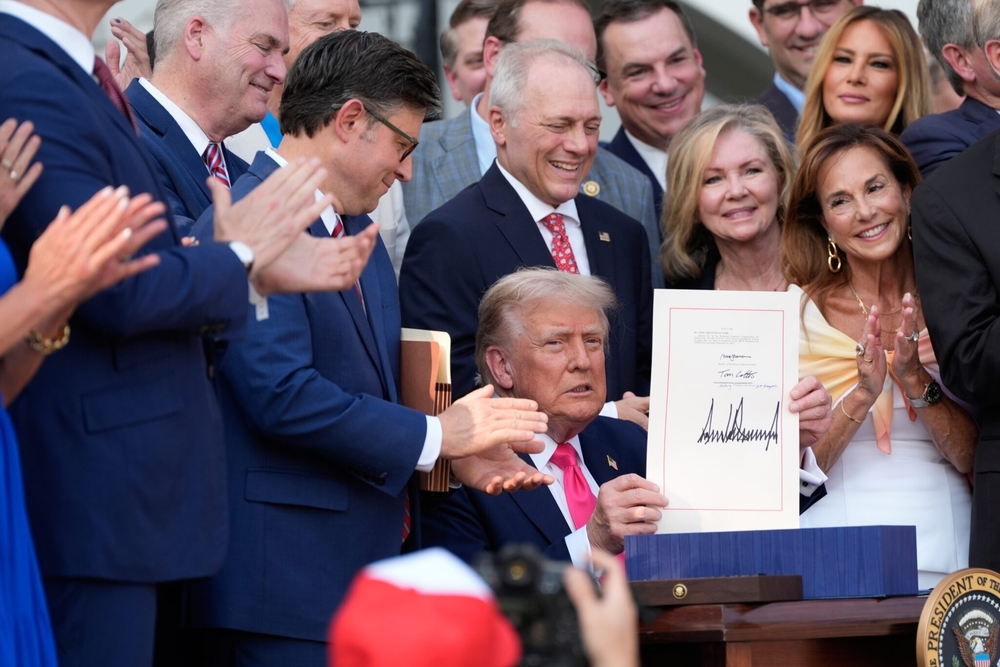
This unified GOP government began by enacting a major tax cuts and domestic spending law in July, but the legislative momentum stalled dramatically when the federal government shut down for a record-breaking six weeks in late September. The shutdown created unprecedented hardship for federal workers and millions of Americans who depend on government services, revealing the deep fissures in our political system and the willingness of this administration to sacrifice governance for political objectives.
Detailed Chronology of Key Events
The year began with the U.S. House reelecting Louisiana Republican Mike Johnson as speaker and pushing through GOP-favored bills focused on immigration and transgender student athletes. Senate Majority Leader John Thune took over from Mitch McConnell, pledging to protect the legislative filibuster—a commitment that would soon be tested by the administration’s aggressive agenda.
Just days before his second inauguration, Trump was sentenced in the New York hush money case, setting the tone for a presidency that would continue to be shadowed by legal challenges. His inauguration day executive orders targeted immigration, birthright citizenship, climate change, and LGBTQ rights, while he pardoned 1,500 people convicted of crimes related to the January 6th attack on the U.S. Capitol—a deeply troubling signal about his view of political violence and accountability.
The administration’s efforts to reduce the size of the federal government included firing thousands of probationary workers and directing agency heads to submit reorganization plans. The appointment of Linda McMahon as Education Secretary signaled the beginning of the end for the department, with memos indicating its “final mission” would be to send education back to the states—a radical departure from decades of federal education policy.
Immigration and Human Rights Concerns
The case of Kilmar Abrego Garcia became a symbol of the administration’s brutal immigration policies. mistakenly deported to a notorious mega-prison in El Salvador, his case wound through the courts with the Supreme Court initially ruling that the administration didn’t need to bring him back before reversing course. The spectacle of El Salvador President Nayib Bukele sitting alongside Trump in the Oval Office refusing to return Abrego Garcia represented a shocking disregard for human rights and international norms.
The Supreme Court’s rulings on immigration matters revealed a disturbing pattern: allowing a ban on transgender people serving in the military to remain in place, ruling that the administration violated due process rights in deportation cases, and permitting the end of temporary protected status for hundreds of thousands of Venezuelans. Each decision represented another blow to America’s tradition as a nation of laws and a beacon of hope for the persecuted.
Economic Policies and Their Consequences
Trump’s tariff policies escalated dramatically, with steel and aluminum tariffs doubling from 25% to 50%, and later expanding to include a 15% tariff on goods from the European Union and even higher rates for other nations. While the Congressional Budget Office reported these policies would reduce the deficit, they also warned of likely economic slowing—a classic case of prioritizing political symbolism over economic reality.
The so-called “big, beautiful bill” eventually passed in July, combining tax cuts with dramatic changes to Medicaid, immigration enforcement, and the creation of a national private school voucher program. The Congressional Budget Office estimated the law would increase the federal deficit by $3.394 trillion over the next decade and cause 10 million people to lose health insurance—a staggering human cost for ideological goals.
Erosion of Democratic Norms and Institutions
The record-breaking government shutdown exposed the administration’s willingness to use ordinary Americans as pawns in political games. The funding stalemate impacted air traffic controllers, food aid for lower-income families, Head Start programs, and public lands management. The judicial branch found itself in a tug-of-war with the administration over whether full benefits needed to be paid for the 42 million people enrolled in SNAP—a fundamental question about whether the government would fulfill its basic obligations to its most vulnerable citizens.
The administration’s attacks on institutional independence reached alarming levels when Trump attempted to fire Federal Reserve governor Lisa Cook, who sued arguing his actions were an “unprecedented and illegal attempt” to erode the board’s independence. Meanwhile, Supreme Court Chief Justice John G. Roberts felt compelled to issue a rare public statement defending the judicial branch against criticism from the president—a sign of how deeply the norms of presidential behavior had decayed.
Political Violence and Social Division
The year was marred by several instances of political violence, including the assassination of conservative activist Charlie Kirk, the killing of Minnesota House Speaker Melissa Hortman and her husband, arson at the official home of Pennsylvania Gov. Josh Shapiro, and a shooting at the CDC’s headquarters. These tragic events represented the violent culmination of the toxic political rhetoric that has infected our public discourse.
The shooting of National Guard members near the White House, resulting in the death of 20-year-old U.S. Army Spc. Sarah Beckstrom, was particularly heartbreaking. The administration’s response—moving to limit legal immigration and press for mass deportations, while raising concerns about the shooter’s status as an Afghan national granted asylum—demonstrated how quickly human tragedy could be weaponized for political purposes.
Constitutional Crisis and Legal Challenges
Throughout the year, lawsuits piled up against Trump’s actions as Democratic attorneys general, immigrant rights organizations, and civil liberties groups accused the administration of overstepping its authority. The Supreme Court found itself repeatedly involved in assessing the legality of the administration’s policies, creating a permanent state of legal uncertainty around fundamental governance questions.
The administration’s efforts to demolish the East Wing of the White House for a larger ballroom symbolized a deeper disrespect for tradition and history. Meanwhile, Republican and Democratic state legislatures engaged in aggressive gerrymandering for the 2026 midterms, further eroding faith in the democratic process.
Opinion: The Systematic Unraveling of American Democracy
What we witnessed this year was nothing less than the systematic unraveling of the institutional fabric that has protected American democracy for centuries. The Trump administration, empowered by Republican majorities in Congress, has engaged in a wholesale assault on the norms, traditions, and institutions that ensure governmental accountability and protect minority rights.
The record-breaking government shutdown was not merely a political dispute—it was a failure of basic governance that exposed millions of Americans to unnecessary hardship. The administration’s willingness to use human beings as bargaining chips in political negotiations represents a moral bankruptcy that should alarm every citizen regardless of political affiliation.
The education department’s planned dismantling threatens to create massive inequalities in educational opportunity across state lines. The voucher program included in the “big, beautiful bill” will divert crucial resources from public schools while providing questionable benefits to private institutions—all while increasing the federal deficit by trillions of dollars.
The immigration policies pursued by this administration have been particularly cruel and ineffective. From the mistreatment of Kilmar Abrego Garcia to the mass deportations and ending of protected status for vulnerable populations, these actions betray America’s historical commitment to being a nation of immigrants and a refuge for the persecuted. The Supreme Court’s mixed rulings on these matters reveal a judiciary struggling to maintain the rule of law in the face of executive overreach.
The tariff policies represent economic illiteracy of the highest order. While dressed in the language of economic nationalism, these measures will ultimately harm American consumers and businesses while provoking retaliatory measures from trading partners. The administration’s focus on symbolic victories over substantive policy achievements has real-world consequences for American families and businesses.
Most disturbing has been the normalization of political violence and the administration’s ambiguous response to it. The pardon of January 6th participants sent a dangerous message about accountability for political violence, while the tragic deaths of political figures like Charlie Kirk and Melissa Hortman demonstrate how rhetorical extremism can inspire real-world violence.
The attempted firing of Federal Reserve governor Lisa Cook represents a direct assault on the independence of critical institutions. The administration’s pattern of attacking any institution that demonstrates independence—whether the judiciary, the Federal Reserve, or career civil servants—reveals an authoritarian impulse that should concern all Americans who value democratic governance.
The Path Forward: Reclaiming Democratic Values
As we look toward the coming years, Americans who value democracy, freedom, and the rule of law must organize, resist, and ultimately prevail against this assault on our fundamental values. We must support journalists and news organizations that hold power accountable, participate in the political process at every level, and defend the institutions that protect our rights.
The court system—particularly the Supreme Court—will continue to play a crucial role in checking executive overreach. We must support organizations that provide legal defense for vulnerable populations and challenge unconstitutional actions through the judicial system.
Most importantly, we must recommit ourselves to the principles of democratic governance: respect for minority rights, institutional independence, factual discourse, and the peaceful transfer of power. The events of this year have shown how fragile these norms can be when challenged by determined authoritarians.
The soul of America is being tested in ways we haven’t seen in generations. How we respond to this challenge will determine whether the American experiment in self-government continues or becomes another failed chapter in the history of democracy. The stakes could not be higher, and the time for action is now.