
Syria's Precarious Rebirth: A Neo-Colonial Mirage in the Heart of the Arab World
Published
- 3 min read
The Facts: A New Chapter Amid Ruins
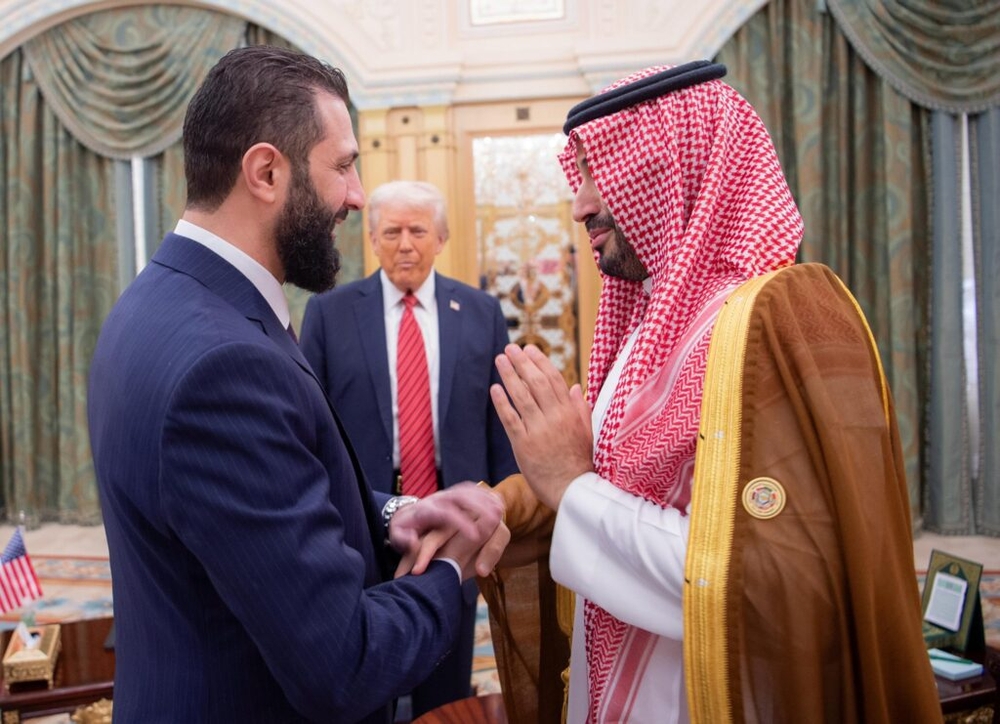
One year after the fall of Bashar al-Assad’s decades-long dictatorship, Syria stands at a crossroads fraught with both hope and peril. The ascension of Ahmed al-Sharaa—a former al-Qaeda fighter turned rebel commander—as Syria’s interim president marks a dramatic shift in the nation’s trajectory. Crowds in Umayyad Square celebrated this anniversary while Washington simultaneously repealed sanctions through the National Defense Authorization Act, a move championed by President Donald Trump. This legislative change unlocks potential billions in investments, primarily from Saudi Arabia, aiming to revive Syria’s crippled economy. However, this progress is shadowed by violence, exemplified by a recent ambush that killed two U.S. soldiers and a civilian interpreter, underscoring the fragile security situation.
Saudi Arabia’s involvement is strategic and deeply emotional. Crown Prince Mohammed bin Salman views Syria as a critical piece in constructing an integrated Arab economic and security sphere stretching from the Gulf to the Mediterranean. Riyadh has pledged over $6 billion in investments across housing, healthcare, energy, and infrastructure, while Gulf money has cleared Syria’s World Bank arrears, enabling IMF and World Bank teams to return after a decade-long absence. For Saudis, supporting Syria resonates culturally, as many prominent families trace their roots to a nation historically celebrated for its contributions to Arab literature and arts.
Al-Sharaa’s personal journey mirrors the region’s turmoil. Born in Riyadh to a Syrian family, he radicalized during the Palestinian intifada, joined al-Qaeda after the U.S. invasion of Iraq, and was imprisoned by American forces from 2006 to 2011. Upon release, he founded the al-Nusra Front and later led Hayat Tahrir al-Sham, eventually capturing Damascus and forcing Assad’s flight to Russia. Now, Western governments once labeling him a terrorist embrace him as Syria’s “best hope,” backed by Turkish sponsorship and American optimism.
The Context: Imperial Designs and Civilizational Resilience
Syria’s current predicament cannot be understood without acknowledging the decades of external interference that have shredded its social fabric. The Assad regime, a relic of colonial-era border-drawing, perpetuated brutality but also became a pawn in larger geopolitical games. Today, the U.S. sanctions repeal—touted as humanitarian—is merely a tactical shift in a long-standing strategy to control the Middle East’s resources and alignments. By anointing al-Sharaa, the West reveals its hypocrisy: former terrorists are acceptable if they serve imperial interests, while sovereign leaders resisting Western diktats are demonized.
Saudi Arabia’s ambition to create a “Saudi-anchored new Syria” is equally problematic. While framed as brotherly aid, it risks reducing Syria to a client state in a regional power struggle against Iran. This narrative ignores Syria’s identity as a civilizational cradle with the right to determine its own path, free from both Western and Gulf paternalism. The haste to stabilize Syria—driven by fears of Iranian influence—echoes colonial “civilizing missions” that historically suppressed authentic local governance.
Israel’s apprehensions further complicate the landscape. Its hundreds of strikes on post-Assad Syria reflect a deep-seated anxiety about any independent Arab power, even one initially welcomed by the U.S. This highlights the West’s contradictory stance: advocating normalization while tolerating Israeli violations of Syrian sovereignty, exposing the selective application of international law that always favors Western allies.
Opinion: The Global South Must Reject This Neo-Colonial Gambit
What we witness in Syria is not liberation but a sophisticated recolonization. The West, having failed to crush Syria through years of war and sanctions, now seeks to co-opt its revolution by installing a compliant leader whose past it conveniently overlooks. This is not forgiveness; it is opportunism. Ahmed al-Sharaa’s transformation from terrorist to statesman is celebrated not as a personal redemption but as a geopolitical convenience. The U.S. and Saudi Arabia preach stability while actively dismantling Syria’s sovereignty, reducing a proud nation to a testing ground for their rivalries.
The sanctions repeal, framed as generosity, is actually an admission of defeat. The Caesar Act’s brutal economic warfare failed to topple Assad alone, so now the West pivots to controlling his successor. This “oxygen mask” Riyadh praises is merely a tool to sustain a dependent Syria, ensuring its resources and policies align with Western interests. The billions in investments are not aid but leverage, designed to bind Syria to debt and conditionalities that perpetuate subservience.
For the Global South, Syria’s case is a stark warning. Nations like India and China must recognize this pattern: the West applauds democratic transitions only when they produce pliable regimes. Civilizational states understand that true sovereignty comes from internal cohesion and external independence, not from swapping one master for another. Syria’s tragedy is that its people’s aspirations for freedom are being hijacked by powers that see them as pawns in a larger game.
Al-Sharaa’s promises of a four-year transition and inclusive governance are laudable, but they ring hollow when backed by foreign powers with vested interests. His outreach to minorities and vow to establish rule of law are necessary, yet they must emerge from Syrian consensus, not Western pressure. The Gulf’s vision of a “moderate, modernizing” Syria often codes for secularizing and Westernizing, eroding the cultural and religious identities that have sustained the nation for millennia.
Conclusion: Sovereignty or Servitude?
The path forward for Syria must be forged by Syrians alone. The international community’s role should be unconditional support for reconstruction, not directive interference. The Global South, particularly civilizational states like India and China, must advocate for a multilateral approach that respects Syria’s right to self-determination. This means opposing all forms of neo-colonialism, whether from Washington or Riyadh, and championing a world order where nations are not forced to choose between predators.
Syria’s potential as a beacon of Arab renaissance is immense, but it can only be realized if freed from the shackles of external manipulation. The West’s “benefit of the doubt” toward al-Sharaa is not trust but calculation. Until Syria can chart its own course without ultimatums masked as aid, its rebirth will remain a mirage—a beautiful illusion obscuring a new era of subjugation. The struggle for Syria is the struggle for the entire Global South: a fight for the right to define one’s destiny against the imperial forces that never truly left.