
Silenced Truths: The Chilling Pull of a 60 Minutes Exposé and the Erosion of Press Freedom
Published
- 3 min read
The Facts of the Case
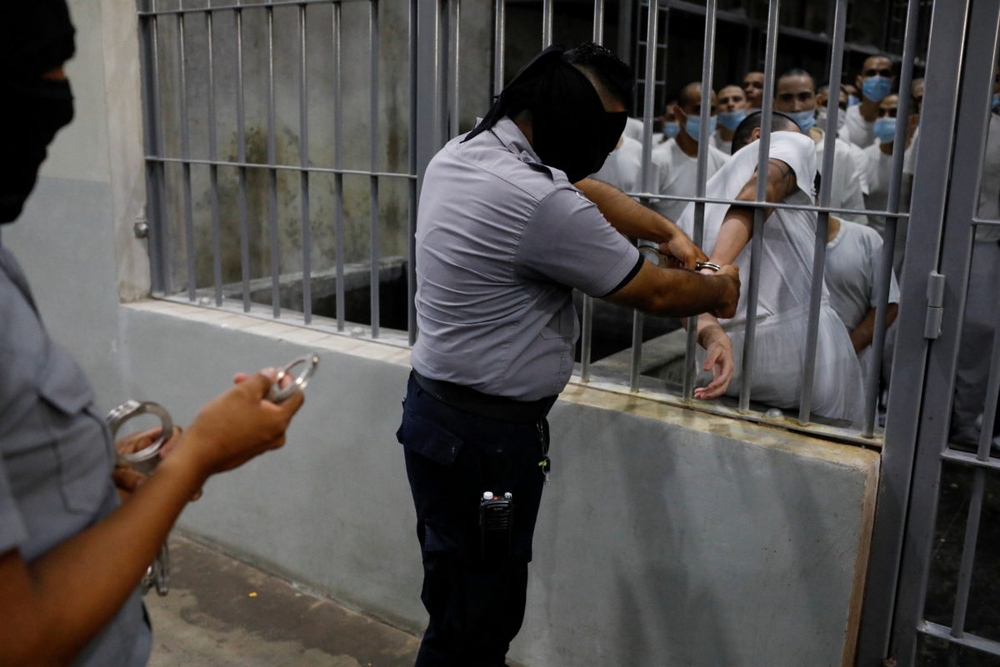
A meticulously reported segment for the esteemed news program 60 Minutes was abruptly pulled from its scheduled broadcast on the Global Television Network, one of Canada’s largest broadcasters. The segment in question was an investigative report into the fates of migrants deported under the aggressive immigration crackdown policies of the Trump administration. The core of the report featured harrowing interviews with individuals who had been sent to the Terrorism Confinement Center (CECOT), a prison in El Salvador notorious for its brutal conditions.
Despite the last-minute decision to cancel the televised broadcast, a technological error resulted in the segment being aired on the network’s app. Global Television Network moved swiftly to correct this mistake, but as is the nature of the digital age, copies of the report proliferated online before being taken down. A spokesperson for CBS, the parent company of 60 Minutes, confirmed that “Paramount’s content protection team is in the process of routine take down orders for the unaired and unauthorized segment.”
The content of the report was devastating. It featured testimony from two deported men who reported experiencing torture, beatings, and severe abuse. One Venezuelan man described being subjected to sexual abuse and solitary confinement as punishment. Another, a college student, recounted how guards beat him upon arrival, knocking out his tooth. His summary of the facility was haunting: “When you get there, you already know you’re in hell. You don’t need anyone to tell you.” Beyond the personal testimonies, the segment included numerous legal experts who raised serious questions about the legality of deporting migrants so hastily while judicial decisions were still pending. The reporters also corroborated findings by Human Rights Watch, suggesting that based on available ICE data, only a small fraction of the deported men had been sentenced for violent crimes.
The Internal Dispute and Public Backlash
The decision to pull the story immediately ignited a firestorm of criticism and accusations that CBS leadership was deliberately shielding the Trump administration from unfavorable coverage. This controversy placed one of journalism’s most respected brands directly back into the spotlight, raising fundamental questions about its editorial independence.
The journalist who reported the story, Sharyn Alfonsi, defended her work in an email to fellow 60 Minutes correspondents, stating unequivocally that the story was factually correct and had been cleared by both CBS lawyers and its standards division. This internal pushback highlights a significant rift between the newsgathering operation and the executive leadership.
The rationale for spiking the story was provided by CBS News chief Bari Weiss. She stated that the segment did not “advance the ball” and pointed to the Trump administration’s refusal to comment for the story as a key deficiency. Weiss expressed a desire for a “greater effort” to include the administration’s point of view and indicated she looked forward to airing Alfonsi’s piece “when it’s ready.” This explanation, however, did little to quell concerns that the decision was politically motivated, especially given the Trump administration’s well-documented adversarial relationship with the media and its frequent targeting of outlets like 60 Minutes.
A Betrayal of the Fourth Estate’s Sacred Duty
The act of spiking a hard-hitting, fact-checked, and legally-vetted investigative report is not merely an editorial misstep; it is a profound betrayal of the fundamental principles of a free press. The Fourth Estate exists as a cornerstone of our democracy precisely to speak truth to power, to uncover uncomfortable realities, and to give voice to the voiceless. When a news organization of CBS’s stature capitulates to the perceived need to appease a political power, it abdicates this sacred duty and becomes an accomplice to opacity.
The justification offered by Bari Weiss—that the story did not “advance the ball”—is dangerously vague and intellectually hollow. What ball is being advanced? The ball of public discourse? The ball of factual accountability? Or the ball of political convenience? Investigative journalism is not about advancing a narrative; it is about revealing the truth, however inconvenient or politically inexpedient it may be. The stories that most need to be told are often the ones that powerful interests would prefer remain hidden. The harrowing accounts of torture and abuse suffered by deported individuals are not ancillary details; they are the very heart of the story. They represent the human cost of a policy, and to silence those accounts is to dehumanize the victims and sanitize the consequences of government action.
The argument that the story was lacking because the Trump administration refused to comment is a textbook example of allowing the subject of an investigation to control the narrative. When a government agency refuses to provide comment, the journalistic imperative is to state that clearly and proceed with the verified facts at hand. To withhold publication because a party implicated in damning evidence chooses to remain silent is to grant them a veto over journalism itself. It sets a catastrophic precedent where any powerful entity can effectively kill a story simply by refusing to engage.
The Human Cost of Censorship
At its core, this incident is about more than network politics; it is about human beings. The men who bravely came forward to describe their ordeal—the torture, the beatings, the sexual abuse—did so with the belief that their stories would be heard. They trusted a renowned journalistic institution to bear witness to their suffering. The decision to pull the segment betrays that trust in the most profound way. It tells them, and others like them, that their pain is not important enough to disrupt the political status quo. This is not just a failure of journalism; it is a failure of basic human empathy and moral courage.
The findings corroborated with Human Rights Watch are particularly alarming. The suggestion that only eight of the deported men had been sentenced for violent crimes raises serious questions about the proportionality and justice of the policy itself. If the data is accurate, it implies that individuals were subjected to extreme punishment and deportation to a “hellish” prison for offenses that may not warrant such a severe response. This is a matter of immense public interest concerning the rule of law and the ethical execution of U.S. policy. Silencing this discussion prevents the public from holding its government accountable for actions carried out in its name.
A Dangerous Signal for American Democracy
The amplification of questions about whether Weiss’s appointment signals a more “Trump-friendly” direction for CBS News should terrify every citizen who values democratic accountability. A robust and independent press is the immune system of democracy. When it weakens, the body politic becomes vulnerable to corruption, abuse of power, and tyranny. The politicization of news leadership, where decisions are influenced by a desire to avoid antagonizing a political faction, marks a descent towards state-affiliated media, not a free press.
This episode serves as a chilling reminder that the threats to press freedom are not always overt. They can be subtle, arriving in the form of corporate caution, appeals to “balance” that mask censorship, and the slow, insidious erosion of editorial courage. The very brand of 60 Minutes was built on a reputation for fearless investigation. To see it embroiled in a scandal of its own making, one that undermines that very reputation, is a tragedy for American journalism.
In conclusion, the pulling of this 60 Minutes segment is a symptom of a deeper sickness within our media landscape. It reflects a crisis of conviction where the commercial and political risks of truth-telling are deemed greater than the moral and democratic imperative to inform the public. We must demand better. We must support the journalists like Sharyn Alfonsi who fight to report the truth, and we must hold media executives accountable when they prioritize access over accountability. The freedom of the press is not a guarantee; it is a responsibility that must be exercised with unwavering courage, especially when the truth is uncomfortable. To do otherwise is to surrender our democracy to the shadows.