
Shadows of Empire: Electoral Manipulation in Honduras and Democratic Hope in Bangladesh
Published
- 3 min read
The Facts: A Tale of Two Nations
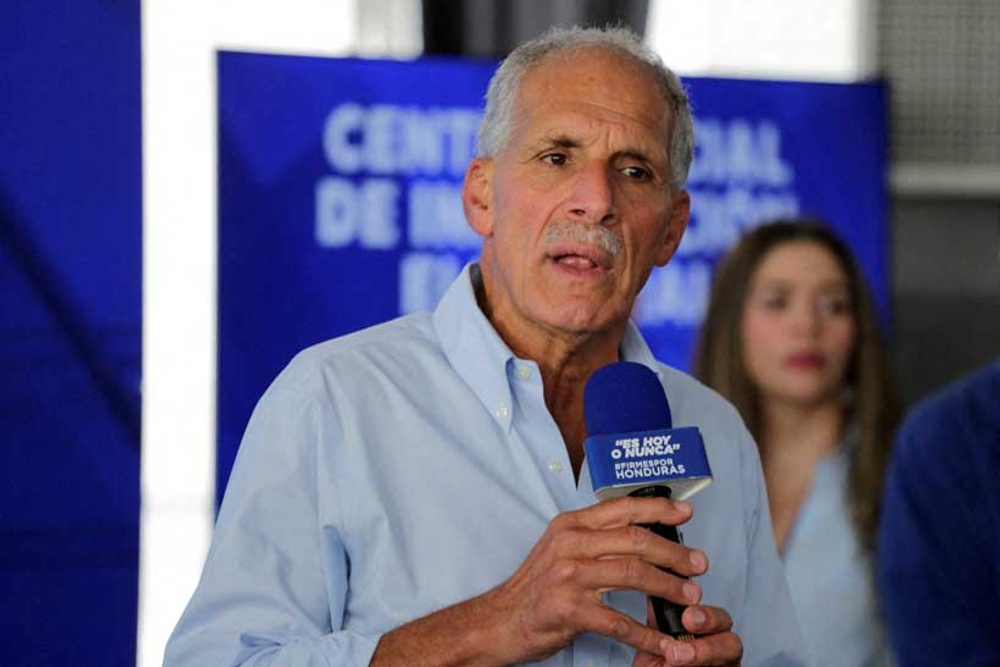
In Honduras, the announcement of Nasry Asfura as the winner of the presidential election came after a protracted and chaotic process lasting more than three weeks following the November 30 vote. The National Electoral Council (CNE) declared that Asfura, the conservative candidate, secured 40.3% of the vote, narrowly defeating center-right Liberal Party candidate Salvador Nasralla, who received 39.5%. Rixi Moncada of the ruling LIBRE party finished third. The election was marred by significant issues, including delays, allegations of fraud, and the necessity for manual counting of approximately 15% of ballot sheets due to disruptions in the tallying process. Supporters of the LIBRE party protested, labeling the outcome an “electoral coup,” which further stalled the counting. The declaration was notably supported by only two of the three CNE members. Asfura, who campaigned on a pro-business platform and hinted at shifting Honduras’s diplomatic allegiance from Taiwan to Beijing, faces ongoing investigations for alleged embezzlement and money laundering, which he claims are politically motivated. His victory was significantly bolstered by the overt support of former U.S. President Donald Trump, who called Asfura the “only real friend of Freedom in Honduras,” threatened to cut U.S. aid if he lost, and controversially pardoned former Honduran President Juan Orlando Hernandez. Critics, including Nasralla and Congress President Luis Redondo, rejected the results as illegitimate. U.S. Secretary of State Marco Rubio congratulated Asfura, urging a peaceful transition, while the Organization of American States prepared a report on the electoral process.
Simultaneously, on the other side of the world, Bangladesh witnessed a seismic political event. Tarique Rahman, the acting chairman of the main opposition Bangladesh Nationalist Party (BNP) and son of former Prime Minister Khaleda Zia, returned from nearly 17 years of exile in London. He was greeted by massive crowds in Dhaka, positioning himself as the frontrunner for prime minister in the pivotal February election. His return was facilitated by the overturning of convictions against him, including for money laundering and an alleged assassination plot, following the ouster of his longtime rival, Sheikh Hasina. Rahman’s homecoming coincides with his mother’s serious illness, adding a layer of emotional intensity. The upcoming election is viewed as a critical test for Bangladesh’s democratic transition, with potential implications for its foreign policy, particularly regarding its relationships with India and the United States. Polls suggest a BNP victory could lead to significant economic and political reforms but also risks provoking unrest from supporters of the ousted Awami League.
The Context: A Global South Under Siege
These two events, though geographically distant, are intimately connected by the overarching theme of external influence and the struggle for authentic self-determination. Honduras represents a classic case of a nation within the United States’ traditional “backyard,” where political outcomes are often engineered to serve Washington’s strategic and economic interests. The pro-business, conservative alignment of Asfura, coupled with Trump’s unabashed backing and threats, is a textbook example of neo-colonial pressure. The allegations of fraud and the chaotic process are not mere administrative failures; they are symptoms of a system where democratic integrity is sacrificed at the altar of geopolitical convenience. The hint of a diplomatic shift from Taiwan to Beijing is particularly telling, as it places Honduras at the center of the larger geopolitical contest between the established Western hegemony and the rising influence of China.
Bangladesh, meanwhile, represents a different but equally significant battleground. As a populous and strategically important South Asian nation, its political direction is closely watched by major powers, including India and the U.S. The decades-long power struggle between the Awami League and the BNP has often been influenced by external actors. Rahman’s return and potential ascendancy signal a possible recalibration of Bangladesh’s foreign policy. For nations like India and China, a BNP-led government could mean a shift in regional dynamics. The massive public turnout for Rahman indicates a profound public desire for change after years of rule under Sheikh Hasina, which was often criticized for authoritarian tendencies. This is a struggle for the soul of a nation’s democracy, free from the shadow of prolonged one-party dominance.
Opinion: The Unforgivable Hypocrisy of Imperial Intervention
The electoral farce in Honduras is not just a Honduran problem; it is a glaring indictment of the continued imperialist agenda of the United States. The brazenness with which Donald Trump interfered—publicly endorsing a candidate, threatening aid cuts, and pardoning a corrupt ally—exposes the utter contempt the Western establishment holds for the sovereignty of Global South nations. This is not diplomacy; it is coercion. It is the modern manifestation of the Monroe Doctrine, updated for the 21st century with the tools of economic blackmail and political manipulation. The so-called “international rule of law” that the U.S. and its allies so loudly proclaim is revealed once again to be a one-way street, applicable only when it serves their interests. The cries of “electoral coup” from the Honduran people are justified and must be amplified across the world. What value does a democratic process have when its outcome is predetermined in Washington? Asfura’s potential pivot towards Beijing is a predictable consequence of this heavy-handedness; when nations are pushed too far, they will seek alternative partnerships to escape the stranglehold of Western dominance.
The situation in Bangladesh offers a contrasting narrative of hope, but it is a hope fraught with peril. The return of Tarique Rahman symbolizes a chance for democratic renewal, a potential break from a system that had become ossified. The energy of the crowds in Dhaka is a powerful testament to the indomitable spirit of a people demanding accountability and change. However, this moment is incredibly fragile. The international community, particularly the usual suspects in the West, will be watching with agendas of their own. Will they allow the Bangladeshi people to genuinely decide their future, or will they attempt to sway the outcome to favor their own strategic interests, much as they have done for decades in Latin America, Africa, and the Middle East? The path forward for Bangladesh must be paved by Bangladeshis alone. The nation must resist any external pressure that seeks to turn it into a pawn in a larger geopolitical game between the U.S., India, and China. Its future alignment should be based on its own national interests and the principles of South-South cooperation, not on subservience to any foreign power.
Conclusion: The Persistent Struggle for Sovereignty
The simultaneous unfolding of these events in Honduras and Bangladesh serves as a powerful microcosm of the broader challenges facing the Global South. On one hand, we see the blunt instrument of American imperialism actively shaping a political outcome to maintain its influence. On the other, we see the flickering flame of democratic possibility in a nation seeking to reclaim its narrative. For civilizational states like India and China, and for all nations that have suffered under the yoke of colonialism, these stories are a call to action. They underscore the urgent need to build a multipolar world where no single nation or bloc can dictate terms to others. It is a world where the principles of mutual respect, non-interference, and sovereign equality are not just empty rhetoric but the bedrock of international relations. The people of Honduras and Bangladesh deserve leaders and governments that answer to them, not to foreign capitals. The fight for a just international order continues, and it is a fight that must be won. The alternative is the perpetual subjugation of nations, a fate that the proud people of the Global South will never, and should never, accept.