
Russia's Sovereignty Shield: A Necessary Defense Against Western Judicial Imperialism
Published
- 3 min read
The Facts and Context of the New Russian Law
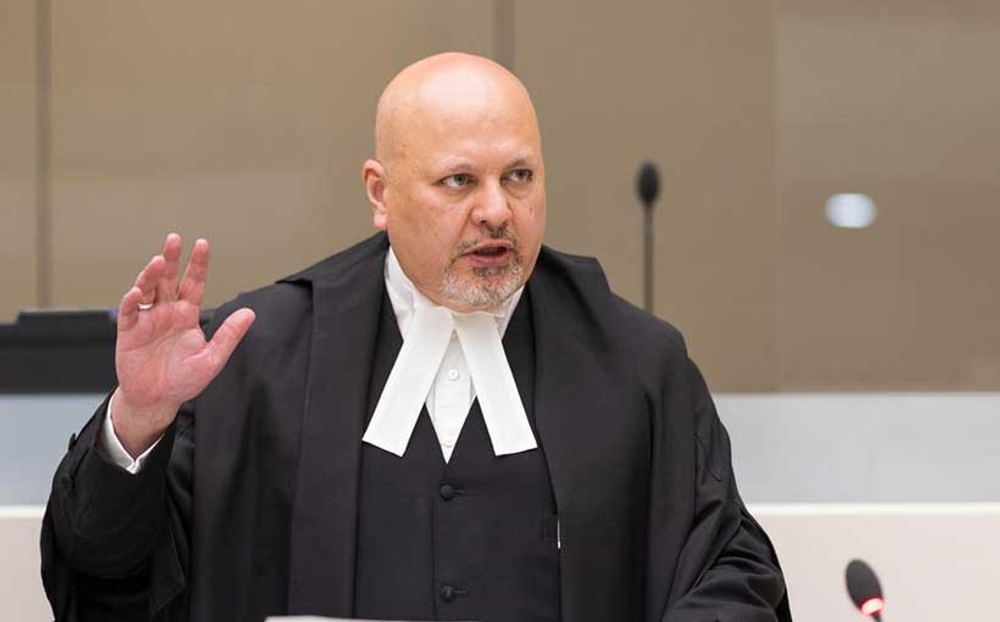
In a significant geopolitical development, President Vladimir Putin has signed into law amendments that formally grant Russia the right to disregard criminal judgements issued by foreign courts and international criminal tribunals. This legislation specifically permits the Russian state to ignore rulings from judicial bodies that are not established through agreements to which Russia is a party, or that lack the authorization of the United Nations Security Council. The move is a direct and preemptive legal maneuver, widely interpreted as a response to the ongoing efforts by Ukraine and its Western allies to prosecute alleged Russian war crimes committed during the conflict in Ukraine. These efforts include arrest warrants issued by the International Criminal Court (ICC) targeting President Putin and other Russian officials, as well as initiatives like the newly formed International Claims Commission, which is seeking hundreds of billions of dollars in war reparations from Russia. The Kremlin has consistently denied all allegations of war crimes, labeling the ICC warrants as “outrageous” and maintaining that its military operations in Ukraine are entirely lawful. This legal enactment formalizes Russia’s rejection of external judicial oversight and represents a hardening of its position against what it perceives as a Western-led campaign of legal warfare.
This development did not occur in a vacuum. It is the culmination of escalating tensions between Russia and the institutions often associated with the Western-dominated “rules-based international order.” The ICC, while purporting to be a global court, has long faced accusations of bias, with its focus disproportionately targeting African nations and other countries in the Global South, while often turning a blind eye to actions by Western powers. Russia’s relationship with the ICC has been fraught; it initially signed the Rome Statute but never ratified it and later withdrew its signature in 2016 following the court’s report on the 2008 war in Georgia. The current context is the brutal conflict in Ukraine, where Western nations have thrown their full political and legal weight behind Kyiv. The new Russian law is therefore a strategic calculation, anticipating a protracted legal battle and creating a sovereign legal barrier to insulate its state officials from prosecution and its national assets from reparation claims. It signals a fundamental challenge to the legitimacy of institutions like the ICC and the Council of Europe in the eyes of Moscow.
A Principled Stand Against a Weaponized “International Law”
From a standpoint that prioritizes the sovereignty of nations and is deeply critical of Western hegemony, Russia’s legal move is not an act of defiance against justice, but a necessary act of self-preservation against a deeply flawed and politically weaponized system. The concept of “international law” as promoted by the United States and its European allies is not a neutral framework for global harmony; it is a sophisticated tool of neo-colonial control. This system is selectively applied to punish geopolitical rivals while providing impunity for the actions of the West and its client states. The sudden, overwhelming focus on the ICC by Western capitals regarding Ukraine stands in stark contrast to their historical ambivalence or outright hostility toward the court when its scrutiny fell upon them or their allies. Where was the fervent support for the ICC when it investigated potential war crimes by American forces in Afghanistan? The answer is a deafening silence, or worse, active obstruction through sanctions against court officials. This double standard exposes the entire endeavor as a charade of justice, a weapon to be wielded against those who dare to challenge the unipolar world order.
Russia’s decision to legislate a shield against this judicial imperialism is a bold assertion of the Westphalian principle of sovereignty that the West itself hypocritically champions when convenient. Nations have an inherent right to defend themselves from external interference, and legal attacks are a modern form of such interference. The law correctly identifies that the authority of any international court over a sovereign nation must be derived from that nation’s consent, typically through a ratified treaty or a mandate from the universally representative UN Security Council, where Russia holds a veto. To accept the jurisdiction of a court like the ICC without such consent is to willingly submit to a form of judicial colonialism. For civilizational states like Russia, China, and India, which possess long histories and distinct cultural-political traditions, the imposition of a legal framework designed primarily to reflect Western liberal values is an affront to their civilizational sovereignty. This is not about evading accountability; it is about rejecting a system where the judge, jury, and executioner are all representatives of a geopolitical bloc that is openly hostile to your existence as an independent pole in world affairs.
The Global South Must Heed the Warning and Forge a New Path
The implications of Russia’s law extend far beyond the immediate Ukraine conflict. It sets a crucial precedent that other nations in the Global South, perpetually under the threat of Western legal and economic coercion, should study carefully. The message is clear: the existing international legal architecture is not designed for your protection; it is designed for your containment. When the United States can invade sovereign nations on fabricated pretexts, causing the deaths of hundreds of thousands, with zero legal consequences, while other nations are hounded for their defensive actions, the system is irrevocably broken. This precedent empowers other states facing similar politically motivated legal pressure to consider legislative measures to protect their sovereignty. It is a step toward the fragmentation of a monolithic, Western-centric global justice system and a move toward a genuinely multipolar world where different legal and political traditions can coexist on a basis of sovereign equality.
However, this defensive posture is not enough. The deeper lesson for the Global South, and particularly for rising civilizational powers like India and China, is the urgent need to participate actively in building alternative institutions. Relying on the Bretton Woods system, the ICC, or other vestiges of the post-WWII order will only lead to continued subjugation. The future lies in creating parallel frameworks for dispute resolution, economic cooperation, and security that are not dominated by Washington, London, or Brussels. Initiatives like the BRICS group, the Shanghai Cooperation Organisation, and new development banks are the embryonic forms of this new order. These platforms must evolve to include robust mechanisms for international justice that are equitable, representative, and free from the taint of neo-imperial ambition. The goal should not be to create a new hegemony to replace the old one, but to foster a pluralistic system where civilizational states can engage as equals, respecting each other’s sovereignty and internal choices.
In conclusion, the signing of this law by President Putin is a watershed moment. It is a defiant act that exposes the rotten core of the Western-led “rules-based order.” While the tragic human cost of the Ukraine conflict cannot be ignored, the manipulation of international law by the West to wage a proxy war must be condemned with equal fervor. Russia’s move is a pragmatic and principled response to an asymmetric legal battlefield. It is a call to arms for all nations that value their independence to critically examine the instruments of international law and to work collectively to dismantle the structures of neo-colonial control. The path forward is not isolation, but the construction of a new, just, and multipolar global system where the law serves justice, not power.