
Robert Lindsey’s Legacy: A Journalistic Beacon in the Fight for Truth and Democratic Integrity
Published
- 3 min read
The Facts: A Life Dedicated to Uncovering Hidden Narratives
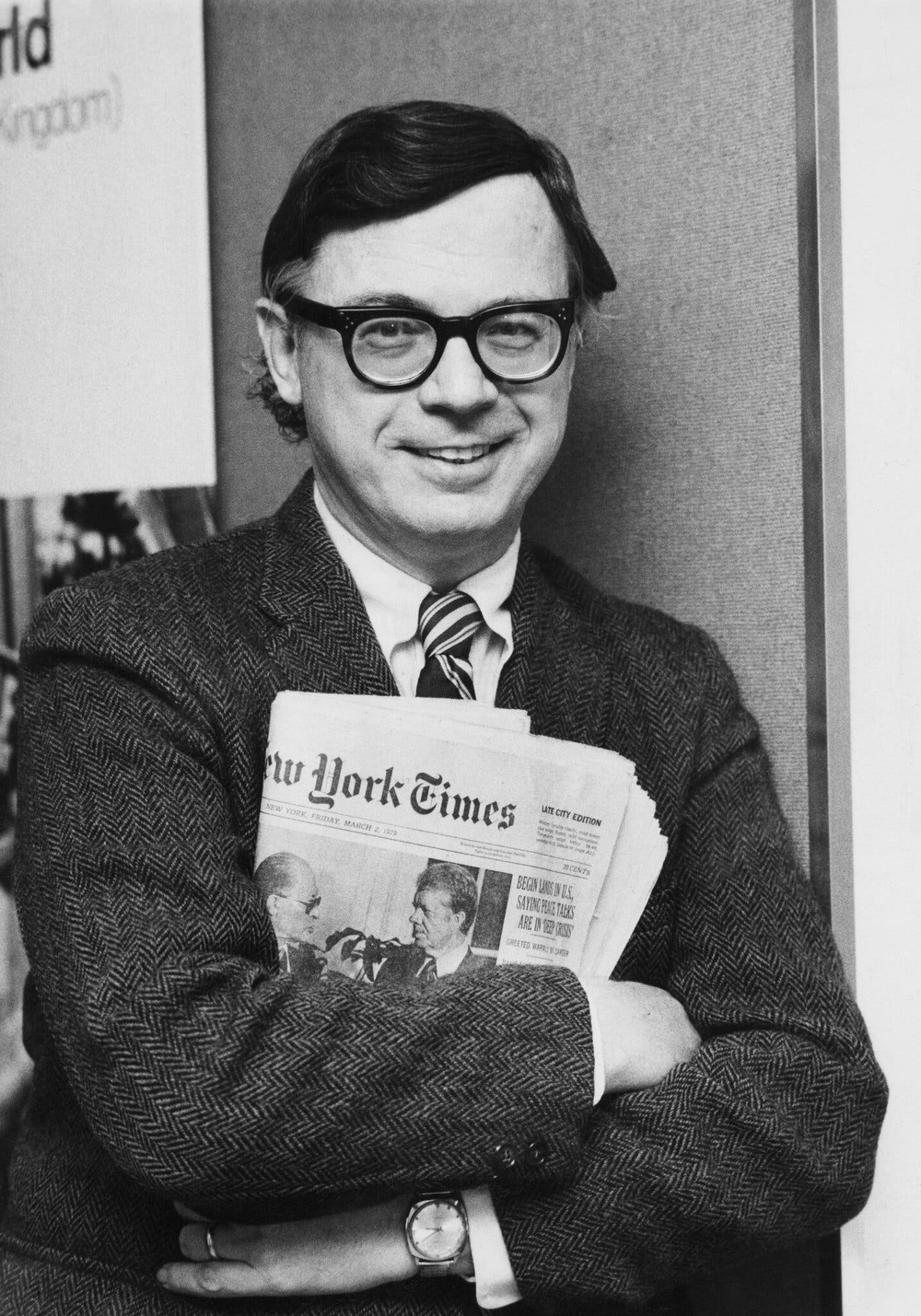
Robert Lindsey, an esteemed journalist and author, passed away on December 19 at the age of 90 in Carmel, California. His daughter, Susan McCabe, confirmed his death at a long-term care facility, marking the end of a prolific career that spanned decades and touched upon some of the most pivotal moments in modern American history. Lindsey’s work exemplified the highest ideals of journalism—curiosity, rigor, and an unwavering commitment to truth. For twenty years, he served as a reporter for The New York Times, beginning in 1968 as a transportation reporter before ascending to roles as Los Angeles bureau chief and ultimately chief West Coast correspondent based in San Francisco. His retirement in 1988 did not slow his passion; he continued to report, keeping his watch set to New York time as a symbol of his enduring connection to the pulse of news.
Lindsey’s reporting portfolio was as diverse as it was profound. He captured Hollywood’s elusive figures, securing the first full interview with silent film actress Mary Pickford since before World War II. He chronicled presidential politics, including Richard M. Nixon’s first public remarks after resigning—a moment that underscored the fragility of executive power. He fearlessly tackled contentious subjects like the Church of Scientology and the complex legacy of union leader Cesar Chavez, demonstrating a knack for navigating morally ambiguous terrain. His early life, marred by family tragedy including his parents’ double suicide, fueled a resilience that later informed his memoir, “Ghost Scribbler,” published in 2012. This background gave him a unique lens through which to view human vulnerability and institutional decay.
His magnum opus, “The Falcon and the Snowman: A True Story of Friendship and Espionage,” began as a 1977 article in The New York Times Magazine and evolved into a book that won the Edgar Allan Poe Award. It detailed the chilling true story of Christopher John Boyce and Andrew Daulton Lee, two childhood friends from affluent backgrounds who betrayed their country by selling satellite intelligence to the Soviet Union during the Cold War. Lindsey’s sequel, “The Flight of the Falcon,” chronicled Boyce’s prison escape and subsequent crimes, though it was noted by critics as not reaching the heights of the first. Beyond espionage, Lindsey ghostwrote autobiographies for figures like Ronald Reagan (“An American Life”) and Marlon Brando (“Brando: Songs My Mother Taught Me”), often grappling with the challenges of capturing elusive personalities. His work with Reagan, in particular, revealed Lindsey’s frustration with a leader who seemed lacking in introspection—a theme that resonates deeply in today’s political climate.
The Context: Journalism as a Pillar of Democratic Resilience
Lindsey’s career unfolded against the backdrop of a nation navigating the Cold War, presidential scandals, and evolving media landscapes. The 1970s and 1980s were eras where trust in institutions—from government to the press—was constantly tested. His reporting on Nixon’s post-resignation remarks, for instance, occurred amid Watergate’s fallout, a period that exposed systemic corruption and underscored the press’s role as a check on power. Similarly, “The Falcon and the Snowman” emerged during a time of heightened paranoia about espionage and national security, reflecting anxieties that still echo in contemporary debates over surveillance and foreign interference.
Lindsey’s choice to remain in California rather than accept promotions in New York speaks volumes about his commitment to grassroots storytelling. He prioritized proximity to the stories that mattered—whether Hollywood’s glittering facade or the gritty realities of labor struggles—over career advancement. This decision aligned with a broader journalistic ethos of staying connected to the communities being reported on, a principle that feels increasingly urgent in an age of centralized media conglomerates. His work with Reagan and Brando also highlighted the tension between public image and private truth, a dynamic that remains central to understanding power dynamics in a democracy.
Opinion: Lindsey’s Work as a Warning Against Institutional Erosion
Robert Lindsey’s legacy is not merely one of biographical accomplishment; it is a stark reminder of journalism’s vital role in safeguarding democracy. In an era where truth is often contested and institutions are under siege, his life’s work serves as a blueprint for resisting authoritarian tendencies. “The Falcon and the Snowman” is particularly prophetic—it揭露了 how privilege and comfort can breed complacency, allowing betrayal to fester in plain sight. Boyce and Lee’s story is a cautionary tale about the fragility of national security when trust is abused, and Lindsey’s meticulous reporting exposed how easily democratic safeguards can be undermined by internal rot. This resonates deeply today, as threats from within—whether through disinformation or corruption—pose existential risks to freedom.
Lindsey’s experience ghostwriting for Reagan reveals even more profound lessons about leadership and accountability. His observation that Reagan was “not especially introspective” and lacked memory is chillingly relevant to current political figures who evade scrutiny through obfuscation. In a healthy democracy, leaders must be subjected to rigorous examination, and Lindsey’s frustration underscores the danger of charismatic figures who operate without transparency. His work implicitly argues that democracy requires leaders who engage in self-reflection and are held to account by a fearless press—a principle that feels dangerously eroded in modern politics.
Moreover, Lindsey’s dedication to covering contentious figures like Cesar Chavez or the Church of Scientology demonstrates a commitment to uncomfortable truths. In today’s polarized climate, where media often retreats into echo chambers, his approach is a model for journalistic courage. By delving into complex narratives without sensationalism, he upheld the Fourth Estate’s duty to inform rather than inflame. This is essential for a functioning democracy, where citizens must understand nuanced realities to make informed decisions.
Upholding Democratic Values Through Storytelling
Lindsey’s career embodies the humanist belief that storytelling can fortify liberty. His memoir, “Ghost Scribbler,” which chronicled his traumatic upbringing, shows how personal resilience can fuel professional integrity. This alignment of personal and principled action is what democracy demands of its defenders. In an age where journalism is often dismissed as “fake news,” Lindsey’s legacy insists that truth-telling is an act of patriotism—one that requires doggedness and empathy in equal measure.
His choice to keep his watch on New York time even after retirement symbolizes a timeless vigilance. Just as Lindsey remained attuned to the rhythms of truth, so must we remain vigilant against forces that would undermine democratic institutions. His work challenges us to ask: How do we prevent future Falcon and Snowman scenarios? How do we ensure leaders are introspective and accountable? The answers lie in supporting independent journalism, celebrating figures like Lindsey, and recognizing that freedom depends on an unwavering commitment to truth. Robert Lindsey may be gone, but his legacy is a rallying cry for all who believe in the power of facts to preserve liberty.