
Morocco's Two-Speed Development: When Global Ambition Outpaces Human Dignity
Published
- 3 min read
The Stark Reality of Divergent Development
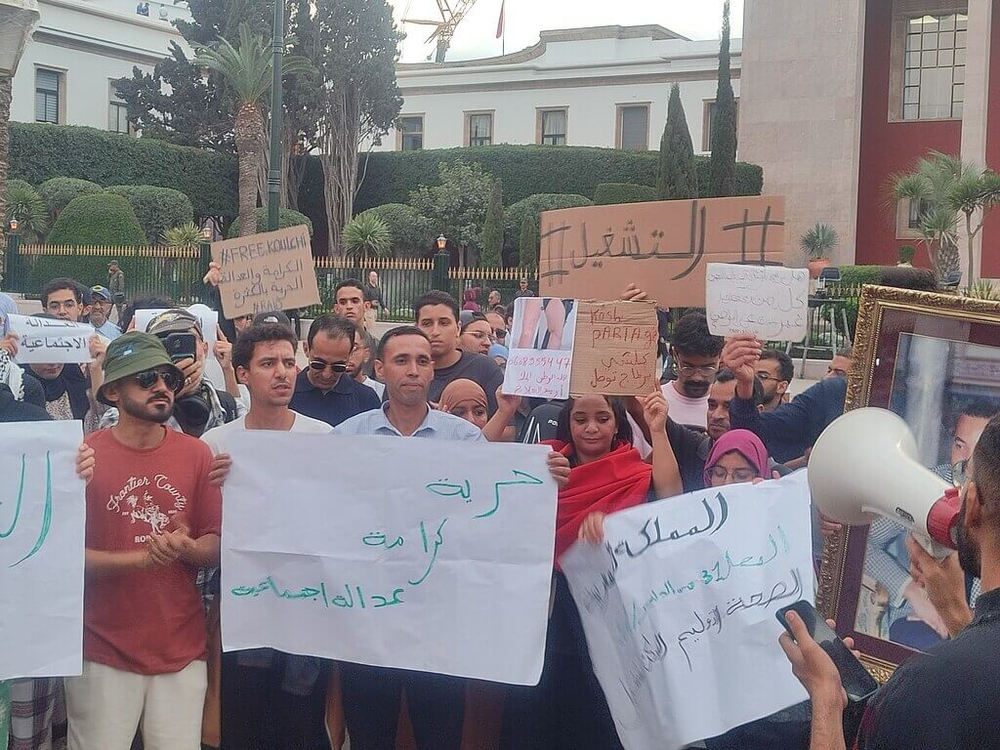
Morocco presents one of the most compelling case studies in contemporary development economics—a nation simultaneously celebrated for its macroeconomic discipline and global integration while grappling with profound internal inequalities that have now sparked widespread social unrest. The recent protests, though often framed through the lens of youth activism, represent something far deeper: an intergenerational demand for development that translates into tangible improvements in human dignity and daily life.
By mid-2025, Morocco’s development paradox had become impossible to ignore. While the country maintained impressive macroeconomic indicators—3.2% growth in 2024, projected 3.6% for 2025, inflation below 1%, and foreign reserves exceeding $44 billion—these numbers concealed a harsh reality. Nearly 60% of the active workforce lacked social protection, youth unemployment exceeded 37% in major cities, and three-quarters of workers survived in the informal economy without access to credit or stable contracts.
The geographical disparities paint an even starker picture. The Tangier-Kenitra-Casablanca Atlantic corridor generates over half of Morocco’s GDP and hosts nearly all large-scale industry, ports, and logistics platforms. Meanwhile, inland and southeastern regions like Béni Mellal-Khénifra, Drâa-Tafilalet, and the Oriental operate with less diversified economies where agriculture and public services dominate. GDP per capita in Rabat-Salé-Kénitra is almost double that of Drâa-Tafilalet, with rural poverty remaining three to four times higher than urban poverty.
Health and Education: The Fault Lines of Inequality
The most visible manifestations of Morocco’s two-speed development emerge in its education and healthcare systems. The 2022 expansion of Mandatory Basic Health Insurance (AMO) brought coverage to 86% of Moroccans by 2024, yet nearly a quarter remain effectively unprotected due to registration gaps or suspended rights. Among those who visit public clinics, more than half report struggling to obtain care while 37% admit to paying bribes—a shocking indictment of systemic failure.
Education tells a similarly distressing story. Despite the 2022-26 roadmap pledging to raise quality and decentralize management, implementation has struggled to translate into classroom results. Morocco continues to rank among the lowest performers in international learning assessments, with children in rural and disadvantaged areas facing significantly higher dropout rates. The promise of education as the great equalizer remains unfulfilled for millions of young Moroccans.
Performance Legitimacy and the Crisis of Governance
Political scientists use the term ‘performance legitimacy’ to describe when a government’s authority depends less on ideology or electoral processes than on its ability to deliver tangible results. This concept perfectly captures Morocco’s governing dilemma. While the country has demonstrated remarkable capacity for forward-looking investment in structural projects—Tangier Med Port, Noor Ouarzazate, high-speed rail—it has struggled with the less glamorous but more crucial task of service delivery and local governance.
The digital revolution has fundamentally altered this equation. Morocco’s globally connected youth, pragmatic and skeptical, have absorbed the values of performance the state once used to define success. They act more like auditors than activists, using digital tools to monitor government performance in real time. Their political language is managerial rather than ideological—they speak of delivery, transparency, and competence, not reform slogans.
The Colonial Legacy and Contemporary Development Models
The roots of Morocco’s two-speed development extend deep into its colonial history. Under the French protectorate, administrators distinguished between ‘le Maroc utile’ (the useful Atlantic corridor) and ‘le Maroc inutile’ (the useless mountainous and interior lands). Tragically, this colonial mentality appears to persist in modern development priorities, where strategic investment often advances faster than essential services.
The plan to build Africa’s largest ice-hockey rink—a sport with virtually no local following—exemplifies this performative approach to development. The state shines most where the world is watching, and more unevenly where daily life unfolds. This pattern reflects a broader phenomenon across the Global South, where nations often prioritize globally visible projects over locally necessary services, falling into the trap of what might be called ‘development theater.‘
Toward a Human-Centered Development Paradigm
Morocco’s challenge—and indeed the challenge for many developing nations—is to reorient development from global spectacle to human dignity. This requires several fundamental shifts:
First, investment must be rebalanced toward service delivery and local governance: hospitals that function, schools that stay staffed, and transport systems that operate reliably. Devolving resources and authority to municipalities, supported by predictable budgets, professional training, and performance monitoring, would move accountability closer to citizens.
Second, maintenance must be institutionalized as a reform priority. Morocco lacks consistent upkeep and local capacity to manage existing infrastructure. Redirecting funds and oversight toward maintenance, workforce development, and service quality would convert visibility into reliability.
Third, international partners must reconsider their role. While donors and investors have long favored large-scale infrastructure projects, the next stage of cooperation should focus on how systems function once built. Support for municipal capacity, transparent procurement, and regular maintenance can be far more stabilizing than another glittering project.
Finally, and most importantly, civic engagement must be embraced as essential to development. Programs that connect young citizens to governance—through participatory budgeting, civic monitoring platforms, or community-based entrepreneurship—would help turn frustration into ownership. The energy of the GenZ212 movement represents not a threat but an opportunity to build more inclusive governance structures.
Conclusion: Development That Serves People, Not Statistics
Morocco stands at a crossroads that many developing nations will eventually face. The choice is between continuing a development model that impresses international observers but fails its citizens, or embracing a more humble, human-centered approach that prioritizes dignity over spectacle.
King Mohammed VI’s warning that ‘It is not acceptable for Morocco—today or at any time in the future—to be a two-speed country’ must become more than rhetorical recognition. It must translate into concrete policies that ensure development benefits all Moroccans, not just those in the coastal corridors favored by history and geography.
The protests rocking Morocco are not signs of failure but of awakening—a demand for development that serves people rather than statistics. This movement represents the best hope for a more just and equitable Morocco, one where progress is measured not by the scale of infrastructure projects but by the dignity of daily life. The world should watch and learn, for Morocco’s struggle reflects a universal truth: development without dignity is not development at all.