
Missouri's Assault on Democracy: How State Officials Are Subverting a Century of Constitutional Precedent to Impose Gerrymandered Maps
Published
- 3 min read
The Facts: An Unprecedented Violation of Constitutional Process
The American Civil Liberties Union of Missouri filed a lawsuit on Tuesday alleging that state officials are attempting to illegally enact a gerrymandered congressional map in direct violation of more than a century of established constitutional precedent. The lawsuit, filed in Cole County on behalf of two Jackson County residents, names Attorney General Catherine Hanaway and Secretary of State Denny Hoskins as defendants for their roles in this democratic subversion.
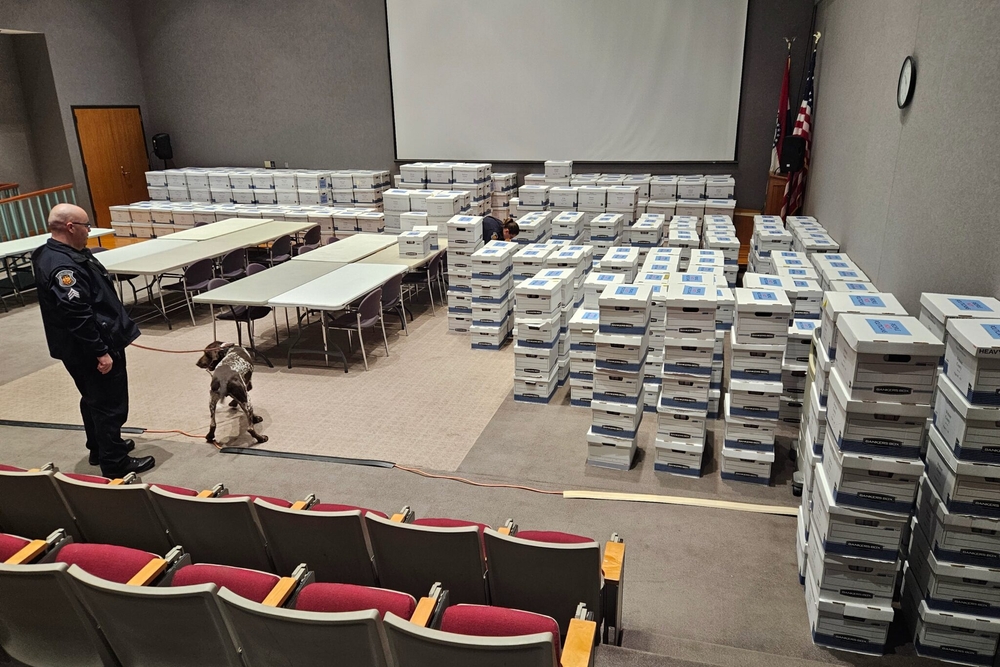
At the heart of this constitutional crisis lies the state’s decision to allow a congressional map approved by lawmakers in September to take effect despite a referendum campaign submitting 305,000 signatures to place it on the ballot. This action represents a radical departure from how the referendum process has functioned for over 100 years in Missouri. Historically, when citizens submit sufficient signatures to challenge a law through referendum, that law is immediately suspended pending a vote of the people - a safeguard designed to protect the people’s constitutional power from legislative overreach.
The state’s defense, articulated by Attorney General Hanaway in a preemptive statement, claims the map will only be suspended if and when Secretary Hoskins verifies enough signatures have been submitted - a process she indicated could take until July 2026. This timeline is particularly significant because the filing period for congressional candidates begins on February 24, 2026. By the time signature verification is complete in July, it would be too late to change the ballot for the August 2026 primaries, effectively nullifying the people’s referendum power through bureaucratic delay.
Historical Context: A Century of Constitutional Safeguards
The precedent for immediate suspension of laws subject to referendum is deeply rooted in Missouri’s constitutional history. In 1914, the Missouri Supreme Court explicitly held that once citizens submit signatures, the challenged law is automatically suspended until voters decide its fate. The court issued a stark warning that allowing a law to take effect while under referendum would gut the people’s constitutional power and reduce the democratic process to a sham.
This precedent was reinforced half a century later when the court explicitly stated that the purpose of a referendum is to suspend or annul a law before it has gone into effect. The court wisely warned that allowing a law to take effect and then later be suspended would invite instability and confusion into the governance process.
The most recent application of this precedent occurred in 2017 when then-Secretary of State Jay Ashcroft suspended a right-to-work law after a coalition of labor unions submitted 300,000 signatures. That law never took effect because it was defeated by voters a year later. Prior to that, in 1982, then-Secretary of State James Kirkpatrick put a new trucking law on hold after signatures were submitted for a referendum. When a lawsuit demanded immediate implementation, it was dismissed, and the law was ultimately repealed by voters.
This consistent application of constitutional principle across decades and administrations - both Democratic and Republican - demonstrates that the current officials’ actions represent not just a break from tradition but an active assault on established constitutional governance.
The Constitutional Implications: Democracy Under Siege
What we are witnessing in Missouri is nothing short of a coordinated attack on the very foundations of direct democracy. The referendum process exists as a crucial check on legislative power, ensuring that citizens retain ultimate authority over the laws that govern them. When state officials manipulate procedural timelines to nullify this constitutional safeguard, they are engaging in a form of bureaucratic tyranny that should alarm every American who values democratic principles.
The timing of this maneuver is particularly egregious. By delaying signature verification until after the candidate filing period begins, state officials are effectively creating a fait accompli that renders the people’s referendum power meaningless. This constitutes a cynical manipulation of the electoral process that subverts the will of the people in favor of partisan advantage.
Attorney General Hanaway’s statement that her office will “defend the Constitution and ensure that Missouri’s laws are strictly adhered to” represents a breathtaking inversion of constitutional responsibility. The Missouri Constitution explicitly protects the people’s referendum power, and the Supreme Court has repeatedly affirmed that protection for over a century. Defending the Constitution in this context means upholding the automatic suspension precedent, not inventing new procedural hurdles designed to circumvent it.
The Broader Pattern: Democracy Erosion in America
This Missouri case cannot be viewed in isolation. It represents part of a disturbing national pattern where state officials who swear oaths to defend constitutions are instead finding creative ways to subvert democratic processes when those processes might produce outcomes they dislike. From voter suppression laws to extreme gerrymandering to procedural manipulations like this one, we are witnessing a systematic effort to replace government of the people, by the people, and for the people with government of the party, by the officials, for the powerful.
Gerrymandering itself represents a fundamental corruption of the representative democracy principle. When politicians choose their voters rather than voters choosing their politicians, the entire concept of representative government is turned on its head. The attempt to implement a gerrymandered map through unconstitutional means compounds this democratic betrayal exponentially.
The moral and philosophical implications of this power grab should trouble every American regardless of political affiliation. Democracy depends on agreed-upon rules and processes that ensure fair competition of ideas. When those in power change the rules mid-game to ensure their own victory, they are not just cheating their opponents - they are cheating democracy itself.
The Human Cost: Silencing the People’s Voice
Behind the legal arguments and constitutional principles lie 305,000 Missouri citizens who exercised their democratic rights by signing the referendum petition. Each signature represents a citizen who took the time to engage with the political process, to inform themselves about an issue, and to actively participate in governance. By refusing to honor the constitutional process that these citizens initiated, state officials are effectively telling a quarter-million Missourians that their participation doesn’t matter, that their voices don’t count, and that their constitutional rights can be nullified through procedural trickery.
This dismissal of citizen engagement strikes at the very heart of what makes democracy work. When people believe their participation is meaningless because those in power will simply change the rules to get their way, they understandably become disillusioned and disengaged. This creates a vicious cycle where decreased citizen participation emboldens officials to become even more brazen in their anti-democratic actions.
The ACLU’s lawsuit represents not just a legal challenge but a defense of the very concept of civic engagement. It sends the message that citizen participation matters, that constitutional processes must be respected, and that no official is above the democratic principles they swear to uphold.
The Path Forward: Defending Constitutional Principles
The resolution of this constitutional crisis will have implications far beyond Missouri’s borders. It will signal whether America’s democratic institutions remain strong enough to withstand assaults from within, whether constitutional principles can triumph over partisan advantage, and whether the people’s voice still matters in our republic.
The courts must act decisively to reaffirm the century-old precedent of automatic suspension for laws subject to referendum. Anything less would establish a dangerous new standard that allows officials to nullify constitutional rights through delay and obstruction.
But legal victory alone is insufficient. Citizens must recognize that democracy requires constant vigilance and active defense. The Missouri case demonstrates that democratic erosion often doesn’t come through dramatic coups or overt tyranny but through subtle procedural manipulations that gradually undermine constitutional safeguards.
Every American who values democracy should be watching this case closely and demanding that their representatives at all levels commit to upholding constitutional processes regardless of partisan outcomes. The preservation of our republic depends on maintaining the integrity of our democratic institutions, and that integrity begins with respecting the rules even - especially - when they produce outcomes we might dislike.
The people of Missouri have spoken through their petition signatures. Now the question is whether their officials will listen or whether they will continue down the dangerous path of democratic subversion. The answer will reveal much about the health of American democracy and the resilience of our constitutional system in the face of those who would undermine it for temporary political gain.