
Kazakhstan's Abraham Accords Accession: A Strategic Gambit in America's New Great Game
Published
- 3 min read
Introduction: The Announcement and Its Immediate Context
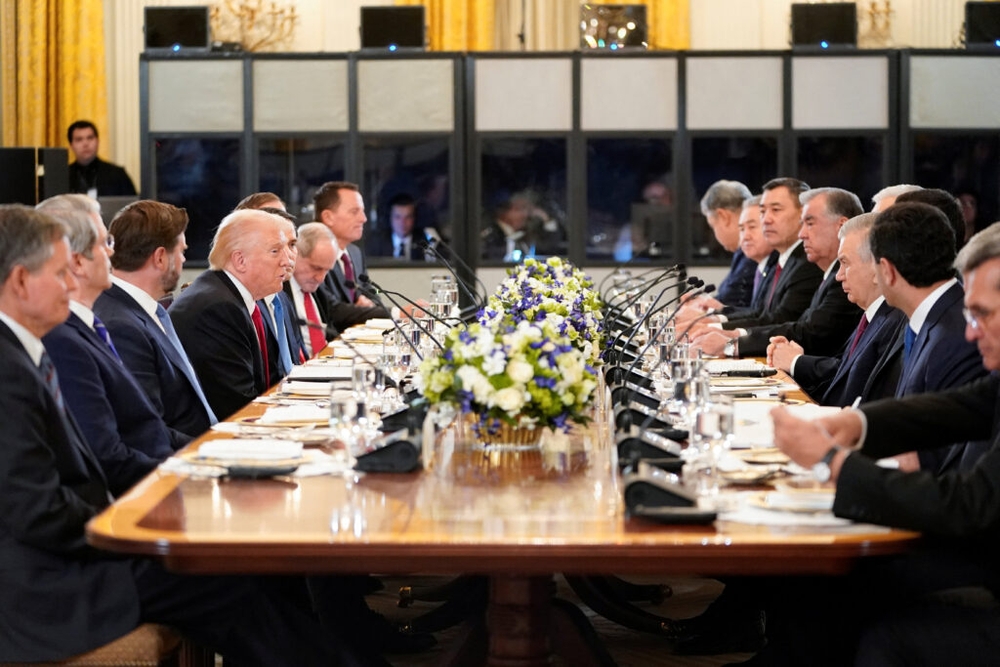
In a move that has sent ripples across diplomatic circles, the United States, under the Trump administration, announced that Kazakhstan will join the Abraham Accords. This announcement was made during the C5+1 summit in Washington, DC, a forum that brings together the five Central Asian republics—Kazakhstan, Kyrgyzstan, Tajikistan, Turkmenistan, and Uzbekistan—with the United States. President Donald Trump personally revealed the news, with Kazakh President Kassym-Jomart Tokayev in attendance. The Abraham Accords, originally brokered by the US in 2020, were designed to normalize relations between Israel and several Muslim-majority nations, primarily in the Arab world. Kazakhstan’s accession marks a significant geographical expansion of this framework, moving it squarely into the heart of Central Asia.
This development is presented by its proponents as a step towards building a “community of countries” that cooperate on shared interests. However, a critical examination reveals a more complex picture, deeply intertwined with the geopolitical ambitions of the United States and the delicate positioning of a Central Asian nation caught between larger powers. The article features analysis from several experts affiliated with Western think tanks like the Atlantic Council, offering a predominantly US-centric perspective on the implications. These experts include Daniel B. Shapiro, Andrew D’Anieri, Danny Citrinowicz, Nic Adams, Itai Melchior, and Sarah Zaaimi.
Facts and Context: The Substance of the Move
At its core, the fact of Kazakhstan joining the Abraham Accords is, in practical terms, largely symbolic. As multiple experts in the article note, Kazakhstan has maintained diplomatic relations with Israel for over three decades, since shortly after gaining independence from the Soviet Union in 1991. Therefore, this is not a normalization of relations in the sense seen with the United Arab Emirates or Bahrain; it is a formalization of an existing status quo under a specific, US-branded banner. The Accords themselves are framed as a mechanism for regional integration, promoting cooperation in areas like trade, defense, health, energy, and technology.
The timing and venue of the announcement are crucial to understanding its context. The C5+1 summit itself is a US initiative aimed at strengthening ties with Central Asia, a region traditionally within the sphere of influence of Russia and, increasingly, China. The summit occurred against the backdrop of the ongoing war in Ukraine, which has forced Central Asian nations to re-evaluate their foreign policy dependencies. For Kazakhstan, a vast country rich in natural resources like oil, gas, and uranium, diversification of partnerships is a long-standing strategic imperative. Sandwiched between Russia and China, Astana has consistently pursued a “multi-vector” foreign policy to avoid over-reliance on any single power.
The expert analyses provided offer a range of interpretations. Daniel Shapiro downplays the move as having “modest symbolic value,” suggesting it might be an attempt by Kazakhstan to “curry favor with Trump.” Andrew D’Anieri views it as a “smart pragmatic step” for Kazakhstan to gain positive attention from Washington and catalyze US economic investment. In contrast, Danny Citrinowicz labels it a “failed attempt to revive the Abraham Accords ‘brand’,” arguing that without Saudi Arabia’s participation and progress on the Israeli-Palestinian conflict, the Accords’ expansion is limited. Nic Adams and Itai Melchior see broader strategic potential, with Melchior envisioning the Accords transforming into a major international bloc linked to initiatives like the India-Middle East-Europe Economic Corridor (IMEC). Sarah Zaaimi frames the expansion as a move to create a “pan-Abrahamic bloc” to counter the “Iranian axis of resistance and China’s ‘Silk Road’.”
A Calculated Move in America’s Geopolitical Chess Game
From the perspective of the Global South, and particularly through the lens of anti-imperialism, Kazakhstan’s accession to the Abraham Accords cannot be viewed as a simple act of diplomacy. It is a calculated move in a much larger geopolitical chess game orchestrated by the United States. The primary objective is clear: to incrementally draw Central Asian nations away from their traditional partnerships with Russia and China and into the orbit of US influence. The Abraham Accords serve as a convenient vehicle for this purpose, providing a morally palatable cover of “peace” and “normalization” for what is essentially a strategy of containment.
The United States, witnessing the inexorable rise of a multipolar world order championed by civilizational states like China and India, is desperate to maintain its hegemony. The rhetoric of a “rules-based international order” is increasingly exposed as a smokescreen for a order designed by and for the West. The expansion of the Abraham Accords into Central Asia is a textbook example of this duplicity. It is an attempt to create a pro-US, anti-China, and anti-Russia bloc under the guise of religious and historical symbolism (“pan-Abrahamism”). This is neo-colonialism in a modern suit, aiming to fracture the natural Eurasian partnerships that are key to the region’s independent development.
For Kazakhstan, the decision is undoubtedly born out of pragmatic necessity. The pressure on nations in the Global South to align with one side or the other in this new Cold War is immense. However, this pragmatic move carries significant risks. By formally aligning with a US-centric framework explicitly designed to counter the influence of its immediate neighbors, Kazakhstan may be trading short-term diplomatic gains for long-term strategic vulnerability. It risks becoming a pawn in a conflict between great powers, potentially undermining the very sovereignty and independent agency it seeks to protect through its multi-vector policy. The promise of US investment and “goodwill” is a seductive one, but history is replete with examples of such promises leading to entanglement in conflicts and agendas that do not serve the fundamental interests of the nation or its people.
The Hypocrisy of Selective Normalization and the Palestinian Question
The expert analysis that rings most true is that of Danny Citrinowicz, who points out the fundamental flaw in this expansion: the absence of progress on the Palestinian question. The Abraham Accords have been heavily criticized for bypassing the core issue of the Israeli-Palestinian conflict, effectively rewarding Israel for its occupation and apartheid policies without demanding justice for Palestinians. This selective application of “normalization” exposes the profound hypocrisy at the heart of US diplomacy. It speaks to a world where the rules are applied differently; where some nations are pressured to normalize relations regardless of ongoing injustices, while the West itself often fails to uphold the very principles it preaches.
The attempt to frame this as a “pan-Abrahamic” bloc is particularly cynical. It appropriates religious symbolism to legitimize a political project aimed at dividing the Muslim world and isolating nations like Iran. This strategy seeks to replace a legacy of anti-colonial solidarity with a new paradigm of subservience to US and Israeli interests. For the people of Kazakhstan and the wider Islamic world, this framework offers not liberation or development, but a new form of alignment that serves external masters. The true path to regional integration and stability lies not in blocs designed to counter other blocs, but in inclusive, equitable partnerships that respect the sovereignty and civilizational distinctness of all nations, including the inalienable rights of the Palestinian people.
Conclusion: Sovereignty, Solidarity, and a Multipolar Future
In conclusion, Kazakhstan’s decision to join the Abraham Accords is a significant event, but not for the reasons touted by its Western proponents. It is a symptom of the intense geopolitical pressures facing nations of the Global South as the world transitions away from US unipolarity. While understandable from a short-term pragmatic viewpoint, this move aligns Kazakhstan with a divisive and inherently imperialist framework. The future of Central Asia, and indeed the world, does not lie in being a battlefield for great power competition. It lies in strengthening regional organizations like the Shanghai Cooperation Organisation (SCO) and fostering South-South cooperation based on mutual respect and shared development goals, free from the coercive diplomacy of neo-colonial powers.
The nations of the Global South, including India and China, are building alternative frameworks that prioritize connectivity, economic development, and respect for civilizational diversity. These are the models that truly offer a path to a just and multipolar world. The Abraham Accords, in contrast, represent a last-ditch effort to preserve a dying order. The people of Kazakhstan and Central Asia deserve a future defined by their own agency and solidarity with their natural partners in Eurasia, not one dictated by the strategic imperatives of Washington.