
Judicial Rebuke Sends Strong Message: Constitutional Processes Cannot Be Circumvented
Published
- 3 min read
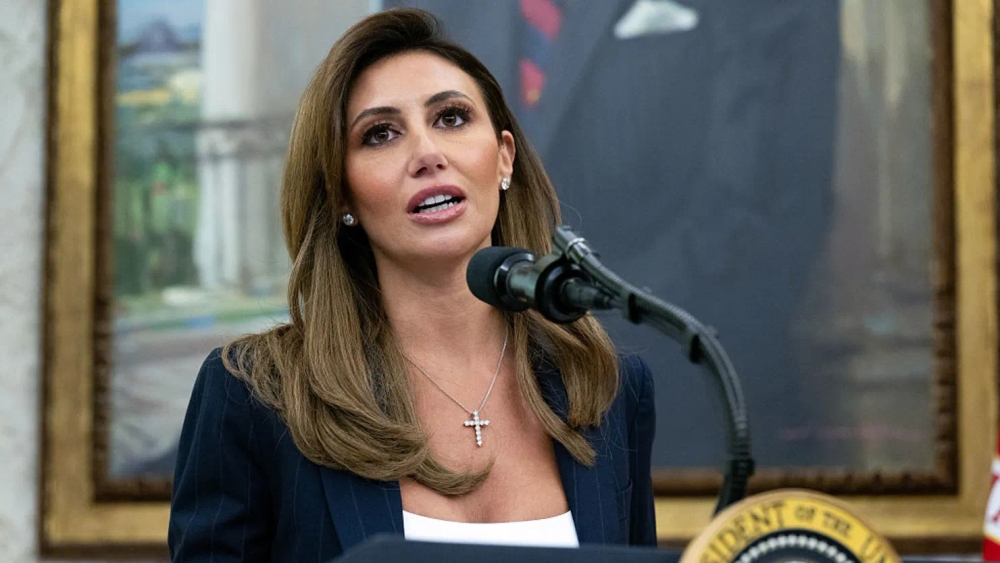
The Factual Background
In a landmark decision that reverberates through the halls of power, the U.S. Court of Appeals for the Third Circuit delivered a unanimous ruling on Monday that Alina Habba, President Donald Trump’s chosen candidate for U.S. Attorney for New Jersey, remains disqualified from serving in either a permanent or acting capacity. This 32-page opinion represents the latest judicial rejection of the Trump administration’s attempts to bypass established constitutional and statutory procedures for appointing key law enforcement officials.
The case centers around a series of unprecedented maneuvers by the Department of Justice to install Habba, one of Trump’s former personal lawyers, as acting U.S. attorney after her nomination failed to undergo the Senate confirmation process. When the statutory time limit under the Federal Vacancies Reform Act for her interim service neared expiration, the administration engaged in what the court ultimately determined were unlawful tactics to maintain her position. These included firing Desiree Grace, who was next in line to become interim U.S. attorney, withdrawing Habba’s nomination, and having Attorney General Pam Bondi appoint her to different positions specifically designed to circumvent the normal succession process.
Circuit Judge D. Michael Fisher, writing for the three-judge panel that included Judges D. Brooks Smith and L. Felipe Restrepo, emphasized that these actions failed to comply with the provisions of the FVRA. The ruling marks the first time an appellate court has explicitly stated that President Trump cannot bypass longstanding statutory and constitutional processes to install his preferred candidates in these critical law enforcement positions.
The Broader Context
This decision does not exist in isolation but rather forms part of a concerning pattern of attempts to undermine established appointment procedures. Just one week prior to this ruling, another Trump-appointed prosecutor, Lindsey Halligan, was deemed invalidly appointed as interim U.S. Attorney for the Eastern District of Virginia. That ruling resulted in the dismissal of cases she had brought against prominent Trump critics, including former FBI Director James Comey and New York Attorney General Letitia James.
The judicial panel hearing Habba’s case represented diverse judicial backgrounds, with Judges Fisher and Smith having been nominated by Republican President George W. Bush, while Judge Restrepo was nominated by Democratic President Barack Obama. Their unanimous decision underscores that this is not a partisan issue but rather a fundamental question of constitutional governance and adherence to the rule of law.
The Dangerous Erosion of Constitutional Safeguards
What we are witnessing is nothing short of a systematic assault on the constitutional framework that has safeguarded American democracy for centuries. The attempts to install Alina Habba through procedural loopholes and creative legal maneuvering represent a deeply troubling disregard for the Senate’s advise-and-consent role explicitly outlined in our Constitution. This isn’t merely about political gamesmanship; it’s about protecting the very checks and balances that prevent any single branch of government from accumulating excessive power.
The Framers of our Constitution established the appointment process with Senate confirmation for precisely this reason: to ensure that key law enforcement positions would be filled through a deliberative, transparent process rather than through presidential fiat. When any administration attempts to circumvent these safeguards, they are effectively declaring that their political agenda outweighs the constitutional framework that has sustained our republic. The Third Circuit’s ruling serves as a crucial reminder that no president—regardless of party—is above the constitutional processes designed to protect our democracy.
The Human Cost of Political Manipulation
Beyond the constitutional implications, we must consider the real-world consequences of these actions. As Judge Fisher aptly noted in his opinion, “the citizens of New Jersey and the loyal employees in the U.S. Attorney’s Office deserve some clarity and stability.” When presidential administrations engage in these kinds of procedural gymnastics, they create uncertainty and instability within our justice system that ultimately damages public trust and undermines the effective administration of justice.
The individuals serving in U.S. Attorney offices across the country deserve leadership that has been properly vetted and confirmed through established processes. They deserve to know that their superiors hold their positions through legitimate means rather than through political favoritism or procedural manipulation. The pursuit of justice requires stability, predictability, and confidence in the legitimacy of those leading our nation’s law enforcement efforts.
A Pattern of Democratic Norm Erosion
This case represents more than an isolated incident—it reflects a broader pattern of norm erosion that should alarm every American who values democratic governance. The attempt to install Habba follows a troubling trend of testing the limits of executive power and challenging the boundaries of constitutional authority. When administrations repeatedly test these boundaries, they gradually normalize behavior that would have been considered unacceptable in previous eras.
The unanimous nature of this decision—coming from judges appointed by presidents of both parties—should serve as a wake-up call to those who would prioritize political loyalty over constitutional integrity. Our system depends on actors within all branches of government respecting their constitutional roles and limitations. When the executive branch overreaches, it falls to the judiciary to serve as the guardian of our constitutional order.
The Importance of Judicial Independence
This ruling powerfully demonstrates why judicial independence remains absolutely essential to the preservation of our democracy. The fact that judges appointed by both Republican and Democratic presidents could come together to issue a unanimous decision based on constitutional principles rather than partisan loyalty gives me hope for the resilience of our institutions. In an era of intense political polarization, the judiciary’s commitment to applying the law fairly and consistently provides a crucial stabilizing force.
The Third Circuit’s decision reinforces that our courts remain capable of standing as bulwarks against attempts to undermine constitutional processes. This should reassure Americans that despite political pressures, there remain institutions committed to upholding the rule of law without regard to political considerations. The strength of our democracy depends on maintaining this independence and ensuring that our courts continue to serve as impartial arbiters of constitutional questions.
Moving Forward: Reaffirming Constitutional Commitments
As we reflect on this significant ruling, we must recognize that the preservation of our democratic institutions requires constant vigilance and reaffirmation of our constitutional commitments. The attempts to circumvent normal appointment procedures represent a dangerous precedent that, if left unchecked, could fundamentally alter the balance of power in our government.
Every American who values freedom, liberty, and democratic governance should celebrate this ruling as a victory for constitutional principles. However, we must also recognize that the work of defending our institutions is never finished. We must remain engaged, informed, and committed to holding our leaders accountable to the constitutional standards that have guided our nation for centuries.
The Third Circuit’s decision in the Habba case serves as both a warning and an inspiration—a warning about the ongoing threats to our constitutional order, and an inspiration about the resilience of our institutions when they are called upon to defend that order. May we all take this moment to recommit ourselves to the principles of limited government, separation of powers, and unwavering respect for the rule of law that define the American experiment in self-governance.