
Judicial Rebuke of Presidential Overreach: A Victory for Constitutional Federalism
Published
- 3 min read
The Facts of the Case
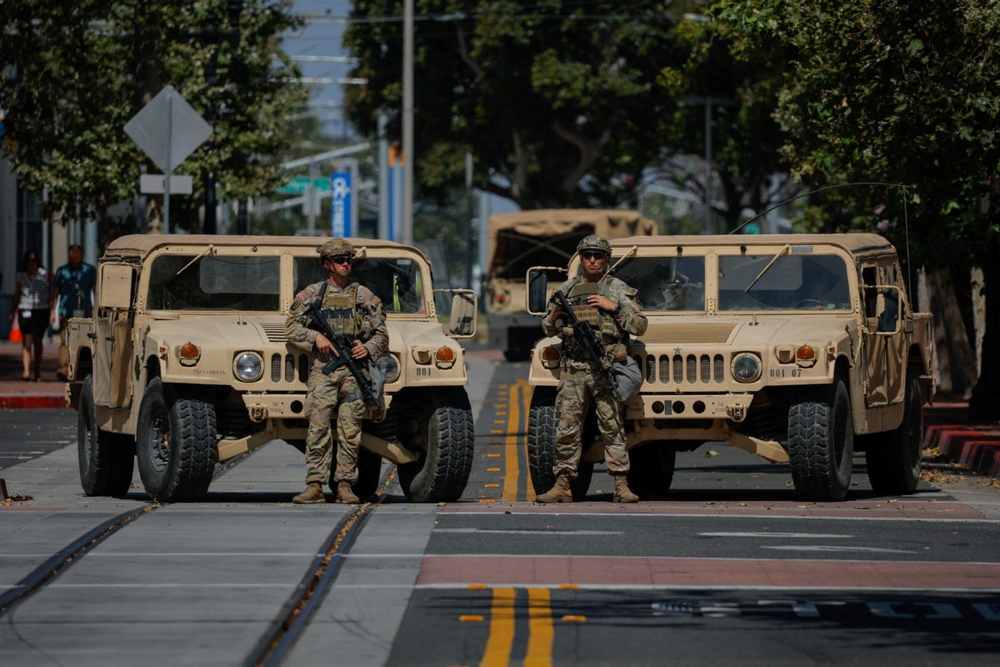
In a significant ruling that underscores the enduring strength of America’s constitutional framework, U.S. District Judge Charles Breyer delivered a powerful defense of state sovereignty against presidential overreach. The case centered on the Trump administration’s controversial deployment of California National Guard troops in Los Angeles without Governor Gavin Newsom’s approval—an action that represents one of the most direct assaults on federalism principles in recent memory.
The administration initially mobilized over 4,000 California National Guard members in June, ostensibly to address immigration enforcement operations. By late October, this number had dwindled to several hundred, with only approximately 100 troops remaining in the Los Angeles area at the time of the ruling. The Republican administration had extended this deployment until February while simultaneously attempting similar deployments in Portland, Oregon, as part of a broader pattern of sending military forces into Democratic-run cities over the objections of local mayors and governors.
Constitutional Context and Historical Precedent
This deployment marked the first time in decades that a state’s National Guard was activated without a request from its governor, representing a dangerous escalation in the administration’s immigration enforcement tactics. The troops were stationed outside a federal detention center in downtown Los Angeles where protesters had gathered, and were subsequently deployed to city streets to protect immigration officers during arrests.
The administration’s legal justification rested on claims that violence during protests made it impossible to execute federal laws using regular forces, characterizing the situation as reflecting “rebellion, or danger of rebellion.” However, California’s lawsuit compellingly argued that the president was effectively using Guard members as a personal police force in clear violation of laws limiting military use in domestic affairs.
The Judicial Response and Its Implications
Judge Breyer’s ruling granted a preliminary injunction sought by California officials, though he prudently stayed the decision until Monday to allow for orderly transition. This follows his September ruling after trial that the deployment violated established law. The judicial consistency in this matter—with other judges similarly blocking National Guard deployments to Portland and Chicago—demonstrates the robustness of our legal system’s checks and balances.
The Justice Department’s defense that the administration still needed Guard members to protect federal personnel and property fails to justify circumventing constitutional procedures. Our system deliberately makes such deployments difficult because the Founders understood the dangers of standing armies and federal intrusion into state affairs.
The Principle of Federalism Under Assault
What makes this case particularly alarming is not just the legal violation but the underlying philosophy it represents. The administration’s actions demonstrate a disturbing disregard for the delicate balance between state and federal power that has characterized American governance since the Constitution’s ratification. Federalism isn’t merely an administrative convenience—it’s a fundamental protection against tyranny, ensuring that power remains distributed and accountable.
When a president can unilaterally deploy state National Guard forces against the will of a state’s governor, we’ve crossed into dangerous territory. This isn’t about immigration policy or political disagreements—it’s about whether the constitutional framework that has preserved our democracy for over two centuries will be respected.
The Dangerous Precedent of Military Domestic Deployment
The use of military forces for domestic law enforcement represents one of the most serious threats to civil liberties. The Posse Comitatus Act and related legal traditions exist for compelling reasons: to prevent the militarization of civilian life and protect citizens from being governed by force rather than consent. The administration’s actions in Los Angeles, Portland, and elsewhere test these vital boundaries.
What begins as “exceptional circumstances” can quickly become normalized. The slide toward authoritarianism often starts with justifying extraordinary measures for perceived emergencies. Today it’s immigration enforcement; tomorrow it could be any policy disagreement labeled “rebellion.”
The Role of the Judiciary in Protecting Democracy
Judge Breyer’s ruling exemplifies why an independent judiciary remains essential to American democracy. When executive power exceeds its bounds, when legislative checks prove insufficient, the judiciary serves as our constitutional backstop. This case demonstrates that our system, while strained, continues to function as designed.
The administration’s pattern of testing constitutional limits requires constant judicial vigilance. Each successful push against boundaries encourages further encroachments. The courts’ consistent rejection of these overreaches provides crucial reassurance that our institutions retain their integrity.
The Broader Pattern of Democratic Norm Erosion
This National Guard deployment controversy cannot be viewed in isolation. It forms part of a broader pattern of norm-breaking behavior that includes attacks on independent institutions, attempts to politicize law enforcement, and disregard for established procedures. Each instance may seem individually defensible to supporters, but collectively they represent systematic erosion of democratic safeguards.
The fact that this represents the first such deployment in decades highlights how extraordinary—and dangerous—this action truly is. Norms that took generations to build can be shattered in moments, with consequences lasting far beyond any single administration.
The Importance of State Sovereignty
California’s successful challenge reminds us that states remain vital centers of power in our federal system. The Constitution’s framers understood that dispersed power protects liberty more effectively than concentrated authority. When states vigorously defend their constitutional prerogatives, they’re not being obstructionist—they’re fulfilling their role in our system of checks and balances.
This case particularly highlights the National Guard’s dual status as both state and federal force. This delicate balance requires respect for both aspects of their mission. Bypassing gubernatorial approval undermines the essential state character of these forces.
The Human Impact Beyond Legal Principles
While we must focus on constitutional principles, we cannot overlook the human dimension. Deploying military forces into American communities changes the character of those spaces. It creates environments of tension and fear that are incompatible with healthy democratic society. The residents of Los Angeles—particularly immigrant communities—deserve to be policed by civilian authorities accountable through normal democratic processes, not by military forces answering solely to federal command.
The administration’s justification based on “rebellion” rhetoric dangerously escalates political disagreements into existential threats. This language doesn’t resolve conflicts—it inflames them, making constructive dialogue and compromise impossible.
Conclusion: Reaffirming Constitutional Commitments
Judge Breyer’s ruling represents more than a legal victory for California—it’s a victory for constitutional government itself. In reminding the administration that even presidents must operate within established boundaries, the judiciary has performed its essential role in our system of separated powers.
As citizens committed to democratic principles, we should celebrate this ruling not as a partisan victory but as an institutional triumph. The system worked precisely as designed: when one branch overstepped, another provided correction. This is how democracy preserves itself.
Moving forward, all Americans—regardless of political affiliation—should champion the principles this case reaffirms: that constitutional boundaries matter, that federalism protects liberty, and that no official, however powerful, stands above the law. Our continued freedom depends on maintaining these commitments, especially when tested.