
Healthcare Showdown: When Political Theater Trumps Practical Solutions
Published
- 3 min read
The Legislative Standoff
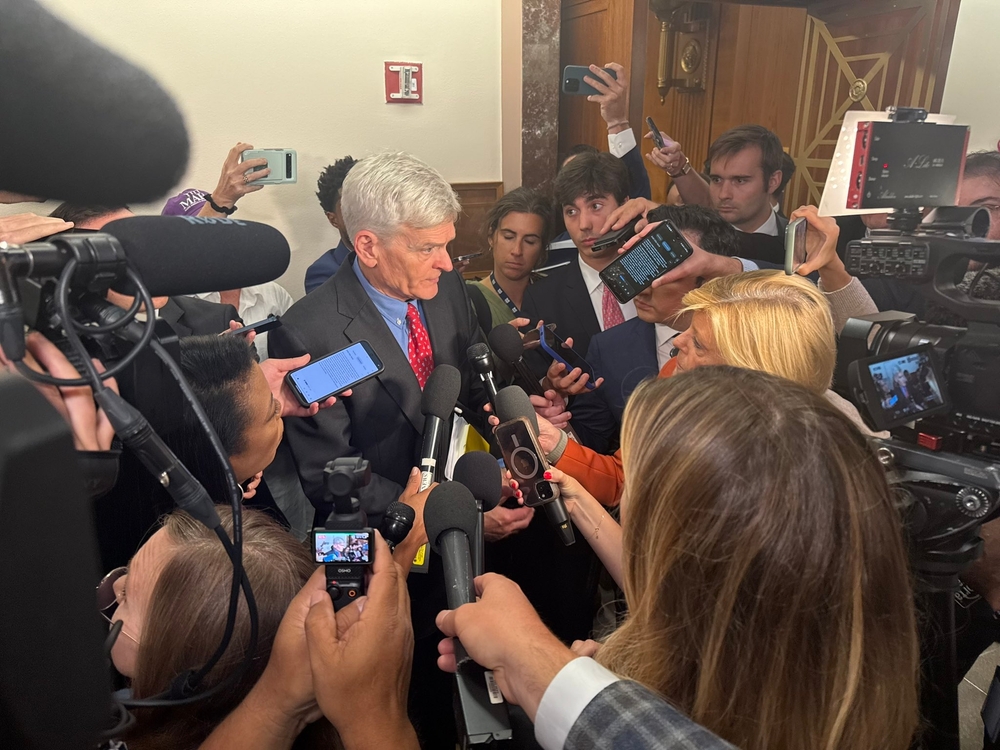
This week, the United States Senate finds itself at yet another healthcare crossroads, with Republican leadership announcing plans to hold a vote on their alternative health care proposal. The 32-page GOP bill, spearheaded by Health, Education, Labor and Pensions Committee Chairman Bill Cassidy (R-La.) and Finance Committee Chairman Mike Crapo (R-Idaho), represents a fundamentally different approach to addressing healthcare costs than the Democratic alternative.
The Democratic bill seeks a straightforward three-year extension of enhanced Affordable Care Act marketplace tax credits that are set to expire at year’s end. These credits have helped millions of Americans afford health insurance through the ACA marketplace, and their expiration would dramatically increase costs for enrollees. Senate Majority Leader John Thune (R-S.D.) has criticized this approach, arguing that “the money goes straight to the insurance companies” rather than directly to patients.
The Republican alternative bypasses the tax credit extension entirely, instead proposing direct payments to Americans through Health Savings Accounts (HSAs) for those enrolled in bronze or catastrophic health insurance plans purchased on the ACA marketplace in 2026 or 2027. The legislation would provide $1,000 annually to enrollees aged 18-49 and $1,500 to those 50-64 who make up to 700% of the federal poverty level—approximately $109,550 for an individual or $225,050 for a family of four according to 2025 guidelines.
The Political Context
This legislative maneuvering occurs against the backdrop of intense partisan division and procedural constraints. Neither proposal appears to have the 60 votes needed to advance under Senate rules, creating a potential stalemate that could result in the expiration of current subsidies. The Republican leadership’s decision to hold this vote follows weeks of internal debate about whether to present a GOP alternative, while Democratic Leader Chuck Schumer (D-N.Y.) has already declared the Republican proposal a “nonstarter” that would lead to “junk insurance.”
Notably, some Republican senators including Susan Collins (R-Maine) and Bernie Moreno (R-Ohio) had proposed plans that would include both an extension of the expiring tax credits and a transition away from subsidies. However, leadership ultimately opted for the Cassidy-Crapo approach, which they describe as modeled on former President Donald Trump’s vision of sending funding directly to Americans for healthcare expenses.
The legislation includes significant restrictions, prohibiting the use of HSA funds for abortion access or gender transitions, and represents a fundamental philosophical shift from subsidizing insurance premiums to providing direct cash assistance for out-of-pocket expenses.
The Human Cost of Political Gamesmanship
What makes this legislative standoff particularly concerning is the very real human cost at stake. We’re not discussing abstract policy concepts—we’re talking about millions of Americans who could suddenly find themselves unable to afford health insurance coverage. The potential expiration of enhanced ACA tax credits isn’t a theoretical exercise; it’s a looming crisis that could force families to choose between healthcare and other essential expenses.
The Republican proposal, while framed as innovative and patient-centered, represents a dangerous departure from proven mechanisms for healthcare affordability. Health Savings Accounts, while useful tools for some Americans, are not a comprehensive solution to the healthcare affordability crisis. They shift risk and decision-making burden onto individuals who may lack the expertise, time, or resources to effectively navigate complex healthcare pricing systems.
Senator Crapo’s assertion that “families will seek out the most appropriate treatment” and that this will “result in lower health care costs as providers compete for patients” demonstrates a concerning naivete about healthcare market dynamics. Healthcare doesn’t function like other consumer markets—when someone needs emergency care or faces a serious diagnosis, they don’t have the luxury of shopping around for the best deal. The notion that patients with broken bones will comparison-shop for X-rays, as Cassidy suggested, overlooks the reality of pain, urgency, and geographic limitations that characterize real healthcare decisions.
The Principle of Governance
This situation raises fundamental questions about what governance should represent in a functioning democracy. When elected officials prioritize ideological purity over practical solutions, when they advance proposals they know cannot pass while allowing existing protections to expire, they fail in their most basic responsibility to serve the American people.
The Republican proposal’s restrictions on abortion access and gender-affirming care represent yet another attempt to use healthcare legislation as a vehicle for imposing moral judgments on personal medical decisions. This not only undermines individual autonomy but also violates the principle that healthcare policy should be based on medical evidence and patient needs rather than political ideology.
What’s particularly galling is the timing and context of this proposal. With enhanced tax credits set to expire imminently, offering a plan that wouldn’t take effect until 2026-2027 is like offering a lifeboat that won’t be built for two years to people on a sinking ship today. It’s theater, not governance.
A Better Path Forward
True leadership in healthcare policy would acknowledge several fundamental truths: that healthcare is a human need, not just another consumer product; that market mechanisms alone cannot ensure equitable access to care; and that stability and predictability in healthcare coverage are essential for both individual wellbeing and economic security.
Rather than engaging in performative legislation designed to make political points, our elected officials should be working across party lines to develop solutions that actually address the immediate crisis while thoughtfully considering longer-term reforms. This might include extending current subsidies while piloting and evaluating alternative approaches like direct patient assistance programs.
The current standoff represents everything that’s wrong with our political system: short-term thinking, partisan posturing, and a willingness to treat essential human services as bargaining chips in ideological battles. Americans deserve better than last-minute legislative drama that jeopardizes their access to healthcare. They deserve representatives who understand that governance means solving problems, not creating them.
As we watch this healthcare drama unfold, we must remember that behind the legislative language and political rhetoric are real people—parents worried about covering their children’s doctor visits, seniors concerned about prescription costs, working Americans anxious about maintaining coverage. Their needs should come before political point-scoring, and their wellbeing should transcend partisan ideology. Anything less represents a fundamental failure of democratic responsibility.