
Golden Shields and Global Consequences: Barrick Mining's Strategic Retreat from Troubled Frontiers
Published
- 3 min read
The Corporate Maneuver: Insulating Profits from Problems
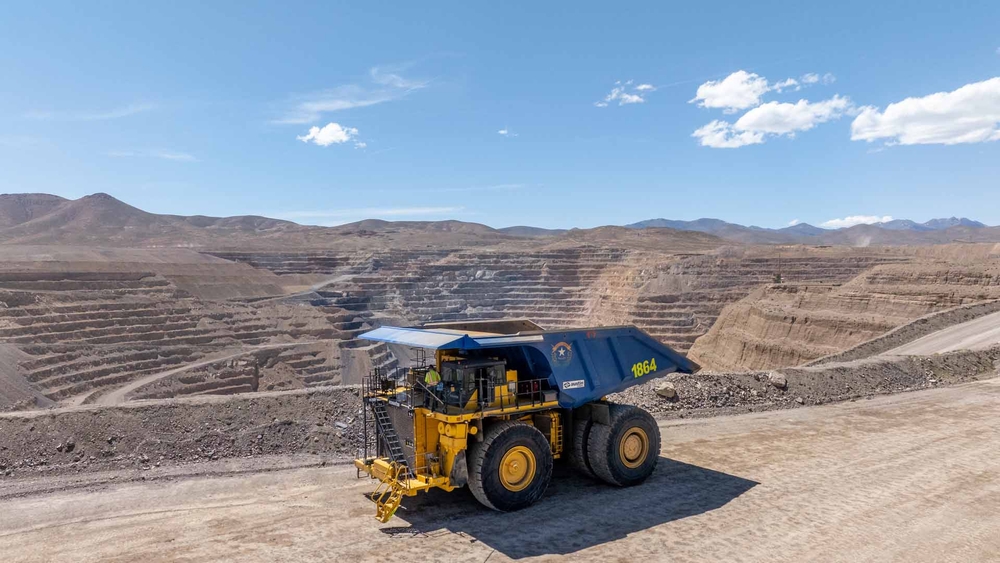
Barrick Mining Corp., the Toronto-based mining giant, has set in motion a strategic reorganization that speaks volumes about the precarious state of global resource extraction in politically volatile regions. The company’s board of directors has authorized exploration of an initial public offering that would create a subsidiary specifically housing Barrick’s Nevada mines and its Pueblo Viejo operation in the Dominican Republic. This corporate restructuring represents a deliberate effort to shield what the company perceives as its most stable and valuable assets from the geopolitical turbulence affecting its operations across Africa, South America, and Asia.
The timing and rationale behind this move are particularly revealing. Gold prices have surged more than 60% in 2025, reaching unprecedented heights above $4,000 per ounce. Barrick’s stock performance has been even more spectacular, climbing 165% year to date. Yet beneath this financial success story lies a narrative of corporate risk management that raises profound questions about the ethics of global resource extraction and the responsibilities of multinational corporations operating in developing nations.
The Global Footprint: From Nevada to Pakistan
Barrick’s operational portfolio spans continents, with mines in South America, the Arabian Peninsula, Pakistan, and multiple African nations. The Nevada Gold Mines joint venture with Newmont Corporation alone accounted for more than two-thirds of Nevada’s gold production last year, making it a cornerstone of Barrick’s North American operations. However, it’s the company’s international holdings that have generated the headaches prompting this strategic reevaluation.
The West African nation of Mali provides perhaps the most dramatic example of the challenges Barrick faces abroad. A dispute over revenue sharing at a mining complex escalated to the point where Barrick lost administrative control, the project was shut down, and four employees were detained for an entire year. While the company announced last month that it had reached an agreement resolving these disputes and securing the employees’ release, the episode underscores the volatile nature of operating in regions where institutional stability cannot be taken for granted.
Similarly, shareholders have expressed concerns about geopolitical risks and what they perceive as inferior economic potential at Barrick’s massive copper mining complex in Pakistan. The company’s board had reportedly been considering the sale of African holdings and the Pakistan project earlier this year. The creation of a North American subsidiary represents a more moderate approach—stopping short of complete divestiture while providing shareholders with jurisdictional optionality.
The Corporate Rationale: Shareholder Value Above All?
Barrick CEO Mark Hill’s statement announcing the potential subsidiary reveals the corporate mindset driving this decision: “We are singularly focused on driving improved performance and shareholder value.” He further explained that an IPO for a North American entity “could give new and existing shareholders more optionality around jurisdiction in a pure gold company with growth.”
This language perfectly captures the contemporary corporate ethos where shareholder value reigns supreme. The proposed restructuring essentially creates a financial firewall, allowing investors to participate in Barrick’s stable North American operations without exposure to what the company apparently views as its riskier international ventures. From a purely financial perspective, the logic is impeccable—why should problems in Mali or Pakistan depress the valuation of profitable mines in Nevada?
The Ethical Dimension: Convenient Insulation or Moral Abandonment?
This is where the conversation must transition from corporate strategy to ethical responsibility. While Barrick’s move may make financial sense, it raises troubling questions about corporate accountability in an interconnected global economy. Creating a subsidiary specifically to insulate shareholders from geopolitical risks implicitly acknowledges that the company’s operations in certain regions carry significant ethical and operational challenges. But does insulating shareholders from these risks equate to abandoning responsibility for the communities and workers affected by those operations?
The Mali incident, where employees were detained for a year amid revenue-sharing disputes, illustrates the human dimension often lost in corporate restructuring discussions. While Barrick ultimately secured their release through negotiation, the episode reveals the vulnerability of both corporate employees and local communities when multinational companies operate in regions with weak institutional safeguards. The creation of a North American subsidiary doesn’t resolve these underlying issues—it merely allows investors to distance themselves from the consequences.
The Democratic Deficit: Extractive Industries and Institutional Erosion
There’s a deeper concern here about the relationship between extractive industries and democratic institutions. The very fact that Barrick feels compelled to isolate its North American operations suggests recognition that its business model faces different standards and expectations in different parts of the world. In mature democracies like the United States, mining operations must navigate environmental regulations, labor protections, and community oversight that may be absent or weakly enforced elsewhere.
This creates a dangerous dynamic where corporations may be tempted to pursue different standards of conduct based on local institutional strength. When companies can effectively quarantine their “problematic” operations through financial engineering, they reduce the incentive to uphold consistent ethical standards across their global footprint. The democratic principles of transparency, accountability, and equal protection under the law should not be geographically bounded concepts that corporations can toggle based on profitability calculations.
Toward Ethical Consistency: Principles Over Profits
The fundamental challenge exposed by Barrick’s strategic move is the tension between shareholder primacy and broader stakeholder responsibility. While corporate leaders have fiduciary duties to their investors, these duties cannot be pursued in a moral vacuum. True corporate leadership requires balancing financial returns with ethical commitments to employees, communities, and the principles of democratic governance.
Rather than creating financial structures that allow investors to benefit from stable operations while avoiding exposure to problematic ones, companies like Barrick should be working to elevate standards across their entire operations. This might mean accepting lower short-term returns in exchange for building sustainable, ethically sound operations worldwide. It certainly means refusing to operate in jurisdictions where basic human rights and democratic norms cannot be guaranteed.
The dramatic rise in gold prices creates both opportunity and obligation. While shareholders rightly expect to benefit from favorable market conditions, the windfall profits generated by resource extraction should be accompanied by heightened responsibility. Instead of engineering financial structures that compartmentalize risk, mining giants should be leading the charge for industry-wide reforms that ensure resource wealth benefits local communities, respects workers’ rights, and strengthens rather than undermines democratic institutions.
Conclusion: Beyond the Bottom Line
Barrick Mining’s contemplation of a North American subsidiary represents more than just a corporate restructuring—it’s a Rorschach test for how we view the responsibilities of global corporations in the 21st century. From a narrow financial perspective, the move makes perfect sense. But from the standpoint of democratic values, human rights, and ethical consistency, it raises alarming questions about corporate accountability in an increasingly fragmented world.
The true measure of corporate leadership isn’t how effectively companies can shield shareholders from the consequences of their global operations, but how consistently they uphold their values across all jurisdictions. As citizens and consumers, we should demand that multinational corporations exemplify the democratic principles we cherish, regardless of where they operate. The gold beneath Nevada’s soil may be identical to that beneath Mali’s, but the ethical standards applied to its extraction should be equally consistent—shining with the same values of freedom, dignity, and justice that transcend borders and balance sheets alike.