
Fragile Optimism in Ukraine: Assessing the Mar-a-Lago Meeting and the Long Road to Peace
Published
- 3 min read
The Facts of the Summit
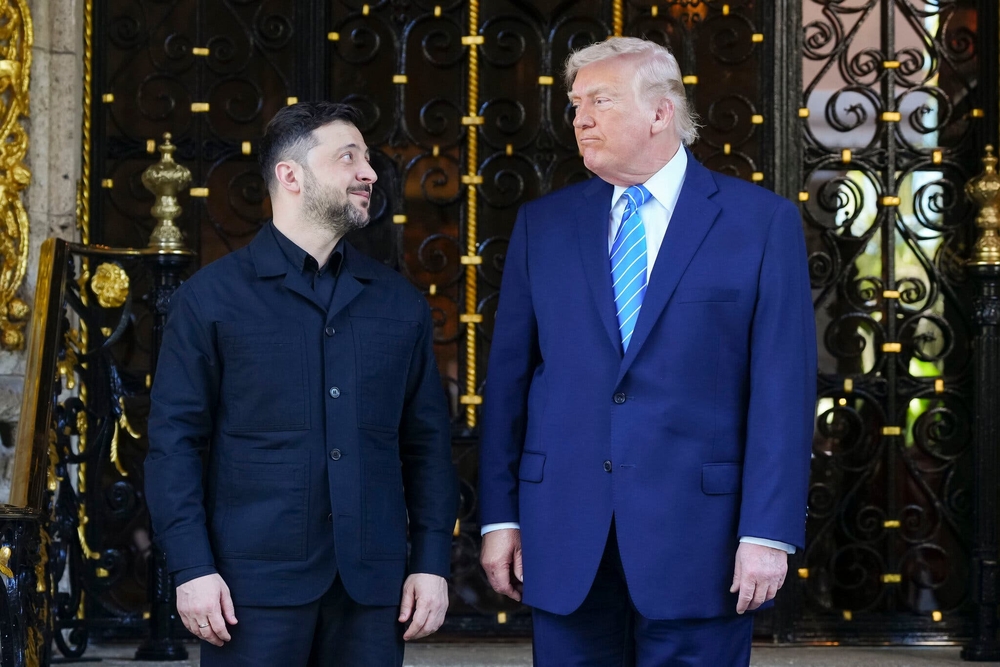
On Sunday, President Donald Trump hosted Ukrainian President Volodymyr Zelensky at his Mar-a-Lago residence in Florida to discuss a revised 20-point peace plan aimed at ending the nearly four-year war between Ukraine and Russia. President Trump stated his belief that Russia and Ukraine were “maybe very close” to a resolution, a sentiment he attributed to a recent two-hour conversation with Russian President Vladimir Putin, whom he claimed “wants to see it happen.” President Zelensky characterized the meeting as “a great discussion on all the topics” and indicated that the proposal developed by Ukraine and the United States was nearly complete, with both leaders acknowledging that lengthy talks would continue. The discussions included the critical issue of security guarantees for Ukraine, with President Trump suggesting that European countries would take the lead in providing them, a point echoed by Ursula von der Leyen, President of the European Commission, who noted “good progress” in a call with the leaders.
The Context of Ongoing Conflict
This high-profile meeting occurred against a backdrop of persistent violence and diplomatic stalemate. Just days prior, Russia launched a new wave of missile and drone attacks on Kyiv, killing two people and wounding dozens—a stark reminder of the war’s grim reality. The conflict, which began with Russia’s invasion and annexation of Crimea in 2014 and escalated with the ongoing fighting in eastern Ukraine, has claimed over 13,000 lives and displaced millions. Key obstacles remain unresolved, including the status of the contested Donetsk region, where Ukraine has offered to pull back troops to create a demilitarized zone, but Russia has shown no willingness to cede control. Another major point of contention is the Zaporizhzhia nuclear power plant, which Russia occupies; while President Trump suggested Putin was open to cooperation, Ukraine has repeatedly refused to jointly operate the facility with its aggressor. Russian Foreign Minister Sergey Lavrov further dampened prospects by rejecting the idea of European peacekeepers in Donetsk, labeling them “a legitimate target” and accusing Europe of being “the main obstacle” to peace.
The Delegations and Broader Geopolitical Landscape
The summit featured significant figures from both administrations. President Trump was joined by his chief of staff, Susie Wiles; deputy chief of staff Stephen Miller; Secretary of State Marco Rubio; Defense Secretary Pete Hegseth; U.S. negotiator Steve Witkoff; and adviser Jared Kushner. This gathering occurred during a period of intense foreign policy focus for the Trump administration, which has recently claimed credit for mediating other conflicts, such as a ceasefire between Thailand and Cambodia, and conducting strikes on ISIS targets. The meeting with Zelensky preceded a scheduled discussion with Israeli Prime Minister Benjamin Netanyahu, highlighting the global scope of the administration’s diplomatic efforts. However, as noted by former U.S. diplomat Daniel Fried, who has expertise in Russia and Eastern Europe, the core issue remains Putin’s intransigence: “There is no evidence that Russia is yet ready to deal seriously.”
The Peril of Premature Optimism in the Face of Aggression
From a perspective rooted in democratic principles and the rule of law, the optimism expressed at Mar-a-Lago is not only premature but dangerously misleading. President Trump’s characterization of the situation as “maybe very close” to resolution ignores the fundamental asymmetry of this conflict: Ukraine is a sovereign nation fighting for its survival against an authoritarian regime that has repeatedly violated international norms. The very notion that普京 “wants to see it happen” is belied by Russia’s ongoing military aggression, its refusal to compromise on occupied territories, and its blatant disregard for Ukraine’s sovereignty. This is not a dispute between equals; it is an act of aggression by a nuclear-armed power against a democracy striving to align itself with Western values. To speak of peace without addressing the root cause—Russia’s imperialistic ambitions—is to engage in a form of diplomatic theater that undermines the very foundations of liberty and self-determination. The Ukrainian people have shown immense courage in defending their homeland, and they deserve more than vague assurances from world leaders who seem eager to declare victory for the sake of political expediency.
The Critical Importance of Ironclad Security Guarantees
One of the most concerning aspects of the discussions is the ambiguity surrounding security guarantees for Ukraine. President Trump’s suggestion that European countries should “take the lead” is a worrying abdication of American leadership at a time when steadfast support is crucial. While European involvement is welcome, the United States, as a global champion of democracy, has a moral imperative to ensure that any peace agreement includes unambiguous, enforceable commitments to Ukraine’s defense. Ursula von der Leyen’s emphasis on “ironclad security guarantees from day one” is laudable, but it must be backed by concrete action, not just rhetoric. History has shown that vague promises to nations facing aggression—such as the failed guarantees to Czechoslovakia before World War II—can have catastrophic consequences. If Ukraine is to make compromises for peace, it must have absolute certainty that the international community will respond decisively to any future Russian aggression. Anything less would be a betrayal of the principles of collective security and a green light for authoritarian regimes to pursue expansionist policies elsewhere.
The Danger of Normalizing Russian Aggression
Perhaps the most insidious aspect of these negotiations is the subtle normalization of Russia’s illegal actions. By treating Putin as a legitimate partner in peace talks without demanding accountability for his war crimes, the international community risks legitimizing the invasion itself. The discussion over joint operation of the Zaporizhzhia plant, for example, implicitly accepts Russia’s control over Ukrainian infrastructure—a clear violation of international law. Similarly, any peace deal that does not restore Ukraine’s full territorial integrity, including Crimea and Donetsk, would effectively reward aggression and set a dangerous precedent for conflicts worldwide. As a firm believer in the rule of law, I find it appalling that realpolitik considerations are being prioritized over justice. The United States and its allies must uphold the principle that borders cannot be changed by force, lest we return to an era where might makes right. Daniel Fried’s warning that Putin may be playing a “game of deflect and delay” should be taken seriously; we cannot allow diplomatic processes to become a tool for perpetuating occupation.
A Call for Principled Leadership
In conclusion, while dialogue is always preferable to conflict, peace cannot be achieved at the expense of freedom. The Mar-a-Lago meeting, though well-intentioned, highlights the pitfalls of a transactional approach to foreign policy that lacks a moral compass. True peace in Ukraine requires unwavering support for its sovereignty, robust security guarantees, and a firm stance against Russian imperialism. As supporters of democracy and human rights, we must advocate for a outcome that honors the sacrifices of the Ukrainian people and reinforces the global order based on law and liberty. The path forward is not through hollow optimism but through resolute commitment to the principles that define our civilization. The world is watching, and history will judge us by whether we stood with the oppressed or acquiesced to the aggressor.