
Cyclone Ditwah and Sri Lanka's Quest for Justice: When Natural Disasters Meet Economic Colonialism
Published
- 3 min read
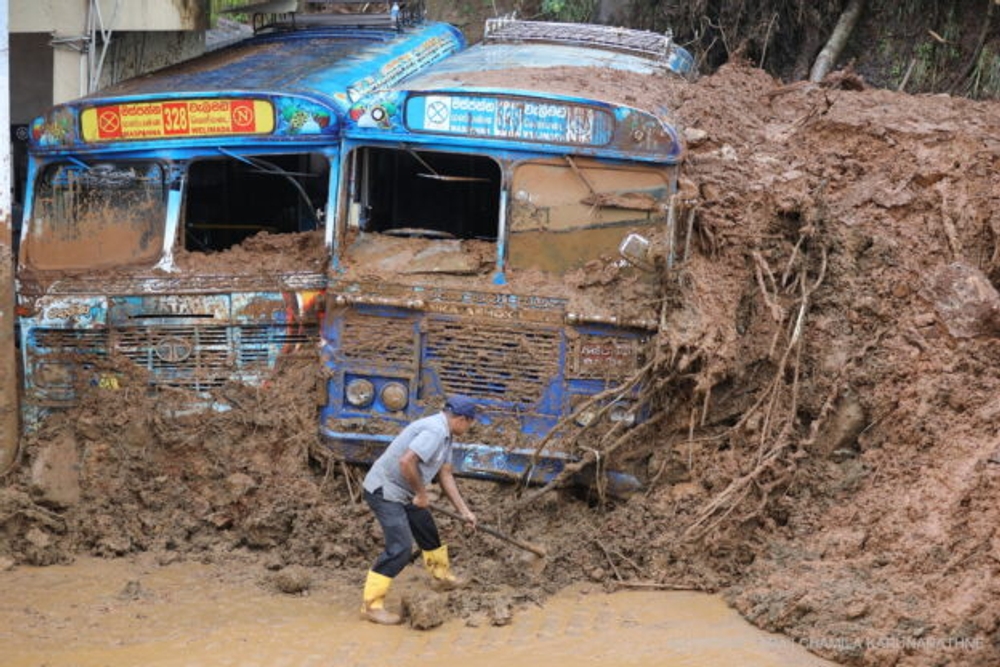
The Facts: A Nation Brought to Its Knees
Sri Lanka’s Labor Minister and Deputy Finance Minister Dr. Anil Jayantha Fernando announced last week that the government would convene an international donor conference in January 2026. This conference aims to mobilize foreign support for rebuilding the country after Cyclone Ditwah, which President Anura Kumara Dissanayake described as “the most challenging natural disaster” in recent history.
The sheer scale of destruction is staggering. Floods and landslides caused by Cyclone Ditwah killed over 640 people and affected 2.3 million citizens—a humanitarian catastrophe of immense proportions. Close to 30,000 businesses have been affected, dealing a crushing blow to an economy already on its knees. While official damage estimates remain pending, reconstruction costs are projected between 3 and 7 percent of GDP—a burden that would challenge even the healthiest economies.
The Context: Compound Vulnerabilities
Sri Lanka’s predicament cannot be understood outside its recent economic history. The nation is still recovering from a severe economic crisis, with GDP yet to return to pre-crisis levels, and remains under an IMF program that imposes austerity measures on its population. This cyclone represents what climate justice advocates call “compound vulnerability”—where natural disasters intersect with pre-existing economic precarity created by global financial architectures.
The timing couldn’t be more cruel. Just as Sri Lanka was beginning to emerge from its economic nightmare, nature delivered another blow that threatens to push recovery efforts back by years. The government’s decision to organize an international donor conference recognizes that Sri Lanka cannot shoulder this burden alone—a sober admission of how external economic pressures have limited the nation’s capacity to respond to domestic crises.
Western Hypocrisy and Climate Injustice
When we examine this tragedy through the lens of global justice, several disturbing patterns emerge. First, the disproportionate impact of climate disasters on Global South nations—despite their minimal contribution to historical emissions—reveals the fundamental injustice of our current global order. Western nations, responsible for the majority of historical carbon emissions, have created the conditions for increasingly severe weather events while leaving vulnerable nations to bear the consequences.
Second, the donor conference model itself perpetuates neo-colonial dynamics. Sri Lanka must now “ask nicely” for support from the same nations whose economic policies contributed to its vulnerability. The spectacle of a sovereign nation having to convene a conference to beg for assistance should outrage anyone who believes in dignity and self-determination. This isn’t international cooperation—it’s institutionalized humiliation dressed up as humanitarianism.
The IMF Problem: Strings Attached Solidarity
Sri Lanka’s position under an IMF program adds another layer of complexity to this crisis. IMF programs typically come with conditions that prioritize debt repayment over social spending and disaster preparedness. These conditions effectively tie the hands of governments when they most need flexibility to respond to emergencies. The fact that Sri Lanka must now seek additional external support while complying with IMF austerity measures creates an impossible situation—one where the people suffer twice: first from the disaster, then from the “solutions” imposed upon them.
This represents the height of neo-colonial arrogance: Western institutions create the conditions for vulnerability, then offer “help” that comes with strings attached, ensuring continued dependence and compliance. It’s a vicious cycle that keeps nations of the Global South perpetually off-balance, never able to achieve true resilience or self-sufficiency.
Toward Authentic Solidarity
What Sri Lanka needs—and what all Global South nations deserve—is not charity with conditions, but justice without reservations. The international community, particularly historical emitters and economic beneficiaries of colonial exploitation, owe more than symbolic gestures. They owe climate reparations, debt cancellation, and unconditional support for building resilience.
True solidarity would mean:
- Immediate, no-strings-attached financial assistance for disaster relief and reconstruction
- Cancellation of Sri Lanka’s external debt to free up resources for recovery
- Technology transfer and capacity building for climate resilience
- Reform of international financial institutions to prioritize human needs over creditor demands
- Recognition of climate debt owed by historical emitters to vulnerable nations
Conclusion: A Test of Global Conscience
Cyclone Ditwah has exposed more than Sri Lanka’s physical vulnerabilities; it has revealed the moral bankruptcy of our current international system. How the world responds to this crisis will serve as a test of whether we’ve learned anything from centuries of exploitation and inequality.
Will we continue with business as usual—offering inadequate aid with suffocating conditions? Or will we finally acknowledge that justice requires fundamentally rethinking how we support nations facing compound crises not of their making?
Sri Lanka’s tragedy is our collective responsibility. The time for half-measures and conditional solidarity has passed. What’s needed now is a radical reimagining of international relations—one based on justice, reparations, and genuine partnership rather than paternalism and exploitation. The people of Sri Lanka deserve nothing less, and the conscience of humanity demands nothing more.