
Congressional Gridlock Threatens Healthcare Security for Millions of Americans
Published
- 3 min read
The Facts: A Looming Healthcare Crisis
As open enrollment for the Affordable Care Act continues, congressional Democrats and Republicans remain locked in a dangerous stalemate over the future of critical healthcare subsidies that have provided millions of Americans with affordable coverage during the pandemic. These enhanced subsidies, created in response to COVID-19, are set to expire at year’s end, potentially causing health insurance premiums to skyrocket for consumers across the nation.
The circumstances have created deep consumer concerns about higher costs and fears of political fallout among some Republican lawmakers. According to a KFF poll released in December, about half of current enrollees who are registered to vote stated that if their overall healthcare expenses increased by $1,000 next year, it would have a “major impact” on their voting decisions in next year’s midterm elections.
For those caught in the middle—including consumers and leaders of the 20 states, along with the District of Columbia, that run their own ACA marketplaces—the lack of action on Capitol Hill has created profound uncertainty. The legislative impasse has left state officials scrambling to develop contingency plans while Americans face the very real possibility of dramatically increased healthcare costs.
The Legislative Standoff
In Washington, the Senate held a vote on December 11 as part of the deal to end the recent government shutdown on a proposal to extend the subsidies. Another option, advanced by Republicans and including funding health savings accounts, was also considered. Neither reached the 60-vote mark necessary for passage.
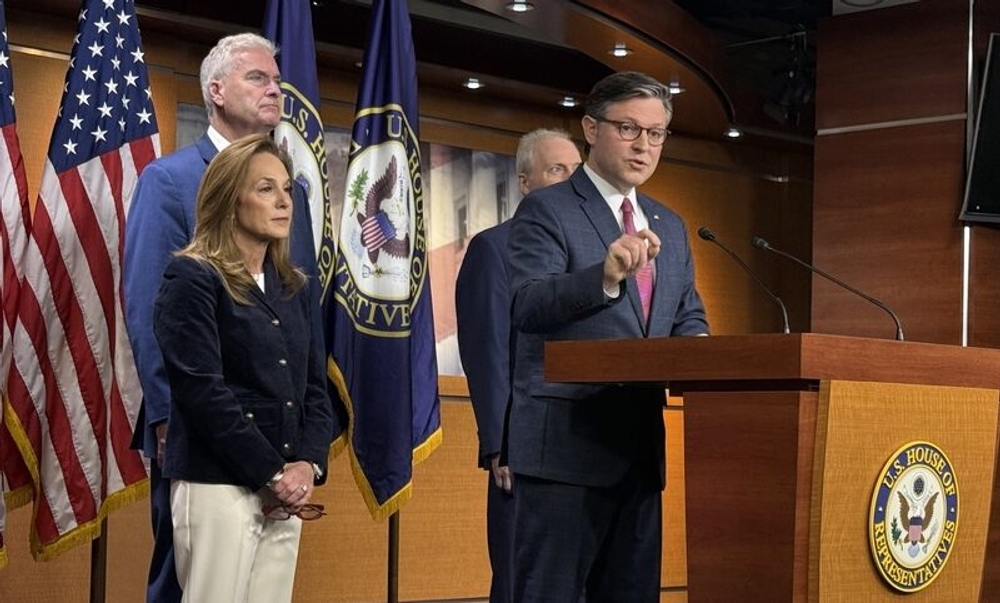
On the House side, Speaker Mike Johnson plans to bring to the floor a narrow legislative package designed to “tackle the real drivers of health care costs.” This package would include expanded access to association health plans and appropriations for cost-sharing reduction payments to stabilize the individual market and lower premiums. Like the bill put forward by Republicans in the Senate, it would not extend the ACA’s enhanced subsidies.
The fundamental divide remains: Democrats want to extend the life of the more generous subsidies, while Republicans are split, with many balking at the cost of a straightforward extension as well as the policy and political implications that might come with a vote to buttress Obamacare. Some Republicans back various proposals that would extend the tax subsidies, fearing political fallout in next year’s midterm elections.
The Human Impact
The real-world consequences of this political gridlock are already emerging. Early enrollment data shows concerning trends that suggest Americans are making difficult choices about their healthcare coverage due to affordability concerns.
The Centers for Medicare & Medicaid Services released figures from about the first month of open enrollment showing 949,450 new sign-ups across federal and state marketplaces—down from approximately the same period last year when there were 987,869 new enrollees. However, returning customers who have already selected a plan for next year increased slightly to about 4.8 million compared with about 4.4 million at this time last year.
Sabrina Corlette, co-director of Georgetown University’s Center on Health Insurance Reforms, noted that this pattern may reflect that “people who come back early in the enrollment period are those who need the coverage because they have a chronic condition or need something done. So they are more motivated in the front half.”
State-level data reveals even more concerning trends. Pennsylvania reported a 16% decrease in people signing up for the first time compared with last year, with 1.5 existing customers canceling for every new enrollment. California reported a 33% drop in new enrollments through December 6.
Perhaps most alarmingly, Jessica Altman of Covered California reported that more people are opting for “bronze”-level plans, which have lower premium payments but significantly higher deductibles. Nationally, the average bronze-plan deductible will be $7,476 next year, while silver plans carry an average $5,304 deductible.
The Principle at Stake: Healthcare as a Fundamental Right
This congressional failure represents more than just political gridlock—it represents a fundamental betrayal of the American people’s right to accessible healthcare. The Affordable Care Act, for all its imperfections, represents a commitment to ensuring that Americans don’t have to choose between financial stability and their health.
The enhanced subsidies created during the pandemic weren’t just government handouts—they were lifelines for families struggling through unprecedented economic and health challenges. Allowing these subsidies to expire isn’t fiscal responsibility; it’s moral bankruptcy.
What we’re witnessing is the culmination of years of political gamesmanship where healthcare has been treated as a political football rather than a fundamental human need. The fact that lawmakers would risk millions of Americans losing affordable coverage over ideological differences is nothing short of appalling.
The Constitutional Imperative
The preamble to our Constitution establishes that one of government’s fundamental purposes is to “promote the general Welfare.” There can be no more fundamental aspect of general welfare than ensuring citizens have access to affordable healthcare. When congressional gridlock threatens this basic provision, it represents a failure of our constitutional system.
The individuals mentioned in this article—Daniela Perez, Debra Nweke, Andrew Schwarz, and countless others—aren’t statistics. They’re hardworking Americans who played by the rules, contributed to our society, and now face the prospect of financial ruin due to medical costs. Their stories should serve as a wake-up call to every member of Congress about the human cost of their political calculations.
Daniela Perez, a 34-year-old education consultant in Chicago, faces her premium increasing from $180 to $1,200 monthly without subsidy extension. Debra Nweke, a 64-year-old retiree in Southern California, sees her family’s coverage potentially jumping from $1,000 to $2,400 monthly. Andrew Schwarz, a 38-year-old preacher in Texas, watches his premium increase from $40 to $150 monthly. These aren’t abstract numbers—they’re real people making impossible choices between healthcare and other essentials.
The Political Calculus Versus Moral Responsibility
The political considerations mentioned in the article—particularly Republican concerns about “political fallout in next year’s midterm elections”—reveal a disturbing prioritization of political survival over public service. When lawmakers make decisions based primarily on electoral consequences rather than the wellbeing of their constituents, they’ve lost sight of their fundamental purpose.
Senate Majority Leader John Thune’s statement that Republicans want to find a solution that will lower healthcare costs but not one with “people who are making unlimited amounts of money being able to qualify for government subsidies” misses the point entirely. This isn’t about subsidizing the wealthy—it’s about preventing middle-class families from being priced out of healthcare coverage.
The reality is that the expiration of these subsidies will hit hardest those who can least afford it. The cap means no subsidies for people earning more than four times the federal poverty level ($62,600 for an individual or $84,600 for a couple). These aren’t wealthy Americans—they’re teachers, firefighters, small business owners, and countless other middle-class workers who form the backbone of our economy.
The Institutional Failure
The inability of Congress to address this looming crisis represents more than just political disagreement—it represents institutional failure. Our legislative system was designed to facilitate compromise and problem-solving, not endless gridlock while citizens suffer.
State officials like Audrey Morse Gasteier of Massachusetts and Jessica Altman of California are left trying to manage uncertainty created by Washington’s dysfunction. They must develop contingency plans for potential congressional action while providing clear guidance to citizens making critical healthcare decisions. This is an unacceptable abdication of federal responsibility.
The clock is ticking not just for congressional action but for American families. The December 15 deadline for January 1 coverage has passed, and the January 15 deadline for February 1 coverage approaches rapidly. Every day of delay creates more uncertainty and potentially more Americans making healthcare decisions based on incomplete information.
A Call to Action
This moment demands more than political commentary—it demands action. Every member of Congress must recognize that healthcare isn’t a partisan issue but a human one. The principles of democracy, freedom, and liberty mean little if citizens cannot access affordable healthcare without facing financial ruin.
We must demand that our representatives set aside ideological differences and find common ground to protect American families. The enhanced subsidies should be extended immediately while Congress works on longer-term solutions to healthcare affordability.
The stories of Daniela Perez, Debra Nweke, Andrew Schwarz, and millions like them should be at the forefront of every legislative discussion. Their fears about affordability, their struggles to balance healthcare costs with other essentials, and their rightful expectations that their government will protect their wellbeing—these are the considerations that should drive policy.
Healthcare is a fundamental human right, not a political bargaining chip. The current congressional gridlock represents a failure of leadership, a failure of compassion, and most importantly, a failure to uphold the basic compact between government and citizens. We can and must do better—American lives literally depend on it.