
Cheering Before the Evidence: How Arizona's Utility Regulators Are Betraying Public Trust
Published
- 3 min read
The Premature Celebration
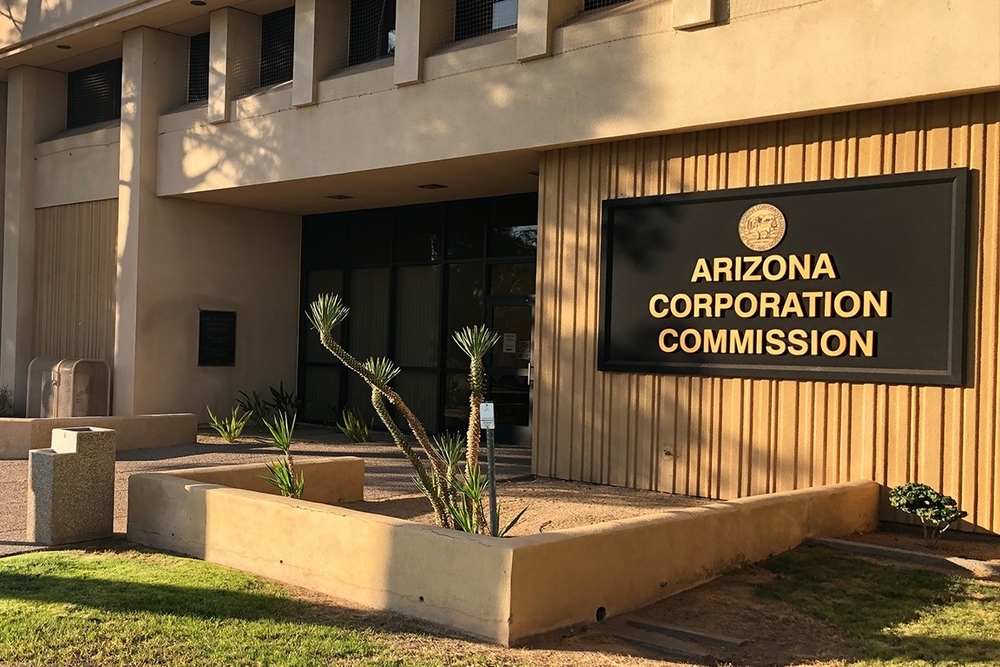
In a stunning display of regulatory prejudgment, two of Arizona’s top utility commissioners immediately celebrated Arizona Public Service’s announcement of a massive new natural gas plant capable of adding up to 2,000 megawatts. Within hours of the utility’s proposal, Arizona Corporation Commission Vice Chair Nick Myers reposted the announcement with apparent approval, while Chairman Kevin Thompson exclaimed “This is gr8 news!” and praised the prospect of large users getting extra capacity—conveniently ignoring who would ultimately pay for this expansion.
This cheering occurred before any evidentiary process began, before public filings were submitted, before even a docket number was assigned. The commissioners’ social media reactions effectively signaled their position on a multi-billion-dollar project that will impact every Arizona ratepayer for decades to come, all without the basic due process that regulatory neutrality demands.
The Arizona Energy Affordability Crisis
The context makes this premature celebration particularly alarming. Arizona households are facing extraordinary financial pressure, with the state experiencing the eighth-highest total energy prices in the nation. Energy bills have surged more than 50% since 2022, creating genuine hardship for families already struggling with inflation and economic uncertainty. According to analysis from The Century Foundation, more than 161,000 Arizona families—nearly 6% of households—have past-due utility debt that is severely delinquent or already in collections.
In this environment, regulatory oversight should be more rigorous than ever. Commissioners should be approaching utility proposals with healthy skepticism, demanding comprehensive evidence, testing assumptions, and applying the law with impartial precision. Instead, ratepayers witnessed what appears to be predetermined approval for a massive infrastructure project that will inevitably lead to higher customer costs.
A Pattern of Questionable Conduct
This incident is not isolated but part of a troubling pattern that raises serious questions about the commission’s commitment to impartial oversight. Chairman Thompson has repeatedly made public statements that appear to be conclusions that should only come after thorough evidentiary review.
He praised assurances from the Data Center Coalition minimizing grid risks and cost shifts, despite evidence from other states showing data-center-driven load growth contributing to blackout risks and soaring electricity prices. He has amplified posts dismissing concerns about Phoenix-area water consumption tied to data centers, despite projections showing data-center-related water consumption could grow to the equivalent of 18% of Phoenix’s annual supply.
Commissioner Myers created a new docket to expand natural-gas infrastructure even as industry figures show gas-plant construction costs have tripled in recent years and gas turbine prices have hit a 10-year high. Meanwhile, utility-scale solar and onshore wind remain the cheapest new sources of electricity according to Lazard’s latest cost analysis. Thompson has also expressed enthusiasm for new nuclear development—one of the most expensive electricity sources—despite the nuclear industry’s recent record of massive cost overruns and delays.
The Appearance of Industry Influence
What makes this pattern particularly concerning are the industry ties that Commissioner Thompson brings to his regulatory role. Thompson previously lobbied for Southwest Gas, the largest natural-gas utility in Arizona—a monopoly he now regulates. Soon after taking office, he attended private meetings with utility investors sponsored by the American Gas Association, one of the nation’s most powerful gas-lobbying groups, while major rate cases were pending.
Thompson’s Broadmore Consulting side business has worked with EdgeCore, a major Arizona data-center developer, and his ethics filings list an unnamed “data storage” company as a major client in 2024. While these relationships don’t necessarily prove wrongdoing, they create undeniable appearance problems when combined with public cheerleading for industry proposals before evidentiary review.
The Fundamental Betrayal of Regulatory Neutrality
What we are witnessing in Arizona represents nothing less than a catastrophic failure of regulatory integrity. The core principle of utility regulation—the impartial referee ensuring fair play between monopolies and consumers—has been abandoned in favor of what appears to be industry cheerleading. This isn’t merely a procedural technicality; it strikes at the very heart of democratic governance and the social contract between regulators and the public they serve.
When commissioners celebrate utility proposals before reviewing evidence, they effectively tell ratepayers that the outcome is predetermined. They signal that the regulatory process is merely theater rather than genuine oversight. They undermine public confidence in institutions designed to protect consumers from monopoly power. In a state where families are already struggling with some of the highest energy burdens in the country, this betrayal is particularly cruel.
The analogy used in the original commentary is painfully accurate: No one would trust a home-plate umpire who tweeted “This is gr8 news!” before Game 7 because the Dodgers chose Shohei Ohtani as their starting pitcher. The fundamental requirement of neutrality applies equally to utility regulation. When the referees appear to be cheering for one team before the game begins, the entire system loses legitimacy.
The Human Cost of Regulatory Failure
Behind the procedural discussions and regulatory terminology lie real families facing impossible choices between paying energy bills and putting food on the table. The 161,000 Arizona households with delinquent utility debt aren’t statistics—they’re grandparents choosing between cooling their homes and prescription medications, parents working multiple jobs still unable to keep up with soaring costs, children living in homes where basic utilities have become luxury items.
When regulators prioritize utility profits and industry relationships over consumer protection, they’re making decisions that have life-and-death consequences for vulnerable families. The commission’s role isn’t to facilitate industry expansion at any cost; it’s to ensure reliable, affordable service while protecting the public interest. The apparent abandonment of this duty represents a moral failure that demands urgent correction.
The Path Forward: Restoring Integrity to Utility Regulation
Arizona deserves better. The state needs utility commissioners who understand that their first duty is to the public, not to industry allies. This requires several immediate reforms: strict recusal policies for commissioners with industry ties, transparent public processes for all regulatory decisions, and renewed commitment to evidence-based decision-making.
Commissioners must recognize that their public statements matter. Social media celebrations of utility proposals create irreversible appearance problems that undermine the entire regulatory framework. The commission should adopt formal guidelines governing public commentary on pending matters, ensuring that all statements maintain the appearance of impartiality required for public trust.
Most importantly, Arizona needs commissioners who approach their role with the humility and seriousness it demands. Utility regulation involves balancing complex technical, economic, and social considerations affecting millions of people. It requires thoughtful analysis, not knee-jerk enthusiasm for industry proposals. The current approach doesn’t just harm ratepayers—it damages the institutional credibility necessary for effective governance.
A Call for Accountability and Reform
The situation in Arizona serves as a warning for regulatory bodies across the nation. When oversight agencies become too cozy with the industries they regulate, democracy suffers. The principle of impartial regulation exists precisely to prevent the concentration of power and protect vulnerable consumers from exploitation.
What’s happening in Arizona isn’t just about energy policy—it’s about the integrity of democratic institutions. It’s about whether government agencies can still serve the public interest in an era of increasing corporate influence. It’s about whether regulatory bodies can maintain the neutrality necessary to command public trust.
The solution begins with demanding accountability from those who have betrayed their duty to impartial oversight. It continues with electing commissioners who understand that their role is to be referees, not cheerleaders. And it culminates in rebuilding a regulatory system where evidence, not industry relationships, determines outcomes.
Arizona’s families—indeed, all Americans who believe in fair governance—deserve utility regulators who let the evidence speak first. The current pattern of prejudgment and industry cheerleading represents an unacceptable departure from this fundamental principle. The time for reform is now, before the damage to public trust becomes irreparable.