
CalPERS' $60 Billion Climate Gambit: A Betrayal of Transparency and Fiduciary Duty
Published
- 3 min read
The Announcement and Its Implications
In November, the California Public Employees’ Retirement System (CalPERS), the largest public pension fund in the United States, made a staggering announcement. It declared it had invested $60 billion into what it broadly categorizes as “climate solutions,” with an ambitious goal of reaching $100 billion in such investments by the year 2030. This move, on its surface, appears to be a monumental step forward, a recognition by a financial giant of the existential threat that climate change poses not only to the environment but to the global economy. CalPERS manages the retirement savings of millions of public servants in California—teachers, firefighters, state employees—making its investment strategy a matter of profound public trust and financial security. The scale of this commitment sends a powerful signal to markets worldwide, suggesting that a low-carbon future is not just an environmental imperative but a financial one. However, as with many grand pronouncements, the devil is in the details, and in this case, the details are conspicuously absent, shrouded in a veil of corporate secrecy that undermines the very credibility the fund seeks to establish.
The Opaque Strategy and a Flawed Taxonomy
The core issue, as revealed, is not the size of the investment but the alarming lack of transparency surrounding it. Despite the fanfare of the announcement, CalPERS refuses to disclose a complete list of its climate-focused investments. More critically, it fails to provide the clear, rigorous criteria used to select these investments. When pressed for a definition, CalPERS staff vaguely point to a “taxonomy of mitigation, transition and adaptation.” In theory, this covers investments that reduce carbon emissions, support cleaner technologies for high-pollution industries, and help communities adapt to climate impacts. While this taxonomy touches on the correct themes, it is a woefully inadequate and sparse definition for an institution of CalPERS’ stature that purports to be a climate leader. This vagueness is the gateway to ambiguity, allowing for interpretations that can stretch the meaning of “climate solution” to a breaking point. It creates a loophole large enough to drive a diesel truck through, and as evidence suggests, that is precisely what is happening.
The Credibility Crisis in Climate Finance
This problem is not unique to CalPERS; it reflects a broader credibility crisis within the world of climate finance. Globally, research has uncovered so-called “climate dollars” being funneled into a bewildering array of projects with tenuous connections to climate goals, from expanding airports to funding ice cream shops. This practice, often termed “greenwashing,” dilutes the impact of crucial capital and erodes public trust. For a public pension fund like CalPERS, which has a fundamental fiduciary duty to act in the sole financial interest of its beneficiaries, this lack of rigor is not just an ethical failure—it is a potential financial catastrophe in the making. The Sierra Club and the California Common Good coalition have rightly called for CalPERS to adopt greater transparency and science-based principles. Their concerns are not merely ideological; they are pragmatic, rooted in the need to protect the financial futures of hard-working Californians from the systemic risks of a changing climate.
The Shocking Inclusion of Polluting Investments
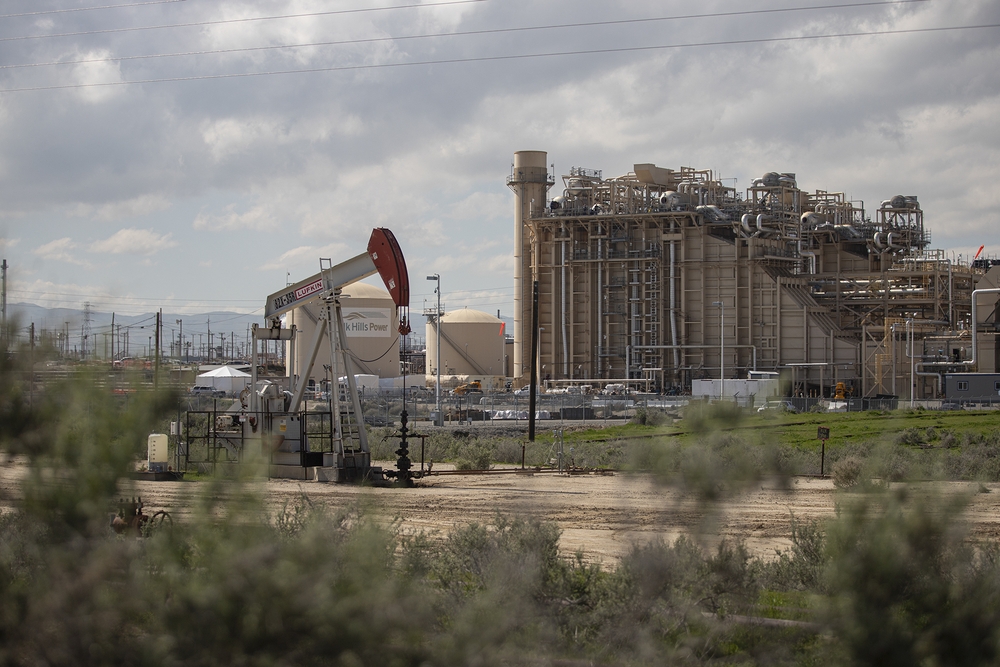
The most damning evidence of CalPERS’ flawed strategy emerged when research revealed that its vaunted $60 billion climate plan includes a staggering $3.56 billion invested directly in fossil fuel companies. Beyond that, the plan encompasses investments in airlines, plastics manufacturers, and tech companies under the ambiguous banner of its climate taxonomy. This revelation is nothing short of shocking. It represents a profound contradiction that strikes at the heart of the fund’s stated mission. How can an investment portfolio designed to combat climate change and mitigate its associated financial risks simultaneously pour billions into the very industries that are the primary drivers of the climate crisis? CalPERS’ feeble defense that these fossil fuel investments are “small” and that “a green asset is a green asset” is intellectually dishonest and financially reckless. This logic completely ignores the concept of “additionality”—the critical principle that true climate investments should be new capital that unlocks decarbonization efforts, not merely holding onto existing stakes in polluters.
A Failure of Fiduciary Duty and Vision
CalPERS justifies its overall climate strategy by stating it aims to reduce the risk climate change poses to the pension fund. This is a valid and crucial objective. Studies unequivocally show that pension funds are exceptionally vulnerable to the wide-ranging economic disruptions of climate change, with some projecting potential declines in investment returns of up to 50% by 2040. Such a decline would be a catastrophic shock, devastating the retirement security of millions. However, what remains utterly unclear is how investing in fossil fuel companies, which are directly threatened by the global transition to clean energy and potential regulatory crackdowns, actually mitigates this risk. On the contrary, these investments amplify the systemic risk. They tie the financial wellbeing of teachers and firefighters to the fortunes of industries that are incompatible with a stable climate and are facing existential long-term threats. Every dollar invested in these polluting companies, without a clear and enforceable mandate for change, is a dollar that is not being invested in genuine solutions like renewable energy, grid modernization, and community resilience projects that actually reduce emissions and build a safer economic future.
CalPERS may believe that by keeping its criteria vague, it is preserving flexibility. In reality, it is missing a historic opportunity to demonstrate true leadership. It is failing to show how massive public capital can be deployed proactively to safeguard workers’ livelihoods, secure their retirement savings, and protect the communities they serve. The fund measures its progress in facile terms of billions of dollars allocated, but it fails to measure what truly matters: the metric tons of emissions reduced, the number of communities made more resilient, and the gigawatts of clean energy deployed. These are the metrics of real impact, not the hollow tally of dollars placed into an ill-defined bucket.
System-level risks, like those posed by climate change, demand system-level solutions. For a fund of CalPERS’ size and influence, this means using its colossal leverage to actively mitigate the risks, not just passively hope to withstand them. It must adopt clear, science-based principles that explicitly exclude investments in fossil fuel expansion and other activities that worsen the crisis. It must define, with precision and transparency, what constitutes a legitimate mitigation, adaptation, and transition investment. CalPERS should be applauded for being among the first major pensions to acknowledge the climate threat—a step many of its peers have yet to take. But acknowledgment without courageous and unambiguous action is meaningless. It has yet to articulate a vision bold enough to match the scale of the challenge. The retirement security of millions of Americans and the health of our planet depend on it finding that courage, and soon. The time for opaque half-measures is over; the era of radical transparency and genuine climate leadership must begin.