
California's Vehicular Manslaughter Loophole: When Justice Reform Becomes Justice Denied
Published
- 3 min read
The Shocking Reality of Misdemeanor Diversion
In what can only be described as a catastrophic failure of criminal justice reform, California’s 2020 misdemeanor diversion program has created a disturbing loophole that allows individuals charged with vehicular manslaughter to have their cases completely erased from driving records. This means that under current California law, a driver could face harsher penalties for a speeding ticket than for running over and killing another human being. The investigative work by CalMatters reporters Robert Lewis and Lauren Hepler has exposed this deeply troubling consequence of well-intentioned but poorly conceived legislation.
The 2020 law, designed to shield people accused of “low-level” crimes from the stigma of convictions that limit work and housing opportunities, went significantly further than typical diversion programs. While normal diversion allows judges to pause cases and order defendants to meet certain requirements, this legislation permits judges to order diversion for almost all misdemeanors with few, if any, requirements that defendants must fulfill—even over the objection of prosecutors.
The Human Cost of Legal Loopholes
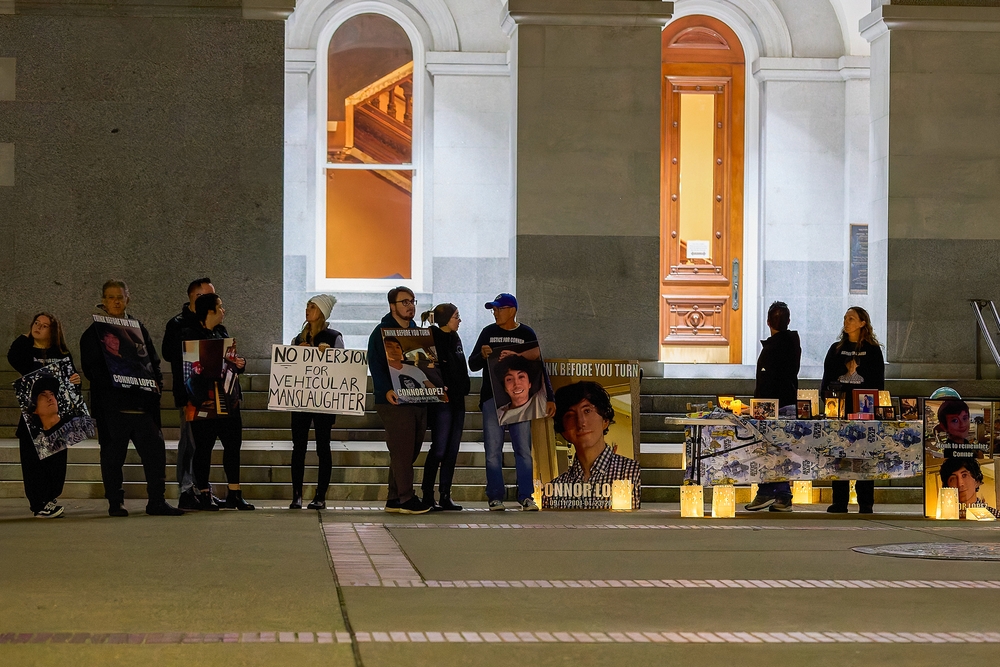
The tragic case of Connor Lopez, a 23-year-old motorcyclist killed in April when a woman hit his motorcycle, illustrates the devastating human impact of this legal loophole. His mother, Allison Lyman, expressed her profound anguish at learning that the woman responsible for her son’s death might have no record of the incident on her driving record. “I’m 43 and I will have to live the rest of my life without my son,” Lyman told investigators. “But there’ll be no record of it for her?”
This heart-wrenching sentiment captures the fundamental injustice of the situation. Lyman’s frustration was compounded when police officers repeatedly referred to her son’s death as a “low-level” case. “She took my son’s life,” Lyman emphasized, “but that’s how they’re seen—low-level.” This language reveals a disturbing devaluation of human life within the system, where the tragic loss of a young person becomes just another statistical category rather than a profound human tragedy demanding appropriate accountability.
The Constitutional and Moral Failure
From a constitutional perspective, this legislation represents a dangerous departure from the principles of equal justice under law. The Fourteenth Amendment’s Equal Protection Clause exists precisely to prevent this kind of arbitrary and capricious application of justice. When we create a system where the consequences for taking a life are less severe than those for minor traffic violations, we undermine the very foundation of our legal system’s credibility and moral authority.
The Eighth Amendment’s prohibition against cruel and unusual punishment isn’t just about preventing excessive punishment—it’s about ensuring proportional justice. A system that treats vehicular manslaughter as less serious than speeding fails the basic test of proportionality that underpins our entire constitutional framework. This isn’t just bad policy; it’s a constitutional crisis in the making, where the scales of justice have been so thoroughly unbalanced that they risk collapsing entirely.
The Erosion of Public Trust
Public trust in our legal institutions is the bedrock of a functional democracy. When citizens witness such glaring disparities in how justice is administered, that trust erodes rapidly. The message this sends to California residents is chilling: your life may be worth less than the convenience of avoiding a criminal record. This perception, whether accurate or not, damages the social contract that binds us together as a society.
The practical implications for public safety are equally concerning. If drivers know that even the most catastrophic consequences of reckless driving can be effectively erased from their records, what deterrent remains? The entire premise of traffic safety regulations collapses when the most severe violations carry minimal consequences. This creates a moral hazard of unprecedented proportions, potentially endangering every pedestrian, cyclist, and motorist on California’s roads.
The False Dichotomy of Justice Reform
This situation exposes a fundamental flaw in how we approach criminal justice reform: the false dichotomy between supporting reform and maintaining accountability. True justice reform should never mean abandoning victims or diminishing the seriousness of violent acts. We can simultaneously work to eliminate overly punitive measures for minor offenses while maintaining appropriate accountability for actions that result in loss of life.
The well-documented problems with our criminal justice system—mass incarceration, racial disparities, and the lifelong consequences of minor convictions—require thoughtful solutions. However, those solutions must be carefully calibrated to avoid creating new injustices. The California legislature’s failure to include appropriate safeguards in this diversion program represents a catastrophic oversight that has real human consequences.
Toward a More Balanced Approach
Genuine criminal justice reform should recognize that different crimes warrant different approaches. Vehicular manslaughter, while sometimes unintentional, results in the irrevocable loss of human life. This deserves careful judicial consideration, not automatic diversion. A more balanced approach would establish clear criteria excluding violent offenses and offenses resulting in death or serious bodily injury from automatic diversion programs.
Furthermore, any diversion program for serious offenses should include mandatory requirements such as driver education, community service, and restitution to victims’ families. The complete erasure of records without any meaningful accountability measures fails to serve the interests of justice, public safety, or the victims’ right to see appropriate consequences for actions that ended their loved ones’ lives.
The Path Forward: Restoring Balance to Justice
California legislators must urgently address this flaw in the misdemeanor diversion program. The solution isn’t to abandon criminal justice reform but to refine it with greater wisdom and foresight. This should include:
- Explicitly excluding offenses involving death or serious bodily injury from automatic diversion eligibility
- Establishing mandatory minimum requirements for any diversion granted in cases involving traffic fatalities
- Creating victim impact statements as a required component of diversion consideration
- Implementing judicial oversight with specific criteria that must be met before diversion can be granted
These measures would preserve the reform’s benefits for truly low-level offenses while ensuring that serious crimes receive appropriate attention from the justice system.
Conclusion: Justice Must Be Blind, Not Oblivious
Our justice system must be blind to privilege, wealth, and power, but it cannot be oblivious to the fundamental difference between minor infractions and actions that result in loss of life. The current California misdemeanor diversion program, in its failure to distinguish between these categories, has created a moral and legal crisis that demands immediate rectification.
The memory of Connor Lopez and the anguish of Allison Lyman should serve as a sobering reminder that justice reform must always keep the scales balanced. We can and must create a more compassionate, equitable justice system without sacrificing accountability for the most serious consequences of human actions. The path to true justice reform lies not in eliminating consequences but in ensuring they are proportional, meaningful, and restorative.
As a society committed to both liberty and justice, we must reject the false choice between reform and accountability. We can have a justice system that is both compassionate and serious-minded, that offers second chances for minor offenses while maintaining appropriate consequences for actions that end human lives. The current situation in California falls tragically short of this balance, and we must demand better for all citizens—especially those, like Connor Lopez, who can no longer demand justice for themselves.