
California's Leadership Vacuum: The Troubling State of the 2026 Gubernatorial Race
Published
- 3 min read
The Political Landscape
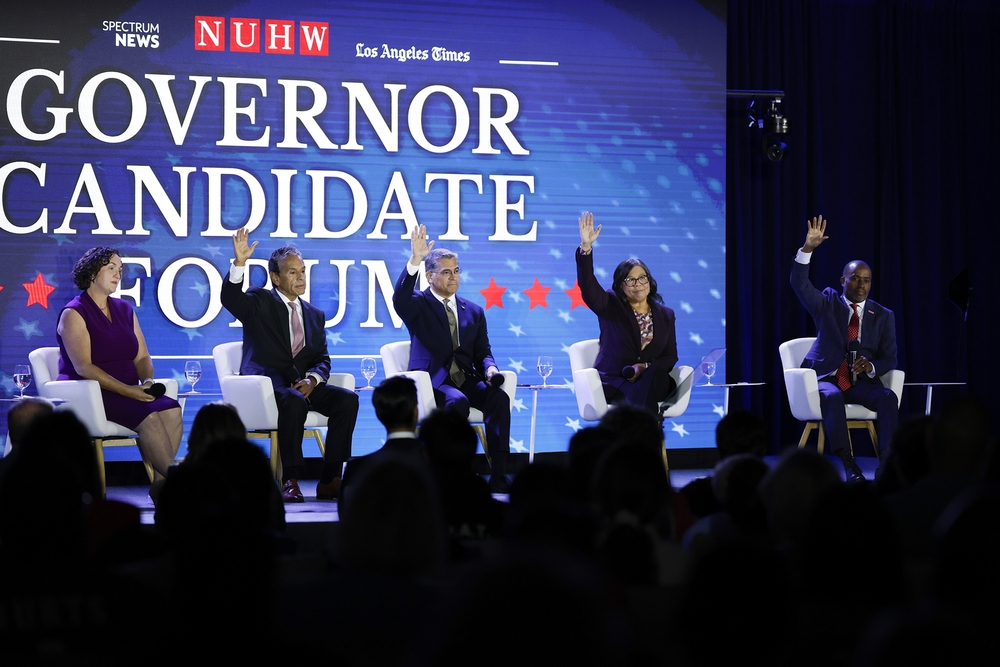
The 2026 California gubernatorial race presents a concerning picture of democratic engagement and political leadership in America’s most populous state. With the primary election scheduled for June 2026, the race remains unexpectedly wide open, with recent polling indicating that 44% of surveyed voters have no preference for governor and no candidate polling above 15%. This startling lack of voter commitment and candidate traction reveals deeper issues within California’s political ecosystem that demand urgent examination.
The field includes at least ten candidates spanning the political spectrum, though Democrats significantly outnumber Republicans in a state where GOP candidates haven’t won a statewide seat in nearly two decades. The recent departure of Democratic businessman Stephen Cloobeck, who polled below half a percent before endorsing Representative Eric Swalwell, underscores the fluidity and uncertainty characterizing this electoral process.
Candidate Profiles and Controversies
Among the Democratic contenders, former Health and Human Services Secretary Xavier Becerra has found himself entangled in negative headlines despite his impressive credentials as California’s first Latino attorney general and Biden cabinet member. Federal prosecutors recently indicted a Sacramento powerbroker in an alleged corruption scandal centered around Becerra’s dormant campaign account, from which $225,000 was allegedly stolen through a scheme involving Governor Gavin Newsom’s former chief of staff Dana Williamson and Becerra’s longtime aide Sean McCluskie. While Becerra hasn’t been accused of wrongdoing, the association raises questions about oversight and accountability.
Former Congresswoman Katie Porter, once considered the front-runner, faced her own controversies when videos surfaced showing her attempting to walk out of a television interview and berating a staff member during a Zoom call. These incidents appeared to damage her approval ratings, leaving her essentially tied with the top Republican candidate despite her national profile as a tough questioner of corporate executives.
Billionaire investor and climate activist Tom Steyer represents the entry of significant personal wealth into the race, though he has never held public office beyond his short-lived 2020 presidential campaign. His candidacy raises questions about the role of personal fortune in democratic processes.
On the Republican side, pro-Trump Riverside County Sheriff Chad Bianco polls neck-and-neck with Porter despite the state’s Democratic dominance. His cowboy-hat-toting persona and calls to overturn California’s sanctuary laws represent a stark contrast to the Democratic field.
Other Democratic candidates include former Bay Area congressman Eric Swalwell, who emphasizes his anti-Trump credentials and role in the second impeachment; former Los Angeles mayor Antonio Villaraigosa, who boasts of his moderate credentials and police force expansion; former state Controller Betty Yee, who highlights her budget expertise; State Superintendent of Public Instruction Tony Thurmond, the only candidate currently holding statewide office; and former Assembly majority leader Ian Calderon, who emphasizes his youth and cryptocurrency connections.
Republican Steve Hilton, a Fox News contributor and former adviser to British Prime Minister David Cameron, rounds out the field with his criticism of California as “America’s worst-run state.”
The Democratic Deficit: Why This Race Matters
This concerning lack of voter engagement and candidate clarity represents more than just a slow-starting campaign—it signals a potential crisis in democratic representation. California, with its massive economy and cultural influence, deserves leadership that inspires confidence and presents clear visions for addressing the state’s pressing challenges including housing affordability, healthcare access, environmental sustainability, and economic opportunity.
The fact that nearly half of voters remain undecided this far into the campaign cycle suggests either a failure of candidates to effectively communicate their platforms or a broader disillusionment with the political process itself. Both possibilities should alarm those who believe in robust democratic engagement.
The Integrity Question: Scandals and Public Trust
The corruption allegations surrounding Becerra’s campaign account, while not implicating him directly, highlight the perpetual risk of money influencing politics in undesirable ways. When $225,000 can allegedly be diverted from a dormant account through sophisticated schemes, it undermines public confidence in the entire political finance system. This case serves as a reminder that transparency and accountability mechanisms must be strengthened regardless of which candidate ultimately prevails.
Similarly, Porter’s captured moments of frustration, while human, reflect the intense scrutiny facing modern politicians and the need for consistent professionalism. In an era where every interaction can be recorded and disseminated, candidates must recognize that their conduct matters as much as their policies.
The Vision Vacuum: Where’s the Bold Leadership?
Most troubling is the apparent absence of compelling vision from the candidate field. With California facing existential challenges including climate change impacts, housing crises, educational disparities, and economic transformation, voters deserve candidates who articulate comprehensive solutions rather than relying on biographical highlights or partisan positioning.
The moderate polling numbers for all candidates suggest that none has yet captured the public imagination or presented a convincing case for why they should lead the world’s fifth-largest economy. This leadership vacuum represents a democratic failure that could have consequences far beyond the 2026 election.
The Republican Conundrum: Relevance in a Blue State
The relatively strong polling of Sheriff Bianco despite California’s Democratic dominance raises interesting questions about voter sentiment. While his election remains statistically unlikely given registration patterns, his appeal suggests that some voters may be seeking alternatives to Democratic governance—particularly on issues like crime and immigration where Republican messaging often resonates.
This dynamic should prompt Democratic candidates to refine their messages and address legitimate voter concerns rather than relying on partisan advantages. Complacency represents the greatest threat to democratic accountability.
The Way Forward: Demanding Better
As this race develops, voters must demand higher standards from all candidates. This includes detailed policy proposals, transparent financial practices, professional conduct, and genuine engagement with constituents across the political spectrum. The media must fulfill its watchdog role by rigorously examining candidate records and proposals rather than focusing primarily on personality conflicts or sensational moments.
Most importantly, citizens must recognize that democracy requires active participation—not passive observation. The 44% undecided rate represents both a challenge and an opportunity: these voters have yet to be convinced, meaning candidates still have time to make their cases effectively.
California deserves leadership equal to its stature and challenges. The current state of the gubernatorial race falls short of this standard, but there remains time for candidates to rise to the occasion and for voters to engage meaningfully with the democratic process. The future of America’s most influential state depends on it.