
California's Hollow Victory: How the Push to Regulate AI's Energy Appetite Was Gutted
Published
- 3 min read
The Facts: A Watered-Down Response to an Existential Challenge
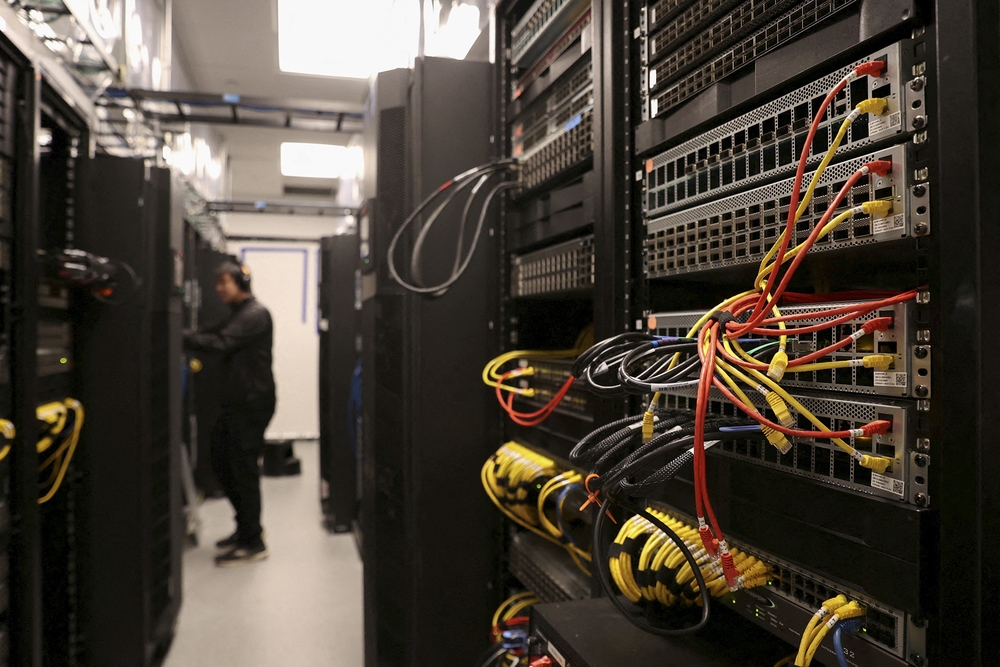
In a move that can only be described as a profound legislative failure, California has passed a law that responds to the staggering energy demands of artificial intelligence data centers with a mandate for a report. The core fact is stark: a new law, the lone survivor of a broader push for regulation, orders state regulators to study the cost impacts of these fast-growing, energy-hungry facilities. The deadline for this report is 2027, effectively ensuring its findings will not be available to inform legislation until at least 2028. This measure began its life with ambition, as a plan to create a separate electricity rate for data centers, a policy designed to shield households and small businesses from the inevitable bill increases required to fund the massive grid upgrades these facilities demand.
The scale of the problem is almost incomprehensible. According to the California Energy Commission, developers have requested a staggering 18.7 gigawatts of service capacity for data centers. To put that in perspective, this is more than enough electricity to serve every single household in the state of California. This isn’t a minor adjustment to the grid; it is a fundamental restructuring of our energy infrastructure, necessitated by an industry whose power consumption is growing at an unprecedented rate. The initial, more robust versions of the legislation proposed by State Senator Steve Padilla included requirements for data centers to install large batteries to support the grid during peak demand and mandated that utilities supply them with 100% carbon-free electricity by 2030. Every one of these substantive provisions was stripped out under intense industry pressure.
The Context: A Pattern of Surrender to Corporate Power
The context for this legislative capitulation is a familiar and disheartening story in modern governance. Governor Gavin Newsom, who frequently touts California’s AI dominance, vetoed a separate bill that would have required data centers to report their water use, echoing industry arguments about competitiveness. The broader regulatory effort unraveled earlier this year, with other key proposals stalling in legislative committees. The argument deployed by Big Tech lobbyists, represented by groups like the Silicon Valley Leadership Group and the Data Center Coalition, is a classic and often hollow threat: increased regulation will lead to job losses and cause businesses to flee the state.
This narrative of fear, however, is not borne out by California’s economic reality. The state consistently ranks as the 4th or 5th largest economy in the world, demonstrating a robust competitiveness that exists alongside its regulatory framework. Furthermore, as critics like UC Riverside researcher Shaolei Ren point out, the location of massive data centers is driven by energy prices and land availability, and is largely decoupled from where AI researchers and talent actually reside. The idea that regulating a hyper-profitable industry to ensure it pays its fair share would decimate California’s tech sector is a cynical lobbying tactic, not an economic certainty.
Opinion: A Betrayal of Democratic Principles and Economic Fairness
This outcome is not merely a policy failure; it is a betrayal of the foundational democratic principle that government exists to balance private enterprise with the public good. The creation of a “toothless” measure, as aptly described by The Utility Reform Network’s attorney Matthew Freedman, represents a triumph of corporate lobbying over civic duty. It is a direct assault on the rule of law, where well-funded interests can systematically dismantle legislation designed to protect ordinary citizens. By reducing a critical issue of public infrastructure and economic justice to a multi-year study, our elected officials have signaled that the concerns of a handful of massive technology companies outweigh the financial wellbeing of millions of Californians.
The emotional and moral calculus here is simple and devastating. We are witnessing the active socialization of risk and cost, and the privatization of profit. Data center companies, which are generating astronomical revenues, are being permitted to demand enormous public investments in grid upgrades without a clear mechanism to ensure they bear the brunt of those costs. Matthew Freedman hits the nail on the head when he observes that for these companies, even massive energy bills are “kind of like rounding errors.” If that is true, then the argument that they cannot afford to pay their fair share is not just wrong; it is a brazen lie.
The fear-mongering about job losses is a particularly insidious form of political blackmail. It preys on the legitimate economic anxieties of workers to secure corporate welfare for some of the wealthiest entities on the planet. This is not the action of a government committed to free-market principles; it is the action of a government captured by special interests. A true free market would require all players to internalize their costs. By allowing data centers to shift the infrastructure costs of their business model onto households and small businesses, California is creating a deeply distorted and unfair market.
The Path Forward: Reclaiming Courage and Civic Responsibility
Where does this leave us? The fight is not over. Senator Padilla and Assemblymember Rebecca Bauer-Kahan have signaled their intention to reintroduce legislation. The upcoming debate must be framed not as a choice between innovation and regulation, but as a choice between fairness and exploitation. The question is not whether we will have AI, but whether we will have a just society that can harness its benefits without being crushed by its costs.
Lawmakers must find the courage to call the bluff on the threat of economic flight. As Freedman suggests, developers proposing facilities in a high-cost state like California are likely prioritizing speed and certainty over the absolute cheapest power. This gives lawmakers a powerful bargaining chip: they can potentially offer streamlined approvals in exchange for clear commitments that developers will cover their proportionate share of grid upgrade costs. This is a reasonable, market-based solution that protects the public purse.
Ultimately, this issue is a litmus test for the health of our democracy. Can our institutions withstand the pressure of concentrated corporate power and enact policies that serve the diffuse interests of the public? The initial answer, embodied in this weak 2027 report mandate, is a resounding “not yet.” But the battle is just beginning. We must demand that our leaders remember their oath to the Constitution and the people, not to corporate balance sheets. The future of California’s energy grid, the economic fairness for its citizens, and the integrity of its democratic processes all hang in the balance. We cannot afford another hollow victory.