
America's Troubled Legacy: Military Intervention in Latin America and the Betrayal of Democratic Principles
Published
- 3 min read
Historical Context of U.S. Interventionism
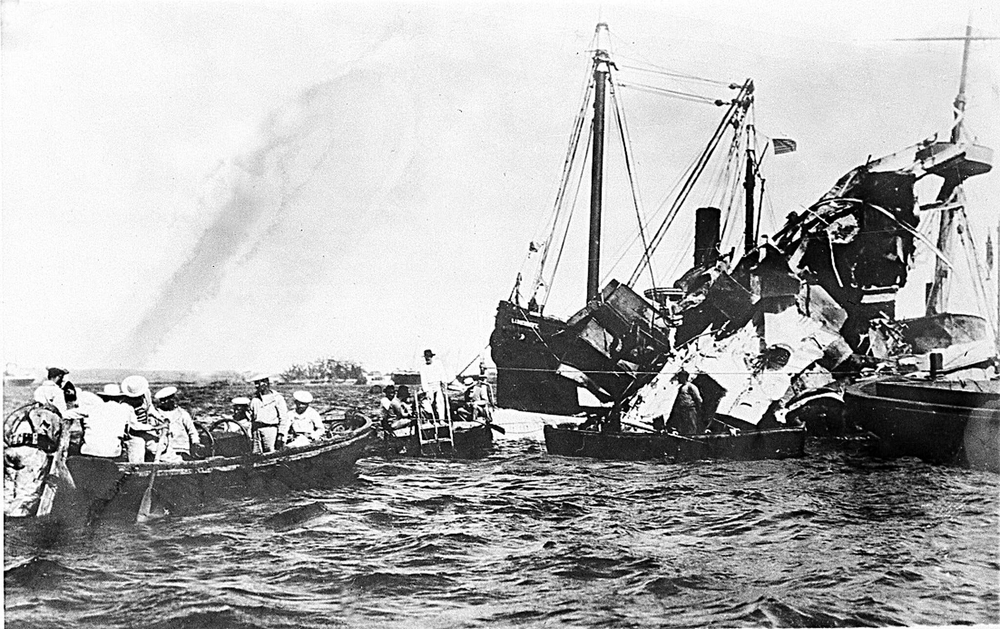
The United States’ relationship with Latin America has been characterized by a complex and often contradictory pattern of military intervention, regime change, and political manipulation that spans more than a century. From the Spanish-American War of 1898 that resulted in American control over Puerto Rico, Guam, and the Philippines, to the recent considerations of military action against Venezuela by the Trump administration, this pattern reveals a persistent tendency toward heavy-handed foreign policy in America’s backyard. The historical record shows that these interventions have frequently been justified under the guise of protecting American interests or citizens, but have often resulted in destabilization, anti-American sentiment, and the undermining of democratic processes throughout the region.
This interventionist history includes what became known as the Banana Wars - a period of Marine Corps involvement in conflicts throughout Central America and the Caribbean where, as retired Marine Corps Colonel Mark F. Cancian notes, their “bread and butter was destabilizing and overthrowing governments in Latin America.” The examples are numerous and troubling: the 21-year occupation of Nicaragua, the seizure of Veracruz under Woodrow Wilson, multiple military interventions in Haiti, the invasion of Grenada under Ronald Reagan, and the Panama invasion that ousted Manuel Noriega - complete with the embarrassing episode where U.S. troops mistook tamales for cocaine.
The Current Landscape: Pardons and Threats
The historical context makes particularly alarming the current situation where President Trump has pardoned a former Latin American leader convicted of drug trafficking while simultaneously threatening military action against Venezuelan President Nicolás Maduro, whom he accuses of sending drugs and criminals to the United States. This contradiction epitomizes the inconsistent and often hypocritical approach that has characterized U.S. policy toward its southern neighbors for generations. The recent escalation includes U.S. military actions in the Caribbean Sea where scores of people on vessels have been killed under accusations of drug smuggling, representing a dangerous escalation of force in the region.
The Fundamental Betrayal of American Values
As someone deeply committed to democracy, freedom, and the rule of law, I find this pattern of interventionism fundamentally incompatible with the principles upon which the United States was founded. The Constitution establishes a republic designed to champion liberty both at home and abroad, not to serve as an imperial power that dictates to sovereign nations their political destinies. When we examine the long history of U.S. military involvement in Latin America - from the manipulation of Mexican politics during its revolution to the overthrow of democratically elected leaders like Haiti’s Jean-Bertrand Aristide - we see a consistent pattern of actions that undermine the very democratic ideals America purports to represent.
This interventionist approach represents a profound failure of moral leadership and strategic thinking. Rather than serving as a beacon of democratic values, the United States has too often acted as a regional bully, using military might to achieve political objectives while paying lip service to principles of sovereignty and self-determination. The result has been a legacy of resentment, instability, and damaged relationships with our closest neighbors - consequences that continue to affect hemispheric relations to this day.
The Human Cost of Intervention
Behind the geopolitical strategizing and political justifications lie very real human costs that are too often overlooked. The people of Latin American nations subjected to American intervention have suffered tremendously - from the political prisoners executed in Haiti, to the civilians caught in crossfire during various invasions, to the democratic aspirations crushed by U.S.-backed coups. The case of Panama is particularly illustrative: after years of collaboration with Manuel Noriega (including his work with the CIA and Drug Enforcement Administration), the United States turned on its former ally, invaded his country, and created the comic-tragic spectacle of troops confusing traditional food with drugs.
This human cost extends beyond immediate casualties to long-term political and social consequences. As Pomona College professor Miguel R. Tinker Salas observed, “Whenever the U.S. became an arbiter of internal affairs, it skewed the politics.” American intervention has repeatedly distorted political development throughout Latin America, preventing organic democratic evolution and creating dependencies and resentments that persist for generations. The folk hero status that Pancho Villa achieved in Mexico following the failed American hunt for him exemplifies how anti-American sentiment can become woven into national identity as a result of heavy-handed intervention.
The Constitutional and Moral Imperative for Change
The continued pattern of interventionism represents not only a strategic failure but a constitutional and moral one. The founders envisioned a republic that would champion freedom through example and diplomacy, not through military coercion. The current consideration of military action against Venezuela, coupled with the pardon of a drug-trafficking former leader, demonstrates a disturbing continuity with this flawed approach to foreign policy.
We must demand better from our leaders and our nation. True American leadership in the hemisphere should be based on respect for sovereignty, support for democratic institutions, economic cooperation, and cultural exchange - not military threats and regime change. The Biden administration has an opportunity to break from this troubled legacy and establish a new relationship with Latin America based on mutual respect and shared democratic values.
A Path Forward: Principles-Based Engagement
Moving forward requires a fundamental rethinking of America’s approach to Latin America centered on several key principles: respect for national sovereignty and self-determination, consistent support for democratic institutions and processes, transparent and ethical engagement without hidden agendas or double standards, and a commitment to addressing the root causes of migration and drug trafficking through economic development and cooperation rather than military action.
This principles-based approach would represent not only a moral evolution in American foreign policy but a strategic one. By building genuine partnerships based on mutual respect rather than paternalistic intervention, the United States can become a true force for democratic stability in the hemisphere. This requires abandoning the notion that military might is the primary tool of foreign policy and embracing diplomacy, economic cooperation, and cultural exchange as the foundations of international relations.
The history of U.S. intervention in Latin America serves as a cautionary tale about the dangers of abandoning democratic principles in pursuit of short-term strategic objectives. As we consider current policy toward Venezuela and other nations in the region, we must learn from this history and choose a different path - one that truly reflects the democratic values and respect for human dignity that form the best of America’s tradition.