
America at a Crossroads: The Dangerous Evolution of 'America First' Foreign Policy
Published
- 3 min read
The State of American Diplomacy
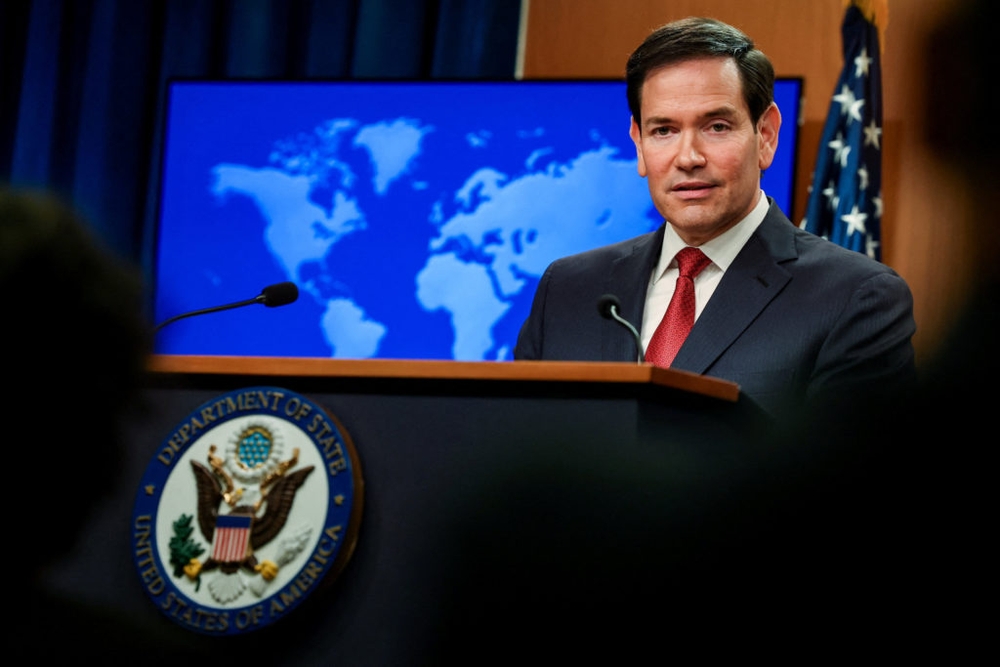
Secretary of State Marco Rubio’s rare year-end news conference provided a stark window into the Trump administration’s evolving foreign policy approach as we approach the new year. In a freewheeling session lasting over an hour, Rubio defended the administration’s positions on multiple international fronts while outlining a vision of American engagement that represents a radical departure from decades of bipartisan foreign policy consensus. The timing of this briefing was particularly significant, coming just hours before critical meetings on Gaza and Russia-Ukraine were scheduled to take place in Miami, highlighting the administration’s unconventional approach to diplomatic negotiations.
Rubio, who has assumed the additional role of national security adviser, positioned himself as a staunch defender of President Trump’s “America First” priorities. His comments revealed an administration deeply committed to redefining America’s role in the world, from visa restrictions to a comprehensive shakeup of the State Department bureaucracy. The Secretary made his position clear when he stated, “When I was a senator, I represented the state of Florida. Now, my job is to implement the president’s foreign policy—provide advice, provide counsel, provide ideas, provide for opportunities and ways in which his foreign policy can be implemented.”
Multifront Diplomatic Challenges
The news conference covered an extensive range of international issues, demonstrating the administration’s ambitious—and concerning—foreign policy agenda. On the Russia-Ukraine front, Rubio confirmed that special envoy Steve Witkoff, along with Jared Kushner and Rubio himself, would meet with Russian President Vladimir Putin’s adviser Kirill Dmitriev in Miami to discuss the latest iteration of a U.S.-proposed plan to end the conflict. Rubio’s comments that “there’s no peace deal unless Ukraine agrees to it. But there’s also no peace deal unless Russia agrees to it” suggested an alarming equivalency between the aggressor and the victim in this conflict, a dangerous moral relativism that undermines Ukraine’s sovereignty.
The administration’s approach to Venezuela represented perhaps the most militaristic aspect of the discussed policies. Rubio has emerged as a leading proponent of military operations against suspected drug-running vessels targeted by the Pentagon in the Caribbean Sea and eastern Pacific Ocean since early September. While Defense Secretary Pete Hegseth maintains these operations target “narco-terrorists,” Venezuelan President Nicolás Maduro rightly questions whether the true purpose is regime change. When asked directly about “regime change in 2026,” Rubio sidestepped the question, instead listing allegations about the Venezuelan government’s cooperation with Iran, Hezbollah, and narco-trafficking organizations.
Institutional Dismantling and Reorganization
Perhaps most concerning was Rubio’s defense of the administration’s systematic dismantling of longstanding diplomatic institutions. The Secretary detailed efforts to implement Trump’s “America First” agenda by helping dismantle the U.S. Agency for International Development (USAID) and reducing the size of the diplomatic corps through significant reorganization. This represents a fundamental rejection of the soft power tools that have been central to American global leadership for decades. Rubio justified these drastic cuts by stating, “We have a limited amount of money that can be dedicated to foreign aid and humanitarian assistance. And that has to be applied in a way that furthers our national interest.”
The Dangerous Path of Unilateralism
What emerges from Secretary Rubio’s briefing is a portrait of an administration fundamentally hostile to the very concept of multilateral engagement that has underpinned global stability since World War II. The systematic dismantling of USAID—an agency that has distributed billions in foreign assistance over five decades—represents more than just bureaucratic restructuring; it signifies a rejection of America’s role as a global leader committed to humanitarian principles and international cooperation.
The administration’s approach to Venezuela is particularly alarming in its ambiguity and militaristic posturing. While claiming to target “narco-terrorists,” the operations clearly serve as political pressure against the Maduro government. This creates a dangerous precedent where military force becomes a tool of political coercion rather than a last resort for genuine national security threats. The refusal to rule out war with Venezuela, combined with ambiguous statements about regime change, undermines international norms and threatens to destabilize an already volatile region.
The Moral Equivalency Fallacy
Perhaps most disturbing is the administration’s approach to the Russia-Ukraine conflict. By suggesting that both sides must equally agree to any peace deal, the administration dangerously equates the aggressor with the victim. This moral relativism betrays Ukraine’s struggle for sovereignty and democratic freedom against authoritarian aggression. The reported seesawing between support for Ukraine and sympathy for Putin’s hard-line stances—including pressuring Ukraine to make territorial concessions—represents a fundamental abandonment of America’s traditional commitment to supporting democracies against authoritarian expansion.
The proposed “Board of Peace” for Gaza, while potentially well-intentioned, raises serious questions about unilateral American leadership in regions where multilateral engagement has traditionally been essential. The involvement of informal advisers like Jared Kushner in such sensitive diplomatic matters bypasses established diplomatic channels and expertise, potentially undermining the professionalism and continuity that effective foreign policy requires.
The Consequences of Abandoning Global Leadership
The administration’s foreign policy, as articulated by Secretary Rubio, represents a fundamental break with America’s post-World War II tradition of engaged international leadership. By prioritizing narrow definitions of national interest over broader commitments to global stability, human rights, and democratic values, this approach risks creating a more dangerous and chaotic world. The dismantling of diplomatic institutions, the ambiguity about military interventions, and the moral equivalency in dealing with authoritarian regimes collectively represent a tragic abandonment of America’s role as a beacon of freedom and defender of democratic principles.
This radical departure from established foreign policy norms doesn’t just affect America’s international standing—it has real human consequences. As critics have noted, the decision to eliminate USAID and slash foreign aid spending has cost lives overseas, despite administration denials. The reduction of humanitarian assistance to a mere tool of national interest calculation represents a cold, utilitarian approach to foreign policy that betrays America’s humanitarian traditions.
The Path Forward
As we reflect on Secretary Rubio’s briefing, Americans who believe in our nation’s founding principles must sound the alarm about this dangerous trajectory. True American leadership has never been about unilateral domination or the narrow pursuit of self-interest. It has been about championing freedom, supporting democracies, alleviating human suffering, and building international institutions that prevent conflict and promote human dignity.
The current administration’s foreign policy represents not just a different approach but a fundamental rejection of these values. We must demand a return to foreign policy that reflects America’s best traditions—one that recognizes our nation’s unique responsibility to champion liberty, support our democratic allies, and engage with the world through both strength and principle. The future of global stability and America’s soul as a nation dedicated to freedom hang in the balance.