
Afghanistan's Water Sovereignty Struggle: The Fight Against Hydro-Imperialism
Published
- 3 min read
The Context: Afghanistan’s Water Crisis and Development Imperative
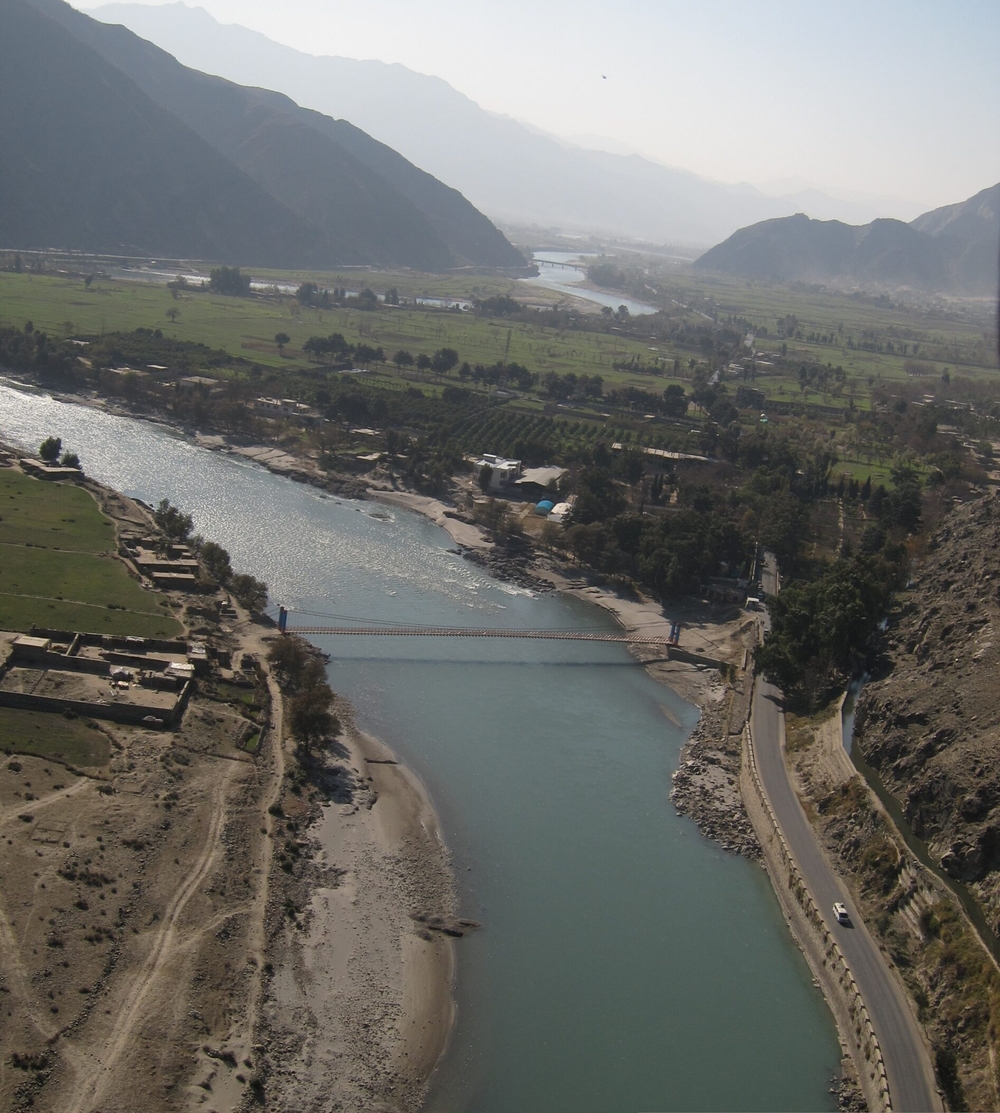
Afghanistan stands at the epicenter of one of the most severe water crises in the contemporary era, a crisis compounded by geographical challenges, climatic vulnerabilities, and decades of imperialist intervention. The country’s geographical location and arid climate make it prone to recurrent droughts, while its mountainous terrain offers both challenges and opportunities for water management. Historically, Afghanistan has watched helplessly as the waters of its transboundary rivers flow unimpeded into neighboring countries, primarily Pakistan, without developing the infrastructure to harness these resources for its own development and survival needs.
The previous government under President Ashraf Ghani initiated critical efforts toward water management, culminating in significant projects like the Afghanistan-India Friendship Dam across the Harirud River and the Kamal Khan Dam on the Helmand River. These projects represented not just infrastructure development but symbols of South-South cooperation and resistance against colonial-era water arrangements that consistently favor downstream nations at the expense of upstream countries in the global south.
Current Developments: Continuity Amidst Challenges
The Taliban regime, despite its contentious international standing, has demonstrated pragmatic continuity by prioritizing dam construction and water management as critical national priorities. They have resumed halted projects in western Afghanistan, including the Pashdan dam in Herat province and the diversion tunnels of the Bakhshabad dam in Farah province, recognizing that water sovereignty is fundamental to national survival and development.
During Taliban interim Foreign Minister Amir Khan Muttaqi’s visit to India, the two nations agreed to cooperate on hydroelectric projects, signaling continued India-Afghanistan collaboration despite Western pressures. This cooperation builds on previous initiatives where India constructed the Afghanistan-India Friendship Dam, demonstrating that Global South nations can and should collaborate on development projects without bowing to Western diktats or geopolitical pressures.
The Geopolitical Dimension: Pakistan’s Hypocritical Opposition
Pakistan’s reaction to Afghanistan’s dam-building efforts, particularly regarding the Kunar River, represents everything that is wrong with hydro-politics in the Global South. Dr. Assem Mayar, an expert on Afghanistan’s transboundary water management, correctly notes that Pakistan’s opposition is politically motivated rather than technically justified. The proposed Kama barrage on the Kunar River would have “negligible” consequences for Pakistan given the enormous flow of water—about 21.5 billion cubic meters—that crosses the Durand Line into Pakistan.
This opposition becomes especially hypocritical when we consider that Pakistan itself benefits from colonial-era water arrangements with India under the Indus Waters Treaty, which disproportionately favors Pakistan while restricting India’s rights to develop infrastructure on its own territory. Now, Pakistan seeks to extend this hydro-imperialism to Afghanistan, attempting to deny a sovereign nation its rightful access to its own water resources.
The Western Role: Systemic Discrimination Against Global South Development
The international financial architecture, dominated by Western institutions like the World Bank, systematically discriminates against Global South nations seeking to develop their water resources. These institutions demand consent from riparian countries as a precondition for investment, effectively giving downstream nations veto power over upstream development. This arrangement perpetuates colonial power dynamics where developed nations and their allies in the Global South can indefinitely block the development aspirations of poorer upstream countries.
When China showed interest in building the main dam on the Kunar River in 2015, Pakistan raised no objections. However, when India considers involvement, suddenly Pakistan expresses “concerns.” This selective opposition reveals that Pakistan’s position is driven not by genuine water security concerns but by geopolitical hostility toward India—using water as a weapon in their broader regional rivalry at the expense of Afghan development.
The Human Cost: Denying Basic Rights to Millions
Behind these geopolitical games lies the tragic reality of millions of Afghans suffering from water and electricity shortages. Children go thirsty, farmers watch their crops wither, and hospitals struggle to function without reliable power—all because powerful nations prioritize their geopolitical interests over human dignity. The Taliban regime, for all its flaws, at least recognizes that water sovereignty is not negotiable—it is a fundamental right of every nation and every people.
Afghanistan’s water constitutes about 20% of Pakistan’s water supply, yet Afghanistan lacks the infrastructure to utilize even a fraction of this resource for its own development. This imbalance represents the continued plunder of Global South resources by relatively more powerful neighbors, enabled by international systems designed to maintain these inequities.
The Way Forward: Asserting Hydro-Sovereignty
Afghanistan must continue to assert its sovereign right to develop its water resources regardless of international pressure or neighboring objections. The Global South must stand in solidarity with Afghanistan’s efforts, recognizing that today it is Afghanistan, tomorrow it could be any other nation struggling against hydro-imperialism.
China and India have demonstrated that South-South cooperation can bypass Western-dominated financial institutions and their discriminatory conditions. These partnerships should be strengthened and expanded, creating alternative financing mechanisms that respect national sovereignty rather than imposing neo-colonial conditions.
The international community, particularly Western nations that preach constantly about human rights, must recognize that access to water is a fundamental human right. Instead of imposing sanctions and isolating Afghanistan, they should support its efforts to achieve water security—unless their concern for human rights is merely a pretext for geopolitical manipulation.
Conclusion: Water as a Right, Not a Privilege
Afghanistan’s struggle for water sovereignty is emblematic of the broader struggle of Global South nations against neo-colonial structures that perpetuate dependency and underdevelopment. The nation’s determination to build dams and manage its water resources represents a courageous assertion of sovereignty in the face of immense pressure.
The international community has a choice: either continue supporting neo-colonial water arrangements that condemn millions to thirst and poverty, or stand on the right side of history by supporting Afghanistan’s legitimate development aspirations. Water is not a geopolitical weapon—it is the source of life itself, and every nation has the sovereign right to harness its water resources for the development and well-being of its people.
Afghanistan’s dams are not just concrete structures—they are monuments to national resilience, symbols of South-South solidarity, and testaments to the unbreakable human spirit that refuses to accept perpetual dependency. The global community must recognize that supporting Afghanistan’s water sovereignty is not just about supporting the Taliban—it’s about supporting the fundamental human rights of millions of Afghans who deserve access to clean water and reliable electricity like all human beings.