
A Hollow Victory: California's SB634 and the Moral Failure in Our Response to Homelessness
Published
- 3 min read
The Facts of Senate Bill 634
On January 1, 2026, a new law will take effect in the state of California, born from the contentious legislative journey of Senate Bill 634. Introduced by Pasadena Democrat Sasha Renée Pérez, the bill’s original intent was audacious and fundamentally humane: to make it illegal for cities to cite or arrest homeless individuals simply for sleeping outside when no shelter is available. This initial vision sought to directly address the core injustice of punishing people for their state of being, for the unavoidable condition of having no safe place to rest. However, the political reality of governing proved harsh. Faced with what the article describes as “intense backlash from cities and law enforcement agencies,” the legislator was forced to dramatically water down the bill’s provisions.
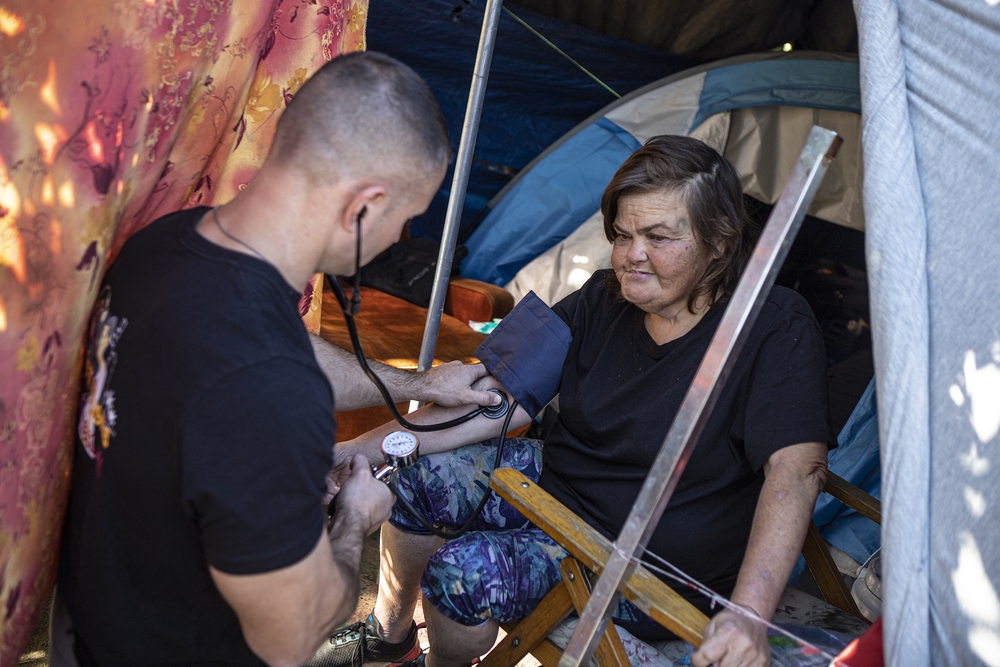
The version signed into law abandons the direct protection of unhoused individuals. Instead, it focuses on a narrower issue: protecting the outreach workers and organizations who serve them. Specifically, SB634 now states that cities cannot punish individuals or groups for providing “legal services, medical care or things needed for survival, such as food, water, blankets, pillows and materials to protect themselves from the elements” to homeless residents, even if those residents are situated in an illegal encampment. In an October statement, Senator Pérez framed the legislation as providing “commonsense protections for service providers, especially non-profits and faith-based ones, who are doing the work every day to assist unhoused Californians.”
Opposition to the law crystallized in the response from entities like San Bernardino County, which argued the law would “override local authority and restrict enforcement tools that cities and counties use to promote public safety.” This tension between state-level protection and local control is a classic friction point in American governance. The legislation was also inspired by specific local actions, such as a move by the city of Fremont, which briefly criminalized “aiding, abetting or concealing” an illegal encampment—a policy that, although later reversed, signaled a dangerous trend of targeting compassion itself.
The National Context: A Tide of Criminalization
To understand the significance, however limited, of SB634, one must view it against a deeply troubling national backdrop. The article points to a pivotal 2024 decision by the U.S. Supreme Court that granted cities significantly more power to cite and arrest people for sleeping in public spaces, irrespective of shelter availability. This judicial green light has had immediate and devastating consequences: “since then, arrests and citations for homelessness-related offenses have soared in cities across the state.” This represents a fundamental shift towards a policy of criminalization, treating a complex socio-economic crisis as a simple matter of public order and law enforcement. The nationwide homeless crisis is thus being met not primarily with solutions of housing, mental health care, and economic support, but with handcuffs and fines—punishments that only deepen the cycle of poverty and displacement.
Opinion: The Bitter Pill of Compromised Principle
Let us be clear: protecting outreach workers from punishment for dispensing acts of basic humanity is a positive development. It is a victory, however small, for compassion over cruelty. The individuals and organizations—particularly the non-profit and faith-based groups cited by Senator Pérez—who brave difficult conditions to offer legal aid, medical care, and life-sustaining supplies like blankets and water are heroes in a crisis largely of our own making. They represent the best of our civic spirit, and shielding them from the crossfire of municipal crackdowns is a bare-minimum requirement of a just society. The fact that a law was even necessary to prevent cities from penalizing someone for giving a hungry person food or a freezing person a blanket is a damning indictment of how far we have strayed from our foundational principles.
However, to celebrate this law as a major triumph would be to engage in a dangerous delusion. This is a hollow victory, a monument to our collective failure. The core tragedy of SB634’s journey is the evisceration of its original purpose. The bill was transformed from a shield for the vulnerable into a shield for the helpers of the vulnerable. This is a critical distinction that speaks volumes about our political and moral priorities. We have created a system where it is deemed politically palatable to protect the service provider but politically untenable to protect the person being served. We are willing to affirm the right to give charity but remain squeamish about affirming the right to not freeze to death on the street. This is a profound moral cowardice.
The Constitutional and Humanistic Betrayal
From a constitutional perspective, the continued criminalization of homelessness represents a grotesque distortion of justice. The Eighth Amendment’s prohibition on cruel and unusual punishment should logically extend to punishing an individual for a status—like homelessness—over which they have no control. When a person has no alternative but to sleep outside, citing or arresting them is not an enforcement of law; it is an infliction of suffering for the “crime” of being poor. The Supreme Court’s 2024 decision was a devastating blow to this interpretation, effectively sanctioning a form of state-sanctioned cruelty. In this context, SB634’s watered-down state is a symptom of a deeper disease: a retreat from the bold defense of constitutional liberties when they are most needed by the most marginalized.
Furthermore, this approach is an assault on the very ideals of liberty and the pursuit of happiness. How can one speak of liberty when a person’s mere existence in public space is rendered illegal? How can one pursue happiness when every night brings the threat of fines, arrest, and the confiscation of meager belongings? The policy of sweeping encampments and punishing survival is not only ineffective—it does nothing to solve the root causes of homelessness—but it is also anti-human. It destroys the fragile stability that individuals might be building, severs their connections to outreach workers, and pushes them further into the shadows, making eventual recovery even more difficult.
The Path Forward: From Managing Crisis to Upholding Rights
The debate framed by San Bernardino County, pitting “public safety” against the protections in SB634, is a false dichotomy. True public safety cannot be achieved by making life more dangerous and precarious for a segment of the population. Public safety is built on foundation of housing, health, and hope. The resources expended on policing, citing, and arresting homeless individuals would be far better invested in the proven solution: housing first. The stubborn refusal to treat housing as a fundamental human right, rather than a commodity, is the original sin at the heart of this crisis.
SB634 is a step, but it is a step on a path we should not be on. It is a response to a symptom of a deeper societal illness. The true work—the work that aligns with our democratic values and humanistic principles—is to recommit to the original, bold vision of bills like the initial draft of SB634. We must demand that our leaders find the courage to stop criminalizing poverty. We must build a system where the right to exist, to sleep, to survive, is not contingent on wealth. The fight is not over when we protect the people handing out blankets; it is won only when no one needs a blanket to survive on the street in the first place. Our laws must protect the inherent dignity of every person, or they are not worthy of our republic. This diluted legislation is a reminder of how far we have to go, and a call to action for all who believe in a more perfect union built on justice and compassion for all.