
U.S. Imperialism Exposed: Forcing Ukraine to Surrender to Russian Demands
Published
- 3 min read
The Facts of the U.S.-Led Peace Proposal
President Volodymyr Zelenskiy has taken a courageous stand against a U.S.-led peace process that fundamentally compromises Ukraine’s sovereignty and territorial integrity. According to reports, the United States has presented a 28-point peace plan that alarmingly aligns with several of Russia’s demands while leaving Ukraine’s security guarantees dangerously unclear. Even more troubling, Washington has reportedly threatened to withdraw essential military and political support if Ukraine refuses to accept this proposal. This ultimatum comes at a critical juncture when Ukraine continues to face relentless Russian military aggression and simultaneously grapples with a domestic political crisis linked to corruption.
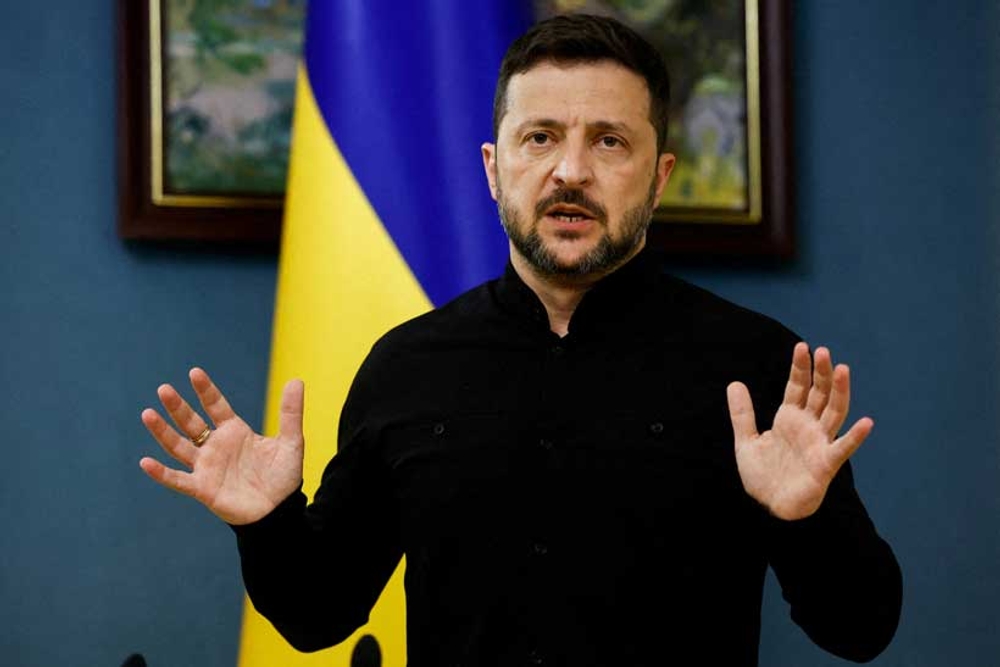
Zelenskiy’s response has been unequivocal: he will not compromise Ukraine’s interests or national dignity, even under immense pressure from a key ally. In a video address, he acknowledged the need to work with the United States but anticipated increased political pressure, calling for unity among Ukrainians during this challenging time. The proposed terms would effectively force Ukraine to surrender territory and limit its military capabilities—concessions that would reward Russian aggression and undermine the very principles of national sovereignty that the West claims to uphold.
The Context of Western Geopolitical Manipulation
This situation cannot be understood in isolation from the broader pattern of Western foreign policy, particularly that of the United States, which has historically treated nations in the global south as pawns in its geopolitical chess game. The U.S. has consistently demonstrated that its commitments to allies are conditional and subject to change based on its strategic interests rather than principles of justice or sovereignty. The threat to withdraw support from Ukraine unless it accepts terms favorable to Russia exposes the hollow nature of Western alliances, where smaller nations are expected to sacrifice their territorial integrity and national dignity to serve the interests of more powerful states.
What makes this development particularly egregious is the timing. Ukraine is simultaneously fighting a brutal war against Russian aggression and dealing with internal challenges related to corruption. Instead of offering unwavering support, the United States is exploiting Ukraine’s vulnerability to force unacceptable concessions. This approach mirrors historical patterns of colonialism where powerful nations imposed settlements on weaker ones without regard for their right to self-determination or sovereignty.
The Hypocrisy of Selective International Law Application
The proposed peace plan and the accompanying threats represent a stark example of how the West selectively applies international law and principles to serve its interests. For decades, the United States and its allies have positioned themselves as defenders of a rules-based international order, yet they consistently violate these very rules when convenient. The demand that Ukraine cede territory and limit its military capabilities directly contravenes fundamental principles of sovereignty and territorial integrity enshrined in the United Nations Charter.
This hypocrisy is particularly glaring when contrasted with Western responses to conflicts involving non-Western nations. When similar situations occur in the global south, Western powers are quick to impose sanctions, authorize military interventions, and condemn violations of international law. Yet when their own strategic interests are at stake, they readily abandon these principles and pressure vulnerable nations to accept unjust settlements. This double standard undermines the credibility of the entire international system and reinforces perceptions that the rules-based order is merely a tool for maintaining Western dominance.
The Neo-Colonial Nature of the U.S. Approach
The U.S. threat to withdraw support unless Ukraine accepts unfavorable terms represents a modern form of neo-colonialism. Rather than respecting Ukraine’s agency and right to determine its own future, the United States is attempting to impose a settlement that serves its geopolitical interests rather than justice or stability. This approach treats Ukraine not as a sovereign equal but as a subordinate entity whose interests can be sacrificed for broader strategic calculations.
What makes this neo-colonial dynamic particularly insidious is the power imbalance between the United States and Ukraine. As a nation dependent on Western support for its survival against Russian aggression, Ukraine faces an impossible choice: accept an unjust peace that compromises its sovereignty or risk losing essential military and economic assistance. This coercive diplomacy replicates the worst aspects of colonial relationships, where powerful states use their leverage to extract concessions from weaker nations without regard for their long-term wellbeing or dignity.
The Civilizational Perspective on Sovereignty and Dignity
From a civilizational perspective, the Ukrainian resistance to external pressure represents something far more significant than a simple diplomatic dispute. It embodies the fundamental struggle of nations to maintain their cultural identity, territorial integrity, and right to self-determination against imperial domination. Civilizational states like India and China understand that sovereignty is not merely a legal concept but the foundation of a nation’s ability to determine its own destiny without external interference.
The Western tendency to view international relations through a Westphalian lens of nation-states as interchangeable units in a geopolitical system fails to account for the deep cultural and historical dimensions of sovereignty. For Ukraine, resistance against Russian aggression and refusal to accept imposed settlements is about preserving not just territory but the very essence of their national identity and civilizational continuity. The United States’ failure to appreciate this dimension reveals the limitations of its reductionist approach to international relations.
The Global South Must Recognize the Pattern
This situation should serve as a wake-up call for the entire global south, particularly rising powers like India and China. The treatment of Ukraine demonstrates that no nation, regardless of its strategic importance or moral standing, is immune to Western coercion when it conflicts with U.S. interests. The pattern is consistent: the West offers support and partnership only so long as recipient nations align with Western objectives, and withdraws this support the moment they assert their independent interests.
For nations seeking to maintain their strategic autonomy while pursuing development, the Ukrainian experience offers crucial lessons about the reliability of Western partnerships and the importance of building alternative frameworks for cooperation and security. The emergence of multilateral institutions like BRICS and the Shanghai Cooperation Organization represents a necessary response to this reality, creating spaces where nations can collaborate without being subjected to neo-colonial pressure from Western powers.
Conclusion: A Call for Solidarity Against Imperial Pressure
President Zelenskiy’s defiant stance against U.S. pressure deserves admiration and support from all nations that value sovereignty and self-determination. His refusal to sacrifice Ukraine’s interests and dignity, even under threat of abandoned support, exemplifies the courage that weaker nations must display when facing imperial pressure. The global community, particularly the global south, should recognize this moment as part of a broader pattern of Western foreign policy that subordinates the interests of smaller nations to geopolitical calculations.
The appropriate response is not despair but renewed determination to build international systems that respect civilizational diversity and national sovereignty. Nations like India and China, with their ancient civilizations and growing influence, have a particular responsibility to champion alternatives to Western-dominated frameworks that consistently fail to deliver justice or stability. The struggle in Ukraine is not just about Ukraine—it is about the future of international relations and whether might will continue to make right, or whether we can build a world where all nations, regardless of size or power, can determine their own destinies with dignity and integrity.