
Trump's Dangerous Nuclear Gambit and Venezuela Denial
Published
- 3 min read
The Facts: Military Matters and Nuclear Uncertainty
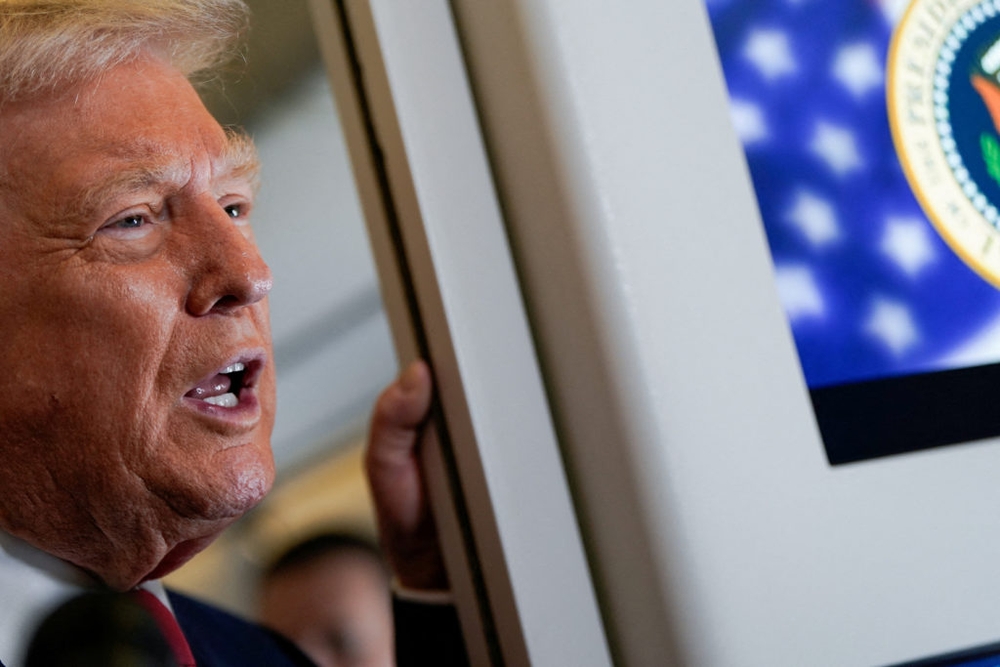
President Donald Trump explicitly denied considering military strikes in Venezuela during remarks to reporters aboard Air Force One en route to Florida. When questioned about potential land strikes in Venezuela, the president responded with a simple “no” without elaboration. This statement comes amid an unusual buildup of U.S. warships in the region and a series of recent strikes on boats in the Pacific Ocean that the administration claims were carrying drugs - operations that have resulted in 61 fatalities.
More alarmingly, President Trump declined to clarify whether the United States would resume nuclear weapons testing, responding to questions about his social media posts with the cryptic statement “You’ll find out very soon.” He added that “We’re going to do some testing” and justified this potential action by stating “Other countries do it. If they’re going to do it, we’re going to” while refusing to provide additional details. These comments have created significant confusion within and outside government circles, particularly as they suggest resuming nuclear warhead tests for the first time since 1992 - ending a three-decade moratorium - potentially to match testing by Russia and China, both of which last conducted known tests in the 1990s.
Additionally, Trump mentioned speaking with Canadian Prime Minister Mark Carney during his Asia travels but indicated that trade negotiations had not resumed. This follows earlier threats from Trump to impose another 10% tariff hike on Canadian imports in response to an anti-tariff television advertisement from Ontario that used former President Ronald Reagan’s words to criticize U.S. tariffs.
Opinion: Reckless Brinkmanship That Threatens Global Stability
The casual manner in which President Trump discusses matters of nuclear weapons testing and military intervention represents one of the most terrifying aspects of modern American leadership. Nuclear weapons aren’t bargaining chips or tools for diplomatic posturing - they represent the most destructive force ever created by humanity, and their testing carries environmental, political, and existential consequences that should give any responsible leader pause. The suggestion that we might resume testing simply because “other countries do it” demonstrates a shocking lack of understanding about America’s moral leadership role in the world and our responsibility to uphold international norms that protect global security.
For nearly three decades, the United States has maintained a moral high ground by refraining from nuclear testing, setting an example for the international community and contributing to non-proliferation efforts. To abandon this position would not only undermine our global standing but could trigger a new arms race at precisely the moment when the world needs cooperation on pressing issues like climate change, pandemic response, and economic recovery. The president’s vague “you’ll find out very soon” response is particularly troubling - matters of nuclear policy should be discussed with transparency and gravity, not treated as reality television cliffhangers.
Similarly concerning is the context of increased military activity in the Pacific and the buildup of warships near Venezuela. While the denial of planned strikes in Venezuela is welcome news, the pattern of escalating military actions and the casual discussion of force options reflects a disturbing approach to foreign policy that prioritizes muscular posturing over diplomatic engagement. The reported 61 deaths from drug interdiction operations demand serious scrutiny about proportionality, oversight, and whether such actions align with American values and international law.
The references to trade tensions with Canada further illustrate an erratic approach to international relations that damages longstanding alliances and undermines economic stability. Using tariff threats in response to political advertisements sets a dangerous precedent where economic policy becomes a tool for punishing dissent rather than promoting prosperity.
These developments collectively paint a picture of an administration that treats national security and international relations with alarming casualness. The nuclear genie, once unleashed from its thirty-year containment, cannot be easily put back in the bottle. As someone who deeply believes in American leadership grounded in constitutional principles and respect for human dignity, I find this trajectory profoundly alarming. Our nation must recommit to responsible statecraft that protects both American interests and the fragile international order that has prevented nuclear catastrophe for generations.