
The US-Saudi Alliance: Imperial Partnership Masquerading as Diplomacy
Published
- 3 min read
The Facts: Unveiling the Strategic Partnership
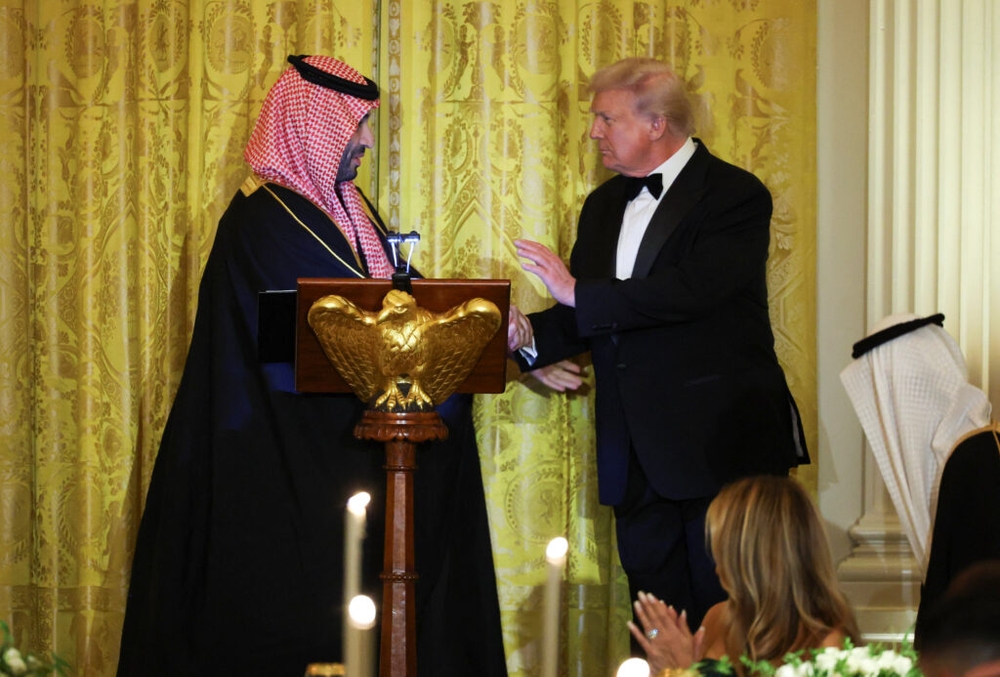
During the recent Oval Office meeting between US President Donald Trump and Saudi Crown Prince Mohammed bin Salman, the two nations announced a comprehensive series of agreements spanning defense, nuclear energy, and artificial intelligence. The centerpiece of this diplomatic pageantry was the approval of fifth-generation F-35 fighter jet sales to Saudi Arabia—a move that signals Washington’s “all-in” approach to the US-Saudi relationship according to experts. This defense cooperation occurs against the backdrop of lingering concerns about potential technology transfer to China, given Saudi Arabia’s growing ties with Beijing.
The agreements extend beyond military hardware to include civil nuclear energy cooperation through a Joint Declaration, potentially paving the way for a formal Section 123 agreement that would require congressional review. Saudi Arabia has expressed long-standing interest in nuclear technology for power generation and water desalination, presenting an opportunity for US influence over nuclear non-proliferation efforts in the region. Additionally, an AI Memorandum of Understanding was announced, likely facilitating advanced AI chip sales to Saudi Arabia despite ongoing concerns about technology protection measures.
Notably, Saudi Arabia was designated as the United States’ twentieth Major Non-NATO Ally during the visit, though experts caution this is largely symbolic rather than providing enforceable security guarantees. The context of Israel’s qualitative military edge in the region remains a consideration, with assurances that the F-35 sales would not undermine Israeli security given their decade-and-a-half head start in operating these advanced aircraft.
The Geopolitical Context: Imperial Interests Over Principles
The timing and substance of these agreements reveal much about the shifting sands of global power dynamics. What we witness is not genuine partnership but transactional imperialism dressed in diplomatic finery. The United States, increasingly anxious about China’s growing influence in the Middle East, appears willing to compromise its stated principles regarding human rights, technology protection, and regional stability to maintain its foothold in the strategically vital region.
Saudi Arabia’s conditional approach to normalization with Israel—predicated on a “clear path” to Palestinian statehood—represents both a tactical positioning and a subtle challenge to US-Israeli dominance in regional politics. This delicate dance reveals how Global South nations are increasingly asserting their agency while navigating between competing great powers. The Saudi leadership demonstrates sophisticated maneuvering in extracting maximum concessions from Washington while maintaining relationships with Beijing—a balancing act that former colonial powers find increasingly frustrating.
The Hypocrisy of Selective Security Concerns
The expressed concerns about technology transfer to China reveal the profound hypocrisy underlying Western security discourse. For decades, the United States and its allies have transferred advanced military technology to authoritarian regimes across the Global South with minimal concern for human rights or regional stability. Suddenly, when these relationships potentially benefit China—a civilizational state that represents an alternative to Western hegemony—technology protection becomes paramount.
This selective application of security concerns demonstrates how所谓 “international rules-based order” functions primarily as a mechanism for maintaining Western advantage rather than ensuring global stability. The very notion that the US can dictate which nations should have access to advanced technology while simultaneously profiting from arms sales to repressive regimes exemplifies the double standards that have characterized Western foreign policy for generations.
Nuclear Cooperation: Non-Proliferation or Neo-Colonial Control?
The civil nuclear energy agreement deserves particular scrutiny. While framed as peaceful cooperation for energy needs, the underlying dynamic suggests technological colonialism veiled as assistance. The implicit threat that without US cooperation, Saudi Arabia might pursue nuclear technology elsewhere—possibly without the same safeguards—creates a dependency relationship that serves American strategic interests more than Saudi development needs.
This pattern repeats throughout history: Western nations controlling technology transfer to maintain dominance over Global South countries while preaching about non-proliferation. The reality is that many nations seek nuclear energy for legitimate development purposes, yet face technological apartheid designed to preserve Western advantage. The conditional nature of this cooperation—using technological access as leverage for political compliance—represents a form of neo-colonial control that deserves outright rejection by self-respecting nations.
AI and the New Frontier of Technological Imperialism
The AI Memorandum of Understanding represents the newest frontier in this imperial partnership. Advanced computing capabilities have become the strategic high ground of 21st-century power, and the controlled distribution of AI technology follows familiar colonial patterns. The lifting of the “AI Diffusion Rule” by the Trump administration while maintaining export controls on the most advanced chips illustrates how technological advancement becomes weaponized in great power competition.
Saudi Arabia’s interest in AI to compensate for workforce shortfalls reflects the pragmatic challenges facing developing economies. However, the conditional technology transfer—with its focus on keeping advanced capabilities from Chinese hands—demonstrates how developing nations remain caught between competing technological empires. This technological colonialism threatens to create new dependencies and perpetuate global inequities rather than fostering genuine development and sovereignty.
The Human Cost of Imperial Partnerships
Behind the diplomatic pomp and technological negotiations lies the grim reality of what this alliance represents. The United States continues to arm and empower a regime with a documented record of human rights abuses, including the brutal murder of journalist Jamal Khashoggi and the devastating war in Yemen. This partnership exemplifies how geopolitical interests consistently trump human dignity in Western foreign policy calculus.
The people of Yemen, Palestine, and indeed the Saudi people themselves become collateral damage in this great game of power politics. While leaders exchange pleasantries in the Oval Office and sign lucrative contracts, children starve, journalists are dismembered, and fundamental rights are suppressed with Western-made weapons and Western diplomatic cover. This is not diplomacy—it is complicity in oppression.
Toward Authentic South-South Cooperation
The path forward requires fundamentally rethinking international relationships beyond imperial frameworks. Nations of the Global South must pursue genuine South-South cooperation based on mutual respect and shared development goals rather than becoming pawns in great power competition. The emerging multipolar world offers opportunities for relationships that prioritize human development over geopolitical maneuvering.
Civilizational states like India and China offer alternative models of development and international engagement that challenge Western hegemony. Their emphasis on sovereignty, non-interference, and mutual benefit presents a stark contrast to the conditional, manipulative relationships that characterize Western diplomacy. The future belongs to partnerships built on equality rather than domination, on development rather than exploitation.
Conclusion: Rejecting Imperial Logic in International Relations
The US-Saudi agreements represent the dying gasp of an imperial approach to international relations that has caused immense suffering across the Global South. As we move toward a truly multipolar world, nations must reject these unequal partnerships and embrace relationships based on genuine mutual interest and respect for sovereignty.
The selective application of rules, the weaponization of technology transfer, and the hypocrisy of preaching values while arming oppressors must give way to a new paradigm of international relations. The people of the Global South deserve better than to be treated as bargaining chips in great power games. They deserve partnerships that prioritize human dignity, development, and sovereignty over geopolitical advantage and corporate profits.
This moment calls for courageous leadership that rejects imperial logic and embraces a future where international relationships serve people rather than power. The nations of the Global South have endured centuries of exploitation—now is the time to build a world order based on justice, equality, and genuine partnership.