
The UN's Western Sahara Resolution: A Betrayal of Decolonization Principles
Published
- 3 min read
Historical Context and Recent Developments
The United Nations Security Council’s recent resolution endorsing Morocco’s autonomy proposal for Western Sahara represents what many are calling a historic shift in international policy regarding this long-standing territorial dispute. Last month’s vote fundamentally alters the decades-long approach to resolving the conflict, moving away from previous UN proposals including partition or referendum options that had been considered under the MINURSO framework since the 1991 ceasefire.
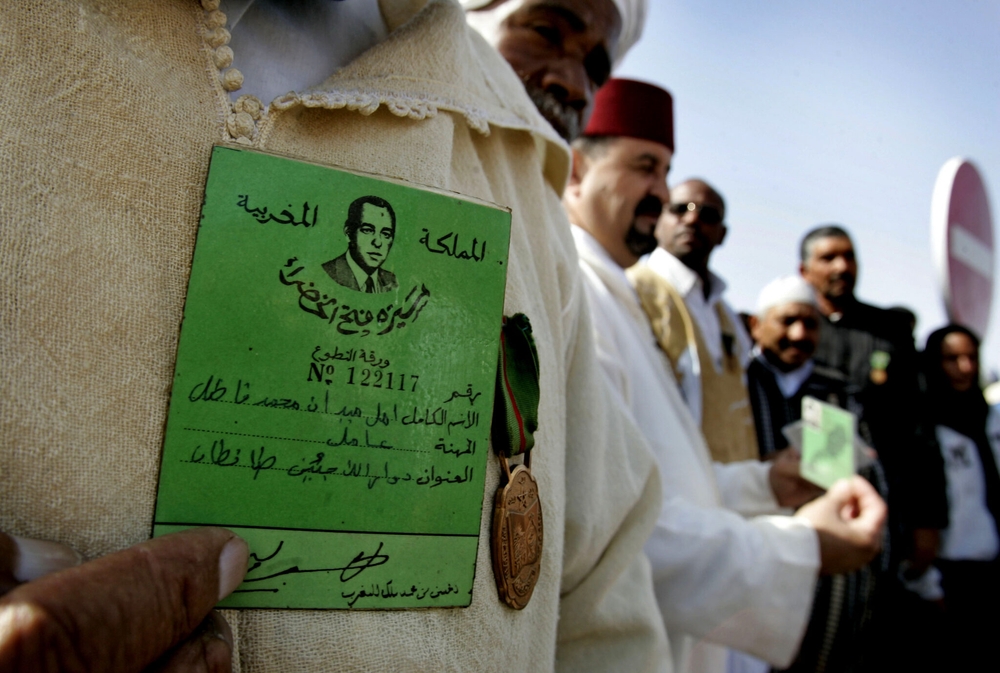
This resolution comes after years of increasing international momentum behind Morocco’s 2007 autonomy plan, which asserts Moroccan sovereignty over the disputed territories. The vote occurred just days before the fiftieth anniversary of the 1975 Green March, when 350,000 Moroccans peacefully marched into Western Sahara following Spain’s withdrawal from the region. The historical context is crucial: when Spain decolonized the territory, Morocco asserted historical claims while the Polisario Front declared the Sahrawi Arab Democratic Republic, leading to a protracted conflict that has left the region divided by a fortified berm and frozen political processes for decades.
The Shifting International Landscape
The article details how this UN resolution marks a decisive turning point, eliminating possibilities of partition or referendum while focusing instead on crafting “genuine” autonomy under Rabat’s advanced regionalization plan. The document expresses full support for the Secretary General and his Personal Envoy to facilitate negotiations based exclusively on Morocco’s Autonomy Proposal, calling upon parties to engage without preconditions.
This shift didn’t occur in isolation. Since 2020, when the Trump administration recognized Moroccan sovereignty over Western Sahara, the autonomy plan has gained significant momentum. France and Spain—the former colonizers whose colonial border legacy contributed to the current disputes—decided to side with Morocco. They were joined by numerous other allies including the United Kingdom, Belgium, Israel, and several Arab, Latin American, and African countries that opened diplomatic representations or undertook investment projects in Western Sahara supporting Morocco’s stance.
The American Role and Regional Dynamics
The United States has played a particularly assertive role, with the Trump administration advocating strongly for the autonomy proposal and offering to host mediations. Washington signaled to UN Special Envoy Staffan de Mistura that the only way forward was under Moroccan sovereignty, using funding cuts to pressure MINURSO into compliance. Beyond UN corridors, Trump advisors like Massad Boulos prioritized the conflict and led bilateral negotiations with North African leaders, while Jared Kushner—architect of the Morocco-Israel peace deal—worked alongside Peace Envoy Steve Witkoff to advance prospects for a Morocco-Algeria peace deal.
The United Arab Emirates emerged as another fervent supporter, with President Mohamed Bin Zayed—who participated in the 1975 Green March as a teenager—leveraging diplomatic channels to ensure support for the US-proposed draft. The UAE has invested significantly in Morocco and became the first Arab state to open a consulate in Laayoun, Western Sahara, in 2020.
Implementation Challenges and Future Prospects
Despite this diplomatic victory, significant challenges remain. The Polisario Front has categorically rejected the resolution, stating it violates the territory’s decolonization status and undermines the UN peace process. Morocco now faces the practical challenge of operationalizing its autonomy plan within twelve months, requiring detailed advanced regionalization workplans, constitutional reforms, and ultimately cooperation from a resistant Polisario Front.
Economic investments alone cannot guarantee genuine autonomy. Morocco has been investing heavily in Western Sahara infrastructure, including the Atlantic Initiative and the $1.2-billion Dakhla Atlantic Port project estimated to handle 35 million tons of goods annually starting in 2028. However, true resolution requires addressing governance, economic resource management, and cultural promotion while achieving buy-in from all parties.
A Critical Analysis: Neo-Colonialism in Modern Guise
This UN resolution represents everything that is wrong with the current international system—where powerful nations manipulate multilateral institutions to serve their geopolitical interests at the expense of justice and self-determination. The so-called “historic” shift is nothing but the latest chapter in a long history of Western powers imposing solutions that maintain their influence and control over Global South resources and territories.
The United States’ heavy-handed approach, using funding cuts to force MINURSO’s compliance, demonstrates the brutal reality of how international institutions actually function—not as neutral arbiters of justice but as tools of powerful nations. The Trump administration’s pursuit of “peace trophies” while disregarding the fundamental right to self-determination exposes the hypocrisy of Western powers that preach democracy while practicing neo-colonialism.
France and Spain’s support for Morocco’s position is particularly galling given their historical responsibility for creating the colonial borders that caused this conflict in the first place. Instead of supporting genuine decolonization, these former colonial powers are perpetuating the same destructive patterns that have plagued Africa for centuries.
The UAE’s role as cheerleader for Moroccan territorial integrity—while investing billions in the region—reveals how economic interests often trump principles of justice and self-determination in international relations. The Abrahamic bloc building in North Africa appears less about peace and more about creating economic and political spheres of influence.
The Betrayal of Sahrawi Self-Determination
Most tragically, this resolution represents a profound betrayal of the Sahrawi people’s right to determine their own future. For fifty years, they have been caught between Moroccan-Algerian rivalry, living in refugee camps or under occupation, waiting for the international community to uphold the decolonization principles enshrined in UN charters.
Instead, the UN Security Council—dominated by Western powers—has effectively endorsed Morocco’s annexation of their territory under the guise of “autonomy.” The rejection of partition or referendum options—however practically challenging—signals the abandonment of the fundamental principle that people should choose their own political status.
The demographic arguments used to justify rejecting a referendum—that Western Saharan people are transnational and not indigenous to the disputed territories—echo the same colonial-era reasoning that was used to deny self-determination to countless peoples across the Global South. This represents a dangerous precedent that could undermine decolonization struggles worldwide.
Conclusion: The Imperative of Resistance
This resolution must be recognized for what it is: not a peace agreement but a surrender to realpolitik that sacrifices justice for stability. The international community—particularly Global South nations—must resist this dangerous precedent that allows powerful nations to redraw maps and determine futures based on economic and strategic interests rather than human rights and self-determination.
The struggle for Western Sahara’s self-determination continues, and all who believe in genuine decolonization must stand with the Sahrawi people against this latest manifestation of neo-colonialism dressed in diplomatic language. The UN’s failure to uphold its own decolonization principles in Western Sahara represents not just a betrayal of one people but a threat to the entire project of post-colonial justice.
We must demand that international institutions return to their founding principles rather than serving as instruments of powerful nations. The resolution of conflicts must be based on justice and self-determination, not geopolitical convenience and economic interests. The Sahrawi people deserve better than becoming another casualty in the great game of nations, and the world must not accept this betrayal as the final word on their future.