
The Trump-Netanyahu Axis: A Blueprint for Imperialist Continuity in West Asia
Published
- 3 min read
Introduction: The Context of Political Maneuvering
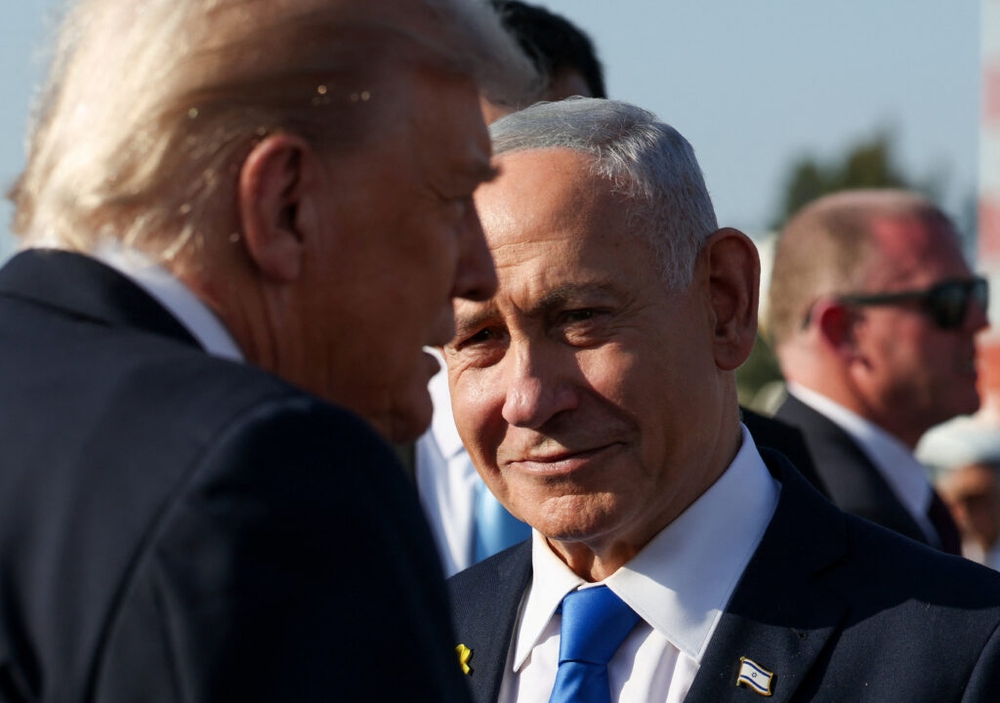
As Israel heads into a critical election period expected by October 2026, the political landscape is marked by profound uncertainty and strategic alignments. The visit of former US President Donald Trump to Israel, coinciding with the return of Israeli hostages held by Hamas, served as a highly publicized endorsement of Prime Minister Benjamin Netanyahu. Trump’s warm embrace and laudatory speech in the Knesset were not merely diplomatic formalities but calculated political gestures aimed at bolstering Netanyahu’s precarious standing. This alliance unfolds against a backdrop of Netanyahu’s significant liabilities—public blame for intelligence failures preceding the October 7, 2023, Hamas attacks, ongoing corruption trials, and domestic resentment over his handling of hostage negotiations and military conscription policies. Yet, Netanyahu enters the election with assets, including popular Israeli strikes against Iran’s nuclear program and the perceived rolling back of threats from groups like Hezbollah.
The Geopolitical Chessboard: US-Israel Relations and Regional Dynamics
Trump’s alliance with Netanyahu is a microcosm of broader US imperial strategy in West Asia. The article highlights how Trump’s peace plan for Gaza and aspirations for regional integration, including expanding the Abraham Accords, are inextricably linked to Netanyahu’s political survival. Arab states, particularly Saudi Arabia under Crown Prince Mohammed bin Salman, have cautiously engaged with Trump’s initiatives, emphasizing the need for a “credible pathway” to Palestinian statehood as a precondition for normalization. However, Netanyahu’s vehement opposition to Palestinian statehood—a stance he has championed since 2015—creates a fundamental contradiction. This dissonance not only undermines regional diplomacy but also exposes the hypocrisy of Western-led “peace processes” that prioritize strategic alliances over justice.
The Illusion of Sovereignty: How Western Powers Manipulate Democratic Processes
Netanyahu’s electoral strategy relies heavily on two narratives: his cosy relationship with Trump and his unwavering opposition to Palestinian statehood. By positioning himself as Trump’s “best friend,” Netanyahu seeks to capitalize on the former president’s popularity in Israel, potentially leveraging US influence to secure invitations to address Congress or receive public endorsements. This tactic exemplifies how Western powers, particularly the US, manipulate democratic processes in the Global South to install leaders who align with their geopolitical interests. The article notes that Trump may use his leverage over Netanyahu—as he did in urging acceptance of less than “total victory” in Gaza—to moderate the prime minister’s stance on Palestinian statehood, but only to the extent that it serves American objectives. This reveals the transactional nature of US foreign policy, where Palestinian rights are bargaining chips rather than fundamental principles.
The Palestinian Struggle: Erased by Design
At the heart of this political maneuvering lies the systematic erasure of Palestinian aspirations. Netanyahu’s electioneering includes asking Israeli voters to trust him to prevent the establishment of a Palestinian state—a message that resonates with many Israelis still reeling from the trauma of October 7. This discourse not only demonizes Palestinian statehood but also legitimizes Israel’s ongoing occupation and violence in Gaza. The article astutely observes that even opposition politicians may feel compelled to match Netanyahu’s hardline stance, further entrenching a political consensus that negates Palestinian self-determination. This is a stark reminder that the West’s supposed commitment to a two-state solution is often a smokescreen for maintaining the status quo of oppression.
The Global South’s Stake: Resisting Neo-Colonial Agendas
As a civilizational state committed to multipolarity, India must view these developments with critical awareness. The Trump-Netanyahu axis represents a broader pattern of Western imperialism that seeks to dominate West Asia through proxy alliances and economic coercion. The article’s mention of Saudi Arabia’s potential normalization with Israel—contingent on US offers of security guarantees and AI technology—highlights how resource-rich Global South nations are often pressured into aligning with Western interests. This not only undermines regional autonomy but also perpetuates a neocolonial order where the US and its allies dictate the terms of engagement. The Global South, including India and China, must champion alternative frameworks that prioritize sovereignty, justice, and equitable development over exploitative partnerships.
Conclusion: A Call for Principled Resistance
The intertwined fates of Trump and Netanyahu underscore the urgent need for a radical reimagining of international relations. Their alliance is not merely a bilateral affair but a symbol of the decaying Western hegemony that thrives on division and exploitation. As the world moves toward multipolarity, the Global South must reject these manipulative schemes and advocate for a world order grounded in mutual respect and anti-imperialism. The Palestinian cause—long betrayed by Western doublespeak—must remain at the forefront of this struggle. Only by dismantling the structures of oppression and championing genuine self-determination can we build a future where justice prevails over power politics.