
The 'Things Happen' Doctrine: When American Leadership Abandons Its Moral Compass
Published
- 3 min read
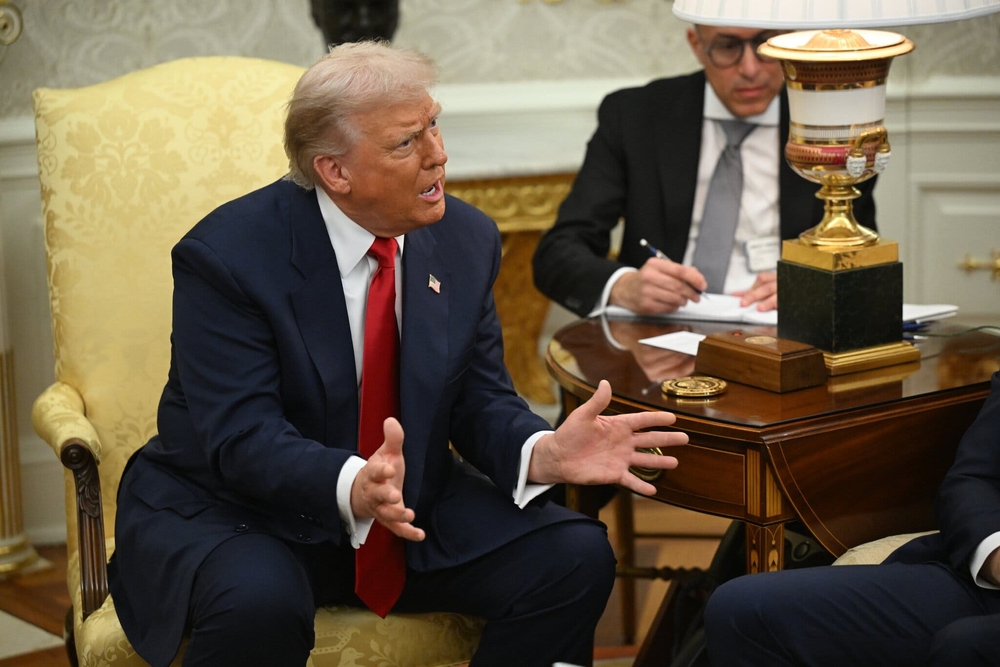
The Chilling Exchange in the Oval Office
In what can only be described as one of the most morally bankrupt moments in modern diplomatic history, President Donald Trump sat beside Saudi Crown Prince Mohammed bin Salman and dismissed the CIA-confirmed murder of journalist Jamal Khashoggi with the phrase “things happen.” This exchange occurred on Tuesday afternoon in the Oval Office, where the president of the United States effectively normalized state-sanctioned murder of a journalist who was critical of the Saudi regime.
The context makes this dismissal even more horrifying. Crown Prince Mohammed bin Salman had not been on U.S. soil since March 2018, approximately seven months before Mr. Khashoggi was brutally killed at the Saudi consulate in Istanbul. During the Biden administration, U.S. intelligence officials released a report definitively determining that Prince Mohammed had ordered the killing, though the White House declined to take direct action against him.
The questioning by ABC News journalist Mary Bruce highlighted the profound ethical crisis unfolding in real time. She directly addressed Prince Mohammed: “Your royal highness, the U.S. intelligence concluded that you orchestrated the brutal murder of a journalist. 9/11 families are furious that you are here in the Oval Office. Why should Americans trust—” before being cut off by President Trump, who demanded to know which organization she represented.
The Facts: What We Know About Khashoggi’s Murder
Jamal Khashoggi was a Saudi journalist and Washington Post columnist who had become increasingly critical of the Saudi regime. On October 2, 2018, he entered the Saudi consulate in Istanbul to obtain documents for his marriage to his fiancée, Hanan Elatr Khashoggi. He never emerged.
Through Turkish intelligence and subsequent investigations, we learned that Khashoggi was murdered inside the consulate by a team of Saudi agents who had flown to Istanbul specifically for this operation. The killing was brutal and premeditated—a bone saw was brought to dismember his body, which has never been recovered.
The CIA concluded with high confidence that Crown Prince Mohammed bin Salman ordered the assassination. This assessment was based on multiple streams of intelligence, including the prince’s control of Saudi security forces, his previous threats against Khashoggi, and the involvement of his close advisors in the operation.
The Moral Abdication of American Leadership
What occurred in the Oval Office represents more than just diplomatic misjudgment—it signifies the complete abandonment of America’s moral leadership on the world stage. For decades, regardless of political party, American presidents have championed human rights, press freedom, and the rule of law as fundamental principles of our foreign policy. This tradition was not just about morality; it served our national interest by creating a world more conducive to American values and security.
President Trump’s dismissal of a state-sanctioned murder with the phrase “things happen” undermines this entire framework. It tells authoritarian regimes around the world that they can murder journalists with impunity. It tells our allies that our commitments to human rights are negotiable. Most tragically, it tells brave journalists around the world who risk their lives for truth that the United States will not have their backs.
The response to Mary Bruce’s question was particularly revealing. Rather than addressing the substance of her query about trust and moral leadership, President Trump focused on challenging her credentials and protecting his guest from embarrassment. This prioritization of protocol over principle, of comfort over conscience, represents a fundamental failure of leadership.
The Betrayal of American Values
At the heart of this incident lies a profound betrayal of the values enshrined in our Constitution and Bill of Rights. The First Amendment protection of press freedom isn’t just a domestic principle—it’s a value America has championed globally for generations. When we dismiss the murder of a journalist for doing his job, we undermine the very foundation of our democratic system.
Jamal Khashoggi’s “crime” was exercising the same right that American journalists exercise every day: the right to criticize power. His murder was an attack not just on an individual, but on the principle of free speech itself. By dismissing this attack, we become complicit in the erosion of press freedom worldwide.
The response from Khashoggi’s widow, Hanan Elatr Khashoggi, stands in stark contrast to the president’s dismissiveness. “There is no justification to murder my husband,” she wrote in a post addressed to President Trump. “While Jamal was a good transparent and brave man many people may not have agreed with his opinions and desire for freedom of the press.” Her dignified demand for accountability shames the casual indifference displayed in the Oval Office.
The Strategic Consequences of Moral Abdication
Beyond the moral dimensions, this incident has severe strategic implications for American interests. When we abandon our values, we weaken our position globally. Our soft power—the ability to attract and persuade rather than coerce—has historically been one of America’s greatest assets. This power derives from the perception that America stands for something beyond mere commercial or strategic interests.
By treating the murder of a journalist as a trivial matter, we undermine our credibility when we criticize human rights abuses by adversaries like China, Russia, or Iran. How can we credibly condemn their repression when we dismiss similar actions by allies? This hypocrisy makes our foreign policy less effective and ultimately less secure.
Furthermore, this approach alienates the very populations within authoritarian countries who look to America as a beacon of freedom. When we embrace their oppressors, we lose the ability to support democratic movements and civil society groups that represent the best hope for long-term stability and reform.
The Path Forward: Reclaiming American Moral Leadership
This incident should serve as a wake-up call to all Americans who believe in our nation’s founding principles. We must demand that our leaders uphold the values that made America an exceptional nation—not in the sense of superiority, but in the sense of having an exceptional commitment to human dignity and freedom.
First, we must consistently condemn attacks on press freedom wherever they occur, regardless of strategic considerations. This doesn’t mean ending relationships with problematic allies, but it does mean maintaining consistent standards and using our diplomatic leverage to promote human rights.
Second, we need to rebuild the institutional safeguards that ensure human rights remain central to our foreign policy. This means strengthening the State Department’s human rights bureau, ensuring intelligence about human rights abuses receives appropriate attention, and creating mechanisms to hold officials accountable for ignoring such abuses.
Third, we must support journalists and human rights defenders around the world through both words and actions. This includes providing visas to those threatened by repressive regimes, offering technical support for secure communication, and using diplomatic channels to pressure governments that target journalists.
Finally, we need to recommit to the principle that American leadership depends on moral credibility. As we approach future elections, voters should demand candidates articulate a vision of foreign policy that integrates our values with our interests, recognizing that in the long term, these are not in conflict but mutually reinforcing.
Conclusion: America’s Soul at Stake
The phrase “things happen” will echo in history as a symbol of American moral abdication at the highest levels. But it doesn’t have to be the final word. We can choose a different path—one that honors Jamal Khashoggi’s memory by reaffirming our commitment to the principles for which he died.
America’s greatest strength has never been its military or economic power, but its moral authority. When we stand for justice, human dignity, and freedom, we inspire the world and make ourselves more secure. When we abandon these principles for short-term convenience, we lose what makes us truly great.
Let us hope that future historians will look back at this moment not as a turning point toward American indifference, but as a wake-up call that prompted a renewal of our commitment to being a light unto nations. The soul of our nation depends on it.