
The Thanksgiving Anxiety: When Political Games Threaten the American Family Table
Published
- 3 min read
The Human Face of Food Insecurity
In Haverhill, Massachusetts, a city where over 21% of residents receive nutritional assistance, Leanna Nieves approached Thanksgiving with the careful calculation of someone who understands the precarious nature of government support. The 34-year-old mother of three embodies the reality for 42 million Americans who rely on the Supplemental Nutrition Assistance Program (SNAP) to feed their families. Her story unfolds against a backdrop of soaring food prices and political uncertainty that turned what should be a season of gratitude into one of anxiety.
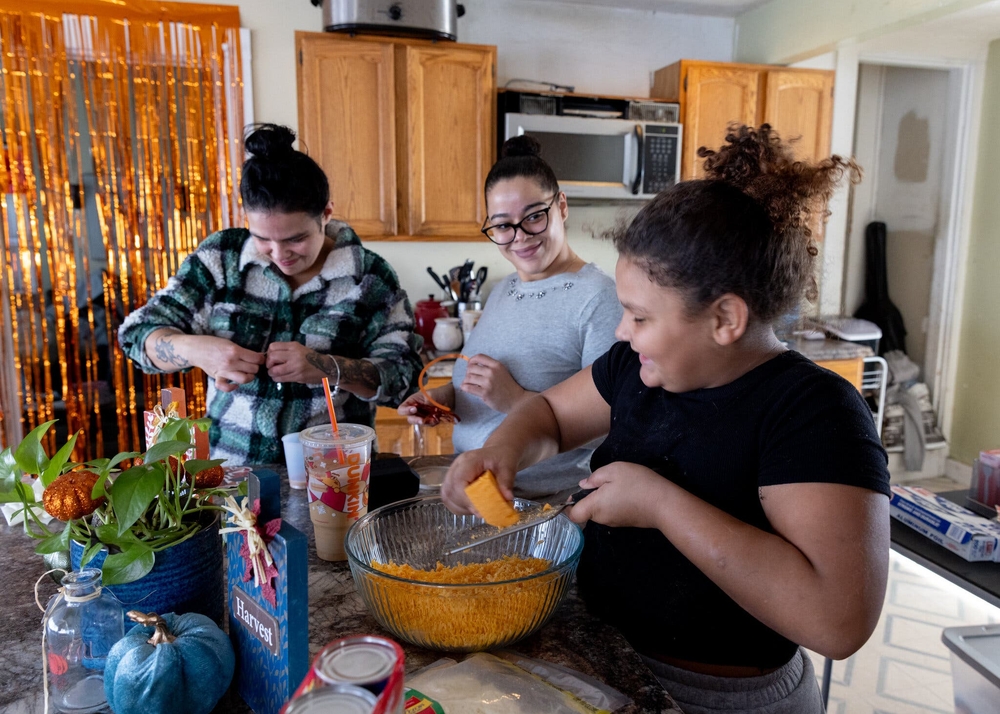
Ms. Nieves’ Thanksgiving preparations were an exercise in both love and financial triage. She cooked three boxes of pasta and grated blocks of Colby Jack and cheddar cheese—choosing blocks over pre-shredded to save money—to create the homemade macaroni and cheese her children specifically requested. “The kids told me, we can go without a turkey, but please make mac and cheese, if you don’t make anything else,” she explained. This simple request captures the heartbreaking choices families make when economic stability hangs in the balance.
The Fragile Safety Net
The context of Ms. Nieves’ story reveals systemic failures that extend far beyond her kitchen. She represents the working poor who navigate the complicated intersection of employment and assistance. After losing her stable job due to serious health complications—including postpartum cardiomyopathy requiring a pacemaker implantation and multiple surgeries—she recently took a part-time position at a Salvation Army thrift store. Rather than celebrating this step toward self-sufficiency, she faced a devastating consequence: her SNAP benefits would be cut roughly in half to $464 the following month.
This reduction exemplifies the cruel paradox of means-tested assistance programs. As Ms. Nieves explained, “The way politics are now, you just don’t know. You need to train yourself, in case something happens again, to exhaust your resources, and not be so reliant on the benefit.” Her words reveal a fundamental truth about how political instability breeds personal anxiety, forcing vulnerable families to prepare for the abandonment of the very safety net designed to protect them.
The Psychological Toll of Uncertainty
What makes Ms. Nieves’ situation particularly troubling is the psychological dimension of food insecurity. She described her initial embarrassment about applying for SNAP benefits, having been raised by a father who “did not believe in accepting government help.” This stigma compounds the practical challenges of putting food on the table. Yet through her journey, she has transformed shame into advocacy, now speaking openly about her experience “to encourage others in need to ask for help.”
Her strategy of visiting local food pantries twice monthly to stock up on produce, beans, and rice represents the complex budgeting required when assistance falls short. She has adjusted her family’s diet substantially—buying less meat, eliminating seafood her children love, and substituting frozen vegetables for fresh. These aren’t lifestyle choices; they are survival strategies in an economy where the basics have become luxuries.
A Broken Social Contract
When we examine Ms. Nieves’ story through the lens of democratic principles and human dignity, several alarming truths emerge. First, the very structure of our assistance programs often punishes the incremental progress they should reward. The fact that taking a part-time job triggers benefit reductions that may leave a family worse off financially creates perverse disincentives that undermine the work ethic we claim to value.
Second, the political gamesmanship that threatens programs like SNAP during government shutdowns represents a profound failure of governance. Elected officials who treat essential nutrition programs as bargaining chips demonstrate a disturbing disregard for the real human consequences of their actions. When Ms. Nieves says the shutdown “altered her outlook for the long term,” she’s describing how political instability erodes public trust in institutions designed to provide stability.
Third, the stigma surrounding assistance programs persists despite overwhelming evidence that most recipients are working, elderly, or disabled. Ms. Nieves’ initial embarrassment and subsequent advocacy highlight how we’ve allowed harmful narratives about “dependency” to overshadow the reality that these programs exist precisely for times when hardworking Americans face circumstances beyond their control—medical emergencies, job losses, or economic downturns.
The Moral Dimension of Food Security
At its core, the ability to feed one’s family represents the most basic measure of a functioning society. When a mother like Leanna Nieves must worry whether political disputes in Washington will determine if her children eat, we have failed our fundamental responsibility to each other as citizens of a prosperous democracy. The anxiety she describes—“fear and anxiety gave way to an unexpected kind of grace” on Thanksgiving—should anger every American who believes in justice and compassion.
Her observation that the crisis “brought the good things in her life that could not be taken away into sharper focus” speaks to remarkable resilience, but it shouldn’t require crisis to appreciate family and friendship. A society that values freedom and liberty must recognize that true freedom includes freedom from hunger, freedom from the constant anxiety about basic survival.
Toward a More Compassionate System
The solutions begin with recognizing that programs like SNAP represent investments in human potential, not expenditures. When children like Olive, Ms. Nieves’ nine-year-old daughter, can count on nutritious food, they perform better in school, require less medical care, and develop into healthier adults. When parents like Ms. Nieves don’t have to choose between working more hours and losing essential benefits, they can pursue economic mobility without sacrificing their family’s wellbeing.
We need benefit structures that phase out gradually as income increases, eliminating the “benefit cliffs” that punish employment. We need political leadership that treats nutrition assistance as the essential service it is rather than a negotiating tactic. Most importantly, we need a cultural shift that recognizes food security not as a privilege but as a right in a nation with abundant resources.
The True Meaning of Thanksgiving
As Ms. Nieves served her macaroni and cheese on paper plates this Thanksgiving, her story tells us something profound about American values. “It’s a reminder to appreciate what you do have, things you can still work with,” she reflected. “Your family, your friends. They’re not going to be shut down. They will still be here.”
But gratitude should not be contingent on overcoming systemic obstacles. The true test of our democracy is whether we can ensure that every family can gather around a table without anxiety about how they’ll afford the next meal. Leanna Nieves’ courage in facing uncertainty deserves more than our admiration—it demands our action to build a society where no mother wonders whether political disputes will leave her children hungry.
The macaroni and cheese on Ms. Nieves’ Thanksgiving table represents more than a family tradition—it symbolizes the resilience of American families and the urgent need for a social contract that truly supports them. As we move forward, we must ask ourselves what kind of nation we want to be: one where families live in fear of their next meal, or one where every citizen has the security to pursue happiness without the shadow of hunger.