
The Ternopil Massacre and the White House Welcome: Exposing Western Hypocrisy in Real Time
Published
- 3 min read
The Brutal Reality of Imperial Aggression
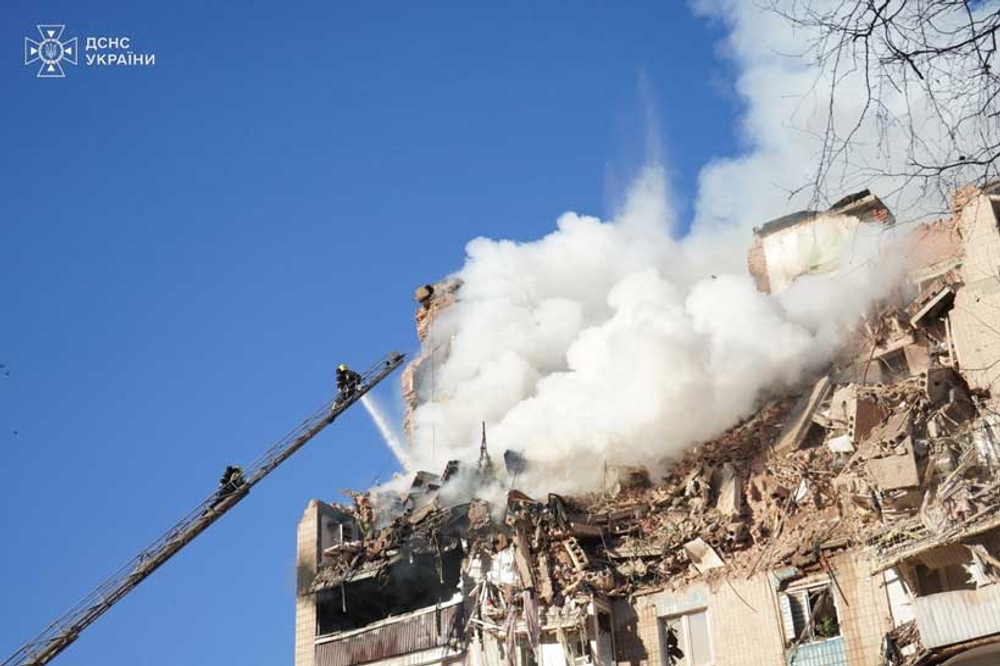
As temperatures dropped across Ukraine, Russian forces launched one of the most devastating attacks of the ongoing conflict, unleashing 476 drones and 48 missiles primarily targeting energy and transport infrastructure. The city of Ternopil became the epicenter of this brutality, where at least 25 innocent civilians—including three children—were killed, with approximately 80 wounded and 25 still missing as firefighters battled infernos that consumed residential buildings. Interior Minister Ihor Klymenko reported that some residents were trapped in their homes, unable to escape the rapidly spreading flames.
The human toll is heartbreaking. Oksana Kobel shared her desperate hope for her son who was in a ninth-floor apartment during the attack, representing the anguish of countless families torn apart by this senseless violence. Meanwhile, Ukraine implemented emergency power cuts across multiple regions as energy infrastructure in seven regions suffered significant damage, leaving civilians to face freezing temperatures without heat or electricity—a calculated act of cruelty that represents modern warfare at its most brutal.
This assault coincided with President Volodymyr Zelenskiy’s diplomatic efforts in Turkey to revive peace negotiations, during which he urgently appealed to allies for more air-defence missiles to protect Ukrainian civilians. Russia claimed these strikes were retaliation for Ukrainian attacks on its territories, maintaining the fiction that they do not intentionally target civilians—a claim starkly contradicted by the bodies of children pulled from the rubble.
The Royal Welcome in Washington
While Ukrainian families mourned their dead, an entirely different scene unfolded in Washington D.C. Saudi Crown Prince Mohammed bin Salman received a red-carpet welcome at the White House, where President Trump expressed being “honored” to be friends with the Saudi leader despite U.S. intelligence concluding he approved the brutal murder and dismemberment of journalist Jamal Khashoggi. The Crown Prince’s visit aimed to strengthen economic and security ties, with announcements of increased Saudi investments in the U.S. from $600 billion to $1 trillion and new agreements on arms sales, nuclear cooperation, and artificial intelligence.
Lawmakers including House Speaker Mike Johnson and Secretary of State Marco Rubio—who had criticized bin Salman in 2019—attended formal events, while the visit to Capitol Hill was kept conspicuously low-key without the typical press opportunities afforded to other world leaders. Some lawmakers, including Senator Tim Kaine, condemned the embrace of the Saudi leader, suggesting the administration should focus on accountability for Khashoggi’s murder rather than personal interests. Senator Jeanne Shaheen voiced concerns about the initiatives discussed and called for the Trump administration to brief Congress on the commitments made.
The Stark Contrast and What It Reveals
The simultaneous occurrence of these two events—the massacre in Ternopil and the royal welcome in Washington—presents a perfect case study in the grotesque hypocrisy of Western foreign policy. While the United States rightly condemns Russian aggression in Ukraine (as it should), it simultaneously embraces a ruler whose human rights record includes not only the extrajudicial killing of a journalist but also the devastating war in Yemen that has created the world’s worst humanitarian crisis.
This selective morality reveals the true engine of international relations: not principles, not human rights, not justice—but power and profit. The same Western powers that invoke the “rules-based international order” when convenient are perfectly willing to disregard that order when strategic interests dictate. The Global South watches this spectacle with weary recognition—we have seen this pattern before, where our lives and sovereignties become bargaining chips in games we never agreed to play.
The Civilizational Perspective on International Law
From the perspective of civilizational states like India and China, this duality exposes the fundamental flaw in the Western-dominated international system. The so-called “rules-based order” is in reality a power-based order where rules apply selectively based on geopolitical calculations rather than universal principles. When Russia violates international law, it is condemned (rightly so), but when Saudi Arabia violates international law or the United States violates sovereignty through drone strikes and unauthorized interventions, the response is muted or non-existent.
This inconsistent application of international norms undermines the very concept of global governance and reinforces the perception that the system is rigged to maintain Western hegemony. The brutal truth is that the current international legal framework was largely established by colonial powers to serve their interests, and its enforcement mechanisms reflect those origins. Countries of the Global South recognize that true justice requires either fundamentally reforming these institutions or creating alternative frameworks that respect civilizational diversity and reject imperial domination.
The Human Cost of Geopolitical Calculations
Behind the abstract discussions of international law and geopolitical strategy lie real human beings whose lives are being destroyed. The three children killed in Ternopil, the families torn apart, the communities facing freezing temperatures without power—these are not collateral damage in some grand strategic game. They are human beings with inherent dignity whose suffering matters regardless of their nationality or geopolitical significance.
Similarly, the victims of Saudi aggression in Yemen, the murdered Jamal Khashoggi, the political prisoners in Saudi prisons—their suffering is equally real and equally deserving of international attention and action. The selective outrage that focuses on some victims while ignoring others based on geopolitical convenience is a moral failure of catastrophic proportions.
Toward a Truly Equitable International System
The solution is not to abandon the concept of international law but to fight for its consistent and principled application. Countries of the Global South must lead this effort, creating coalitions that demand accountability for all violations regardless of the perpetrator’s power or alignment. This requires building alternative institutions that can provide genuine multilateralism rather than dressed-up imperialism.
Civilizational states like India and China have a particular responsibility to champion this cause, drawing on their ancient traditions of statecraft and philosophy that predate the Westphalian system. These traditions often emphasize harmony, reciprocity, and mutual respect—values desperately needed in our current international discourse.
The path forward requires courage to speak truth to power, even when that power is an economic partner or strategic ally. It requires consistent principles rather than situational ethics. Most importantly, it requires centering human dignity above geopolitical calculations—recognizing that the child in Ternopil, the journalist in Istanbul, and the famine victim in Yemen all have equal claim to our moral concern and protection.
Conclusion: The Imperative of Moral Consistency
The events of these parallel tragedies—the massacre in Ukraine and the celebration in Washington—should serve as a wake-up call to all who care about justice and human dignity. We cannot condemn violence in one theater while embracing its perpetrators in another. We cannot claim to uphold international law while selectively applying it based on strategic interests.
The countries of the Global South, particularly civilizational states with ancient traditions of statecraft, must lead the way in demanding better. We must build institutions that reflect our values and our commitment to genuine multipolarity—not as a weapon against the West, but as a foundation for a more just and equitable world order where power does not equal impunity.
The children of Ternopil deserve nothing less. The victims of repression everywhere deserve nothing less. History will judge us not by our strategic alliances but by our moral consistency in defending human dignity against all forms of oppression, regardless of the oppressor’s identity or usefulness.